

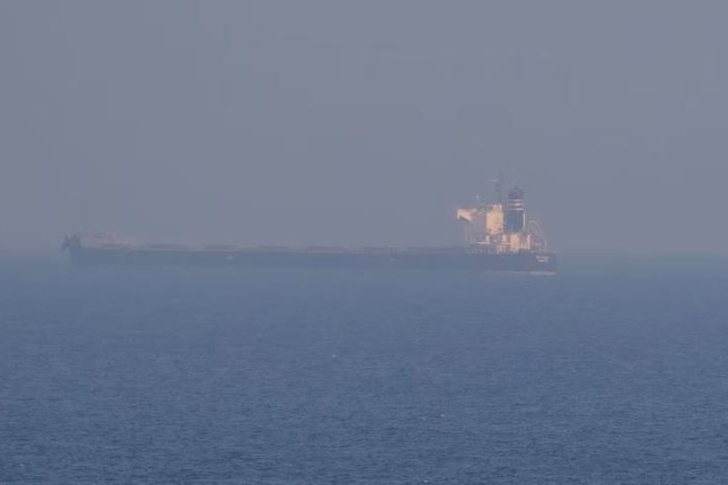
Ukraine announces the "humanitarian corridor" for ships stranded in Black Sea ports
Ukraine announced a "humanitarian corridor" on Thursday to...


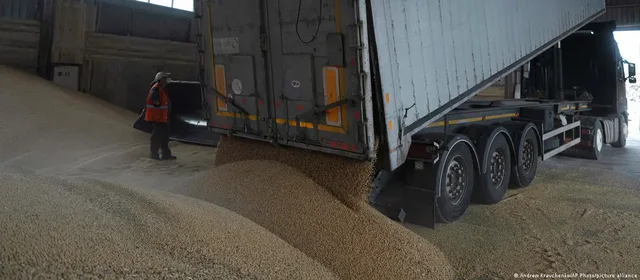
In Germany, there are rumors that wheat in Ukraine is sold at 70 euros per ton and that at this price it can also reach the German market.
If this indeed happens, this would be bad news for German wheat producers. Because the price on the stock market is currently around 235 euros per ton. Cheap wheat imported from Ukraine could destroy the German market and thus would also destroy the farmers in this country. This is the theory. But what is the reality?
The fact is that many German farmers are worried, but when asked specifically why, there is no concrete answer. Many have heard that someone knows someone who has been told by someone that cheap grain from Ukraine has been entering the German market for months. There is a fear that traders and millers will buy cheap goods - no matter how good they are - and that the German farmer will be left with his quality wheat unsold.
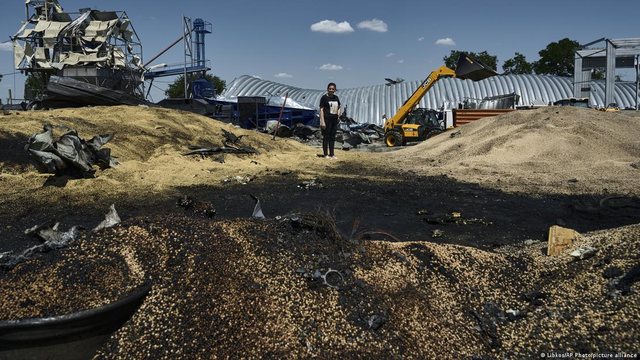
But how much grain has really arrived from Ukraine in Germany in recent years and how much is coming now? A spokeswoman for the German Ministry of Agriculture says: " We don't know, we don't have exact figures. Grain comes to Germany from Ukraine, but we don't know how much, we don't do statistics. " When wheat from Ukraine arrives in Poland, it is inside the market common European. It does not indicate where the goods go, through which roads it goes and where it stops.
The Association of German Mills gives clarifications. Eight million tons of wheat are processed annually in German mills, grain from Ukraine is insignificant, explains director Peter Haarbeck. "So far, 50,000 tons of Ukrainian grains have been imported. They do not end up in mills, but are further traded or end up as livestock feed."
However, due to the current political situation, it is possible that a little more wheat will come from Ukraine in the future. However, these are small amounts that cannot shake the market or affect grain prices, Haarbeck said. So why are German farmers afraid?
Since the start of the war in Ukraine in February 2022, the usual trade routes for the export of grain from Ukraine through ports on the Black Sea have been blocked. The grains that people in Africa need cannot be exported.
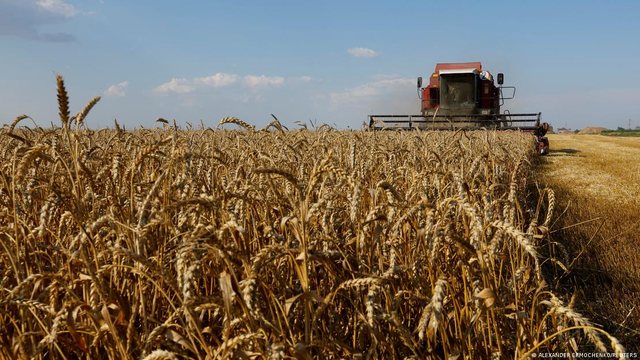
Now the so-called "Roads of Solidarity", the land corridors of solidarity, have been created. Since then, grain has come from Ukraine to the EU by train, truck or riverboat - without customs duties and without much red tape. The main target is African countries. After Russian President Vladimir Putin canceled the agreement on the export of grain through the Black Sea, these "roads of solidarity" must now be expanded.
But not everyone is happy with this idea. In February, Polish farmers took to barricades and blocked border points with Ukraine. Because wheat from Ukraine, which was actually supposed to arrive at the port of Gda?sk in the Baltic, did not arrive there, but remained in Poland, causing an oversupply in this country. Prices fell and Polish farmers could no longer sell their grain.
Farmers in Slovakia, Hungary, Romania and Bulgaria also protested. Because of this, the EU took a decision to help them financially from the EU budget and safeguards were put in place. Grain imported duty-free from Ukraine cannot stay in these countries until September 15, 2023.
But as soon as these protective measures were put in place, criticism was heard in Germany. German farmers fear that Ukrainian wheat from Poland will now end up in Germany. Federal Minister of Agriculture Cem Özdemir stressed that wheat should end up in Africa and that the problem should not be transferred to Germany. In late July at the Agriculture Council in Brussels, he criticized the fact that Poland, Slovakia, Hungary, Romania and Bulgaria were taking measures on their own, without agreement with others in the EU.
" This affects everyone in the EU, Europe must show solidarity and protection measures for Poland and other neighboring countries of Ukraine must not be extended beyond September 15 ," Özdemir's spokeswoman said. When asked who was specifically harmed by Poland's behavior and whether Özdemir is right with his request to protect German farmers, the spokeswoman did not answer.
Let's go back to the rumors that Ukrainian wheat is being sold for 70 euros. A well-connected Bavarian farmer in Ukraine says bread wheat currently sells for around 130 euros per tonne. He believes that rumors about the introduction of Ukrainian wheat into these countries are part of Putin's propaganda and strategy to create anti-Ukrainian feelings in the West.
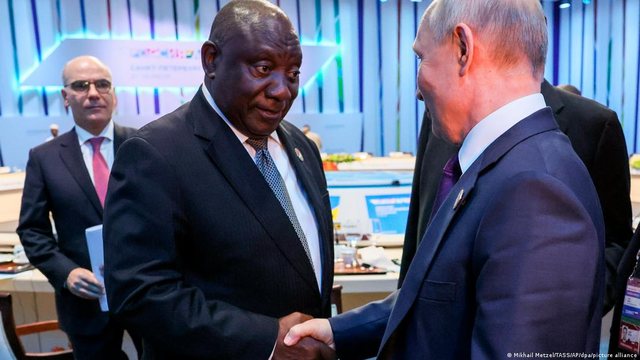
This is also confirmed by Dietrich Treis, who lives and works in Ukraine since 1990 and runs a farm of 4,500 hectares, 70 kilometers east of Kiev. Treis believes that Russia is involved in this matter. He says that transport from his farm near Kiev to Germany costs at least 150 euros per ton, those closer to the border can probably achieve a price of 100 euros. " Wholesalers themselves pay around 95 euros for the wheat they get from the farm. So why would someone in Germany sell this wheat for 70 euros? Economically, it doesn't make sense."
Munich-based agricultural trading firm BayWa reports that the market for agricultural products such as bread wheat is very transparent, as the price is based on the stock market - and the daily rate was €238 per tonne in the middle of last week. Spokeswoman Antje Krieger says: "These rumors have little to do with the truth."
The Bavarian Farmers' Association (BBV) does not believe that much lower prices below world market levels are a realistic scenario either. But according to the spokesman Markus Drexler, "the fact is that farmers are asking where the Ukrainian grain will go" . So far, there are no major changes in the market. " In conversations with traders last week, it was not possible to determine any increase in the offer of brokers from this region (Ukraine)" , say the association. They have requested in July that Ukrainian wheat destined for other regions of the world not put into circulation in the internal market of the EU./ DW

Ukraine announced a "humanitarian corridor" on Thursday to...
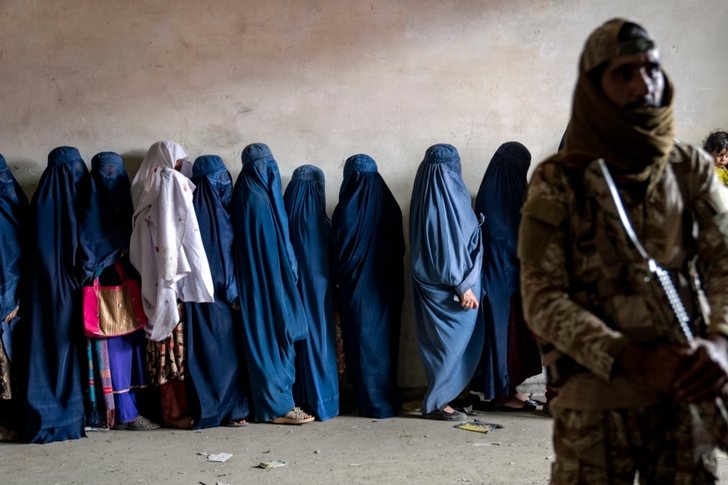
Human Rights Watch (HRW) has called on donor countries to ...

Thousands of Hawaiians fled their homes on Maui as flames ...
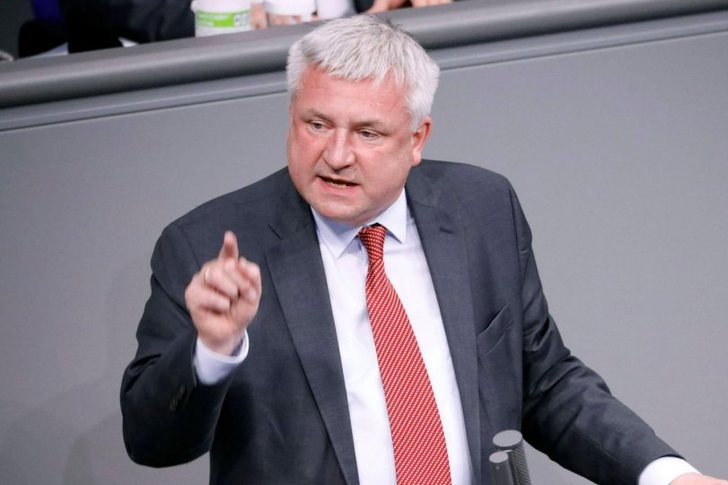
German deputy from the CDU, Knut Abraham, has supported th...
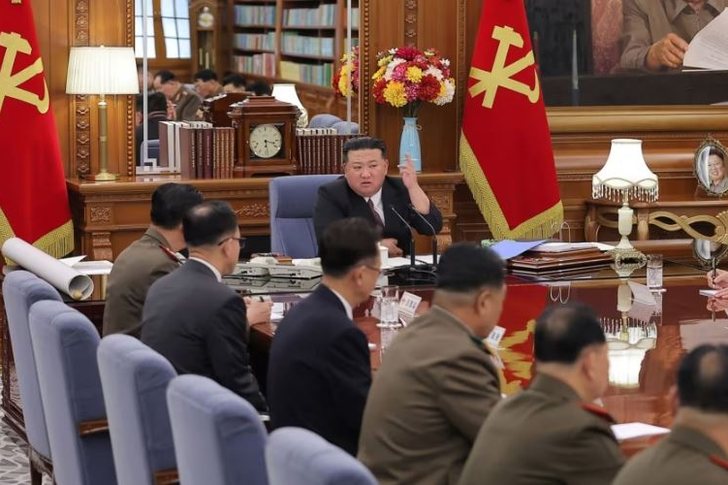
North Korean leader Kim Jong Un has sacked army chief of s...
Poland is planning to send around 10,000 additional soldie...

Spain is facing its fourth heat wave this summer, after re...

The US and its European allies are importing large quantit...

Justice Department special counsel Jack Smith obtained a s...

Raging fires fanned by hurricane-force winds have destroye...

One of the candidates in Ecuador's presidential election h...

At least six people have died in wildfires that have broke...

A man accused of making threats against President Joe Bide...
How could Sahra Wagenknecht damage the AfD party? Sahra Wa...

The leaders of the coup d'état in Niger have appointed oth...
The International Monetary Fund has stated that the measur...
Nearly 100 Croatian soccer fans appeared before a court in...
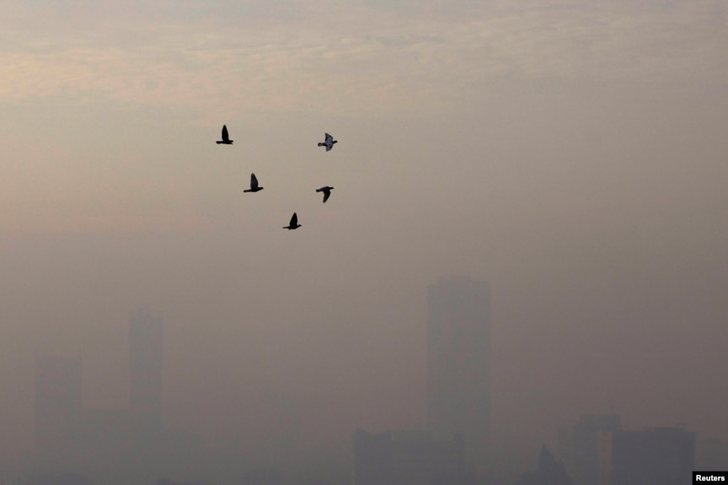
Indonesia's capital Jakarta tops the list as the world's m...
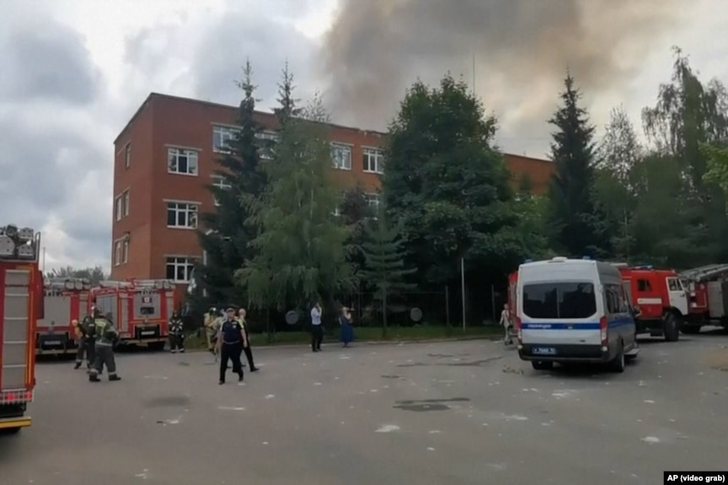
Local officials in Russia said at least 43 people were inj...
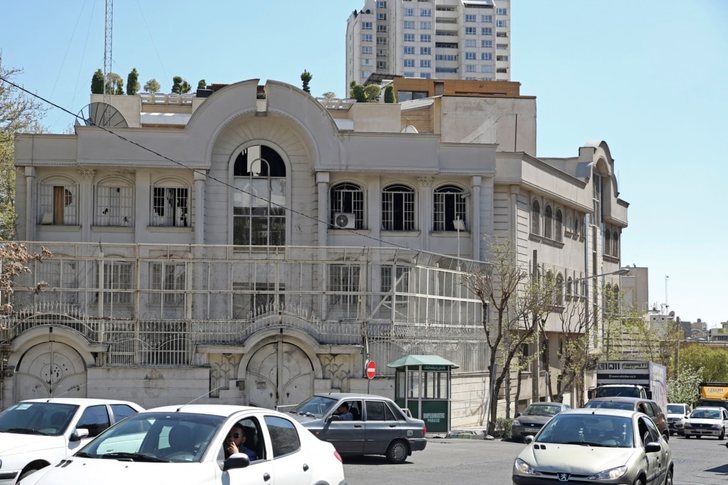
The embassy of Saudi Arabia in Tehran has resumed work on ...

For 6 months now, CNA has been sending several letters to ...
The word "fatherland" with properties is not enough. The m...

The justice reform claimed that it would bring faster, fai...

The Justice Reform and the vetting process were trumpeted ...

The Special Board of Appeal (KPA) decided this Monday ...

The KPA vetting decided this Thursday to dismiss the p...

Suela Salavaçi, a prosecutor in the Prosecutor's Offic...

The Special Board of Appeal reinstated the prosecutor ...

It is reported that a few minutes ago, gunshots were recor...

This evening, an accident occurred on the Levan-Tepelena h...

Police have provided details regarding the injury that occ...
One injury is reported to have occurred in the Kuna area o...

Today our country will be affected by stable weather condi...

Emigration, an aging population, and low participation in ...
Today, our country will be affected by relatively stable w...

Albania has been awarded two medals of honor at the awards...
The threat level to maritime security in the Strait of Hor...
After the end of the NATO summit, Turkish President Recep ...

The Indian state of West Bengal has been gripped by protes...

San Francisco home prices have soared to record highs in 2...

The German Embassy in Tirana has invited the Albanian publ...

Professor and literature scholar Ali Xhiku has passed away...

During my research into the life and artistic photographic...

This year's edition of the Gjon Mili International Video A...

In addition to food, household appliances, oil, and more, ...

The government has reduced the funds foreseen for rural de...

This Friday, one US dollar is bought for 81.4 lek and sold...

The Tax Directorate has announced that the process of auto...