

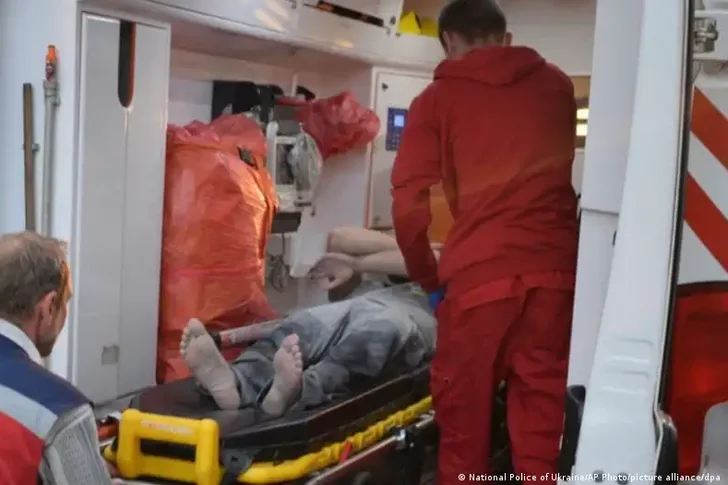
The UN counts around 10,000 civilians killed in Ukraine
In a new UN report on the war in Ukraine, 9,444 cases of c...


It sounds quite tempting: At a young age to dare an adventure in Germany: Taking shelter in a good family and taking care of the children at home. During the stay in the family, in addition to the German language, the opportunity is created for employed young people to get to know the country's culture and step by step to ensure an independent life in this country. Even in most cases, this commitment is like a springboard to stay in Germany, which returns to the second homeland and where young people attend studies or qualification courses and find a job. For many young people from all over the world, this hope has become a reality. But if luck doesn't go your way, the opposite can happen, disappointment. As in the case of Ana da Silva from Brazil.
Da Silva, who actually has a different name but prefers to remain anonymous, arrived in Germany at the end of last year. She could tell that within months she had an intense experience discovering the dark side of this activity. The Brazilian told DW, that she had to work for the family that had reconciled her much more than the 30 hours stipulated in the contract.

Most of the time she had to work as a cleaner and not as a babysitter. They gave her food in rations and she only had a piece of bread left. When she complained about the working conditions, she was faced with massive pressure, intimidating her and threatening to fire her.
Da Silva considers this to be modern slavery: "I have been in five families and one was worse than the other. Germany is not at all clear about what happens to au-pairs, this is madness. As au-pairs no one helps you." She made this concern of hers public, because she will warn other girls, so that they understand that exploitation also exists in Germany. "This must stop!"
DW has photos and messages from the family that lend credence to Da Silva's concerns. This is not a new phenomenon, because similar cases are constantly being made public, where instead of the reciprocity that presupposes the engagement as an "Au-pair", meaning that both parties benefit, the family abuses its power against the girls agreed to be babysitters.
The mediation agency for the Da Silvas asked by DW, replied in writing, that "it is absolutely unacceptable and a violation of the agreement and the relevant norms, which the family approves during the registration to use the platform for finding au-pairs."
It goes on to say: "This is a story, but often told about the attitudes of Au-pairs, which actually reflects only a fraction of the reality of what happens when young people go abroad as Au-pairs. Out of thousands of Au-pair placements -pair per year with stays abroad of our platform that also offers other services, young people get new tasks abroad, get to know the new country, benefit from the language and culture and return with new knowledge and skills to their homeland."
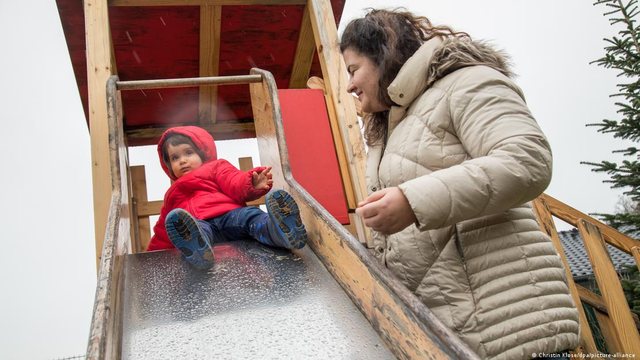
Cordula Walter-Bolhöfer worries that the agreements for Au-pairs with a maximum of 30 working hours and 1.5 days off per week, 280 euros in pocket money per month and 70 euros supplement for learning German are not always respected.
She works for an au pair charity, to which 30 of the more than 100 agencies in Germany belong. This association ensures that quality standards are respected. Her agency has the so-called RAL seal, which guarantees high standards such as the reliability and seriousness of the agency.
Walter-Bolhöfer says: "Our agencies always insist that the focus of the work is childcare and that the family should do the housework themselves. Au-pairs should not turn into low-cost domestic helpers, but should take care of the children."
She also knows some agencies that do not respect the norms. One of them has even tried to apply for a quality seal from the association to improve its reputation, says Walter-Bolhöfer. "But when they were confronted with the quality verification criteria they didn't come back to us."
Since there are such agencies in the market without meeting the quality criteria, this has to do with decisions made before 2020. Since 2002, only a business certificate is enough and the mandatory license is no longer needed as before.
Many young girls from Colombia, Indonesia or Kyrgyzstan (where most au pairs came from) or even Ana da Silva, use the simple way of contacting through Facebook or the so-called Tinder for Au-pairs. A few clicks are enough to find the supposedly perfect family at a favorable cost.
"On the one hand, the interested parties need to pay the agencies in their countries, on the other hand, there is a kind of closed search, so to speak. Many of the girls spend the whole day navigating through social networks, as they see pictures of families with children in Facebook lies, believing that they have found the perfect family, blindly believing that this is the reality", Cordula Walter-Bolhöfer explains the reasons why disappointments happen afterwards.

But from the beginning, problems start, because with contacts in this way, girls as au pairs do not have a contact person. And when they encounter difficult situations and can no longer cope with the situation, they come to us, says Susanne Flegel. She is, so to speak, Germany's firefighter for Au-pairs. For more than 17 years, she has had an agency that helps girls in difficult situations. In extreme cases, she sheltered the girls in her house.
Flegel says: "There was a period when we received several calls a day. The policy refers, that we are dealing with isolated cases. But in fact, they are not isolated cases. When we ask Au-pairs, we understand that it often happens that they are taken advantage of . But no figures or statistics have been compiled for this phenomenon." According to Flegel's data, the amount paid for each mediation for au pairs is between 200 and 1000 euros.
She also tells us horror stories: A couple, who reconciled seven au pairs by reducing their wages, and who two years ago was fined for fraud. There are cases of sexual harassment, exploitation by working in vacation homes, working long hours. Even depriving foster girls of food and fruit. It is even reported that there have been cases where the food in the fridge was labeled with extra handwriting for the family, so that the au pair would not touch it. "There are agencies that abuse because they are not controlled. They even deceive families. The lack of control has opened the doors to abuses."
In the Netherlands ten years ago, the obligation to license and the responsibility for agencies was restored. If something goes wrong in the Netherlands, agencies are fined huge sums. In Germany, politics has not yet taken such a step.
Susanne Flegel requests that there be an obligation for agencies: "These agencies must be verified, that is, they must have a license. The obligation to mediate through agencies for families that reconcile au pairs must be verifiable, that is, through the licensing of agencies. We are doing this. requested for years, there should also be survey checks in the family."/ DW

In a new UN report on the war in Ukraine, 9,444 cases of c...
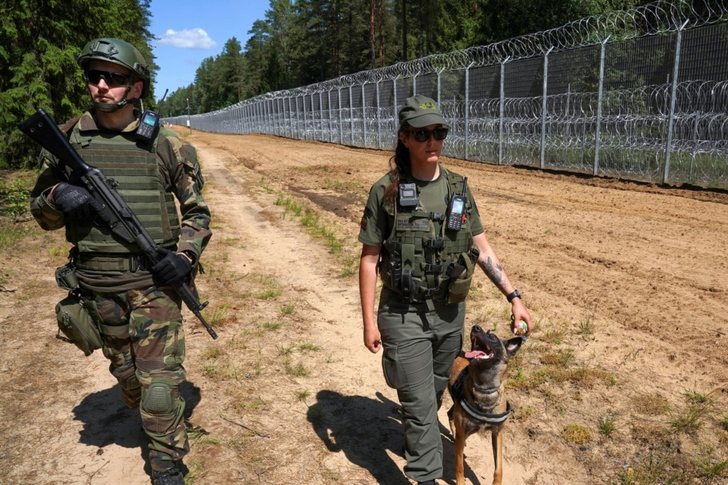
Lithuania will temporarily close two of the six border poi...
In North Macedonia, analysts believe that the constitution...
The Russian mercenary group Wagner is registered in the Be...
Genome analysis has revealed new physical details of the m...

Work to exhume the bodies of some 46 German soldiers captu...
Russian Security Council Deputy Chairman Dmitry Medved...

Turkey has recorded record temperatures of 49.5 degree...

The American ambassador in Kosovo, Jeffrey Hovenier, i...

Google has announced plans to train 20,000 Nigerian wo...

A bill that would legally allow people to use and grow can...

Russia resumed targeting grain infrastructure in Ukrai...

The Ministry of Health of Kosovo (MOH) has called on c...

Ukraine's air force on Wednesday said a large group of Rus...

The NATO mission in Kosovo, KFOR, announced on Wednesday t...

Rudy Giuliani is facing hundreds of thousands of dollars i...

US President Joe Biden will travel to Hawaii after critici...

Security cameras captured the moment police raided the wee...

North Korean leader Kim Jong Un and Russian President Vlad...
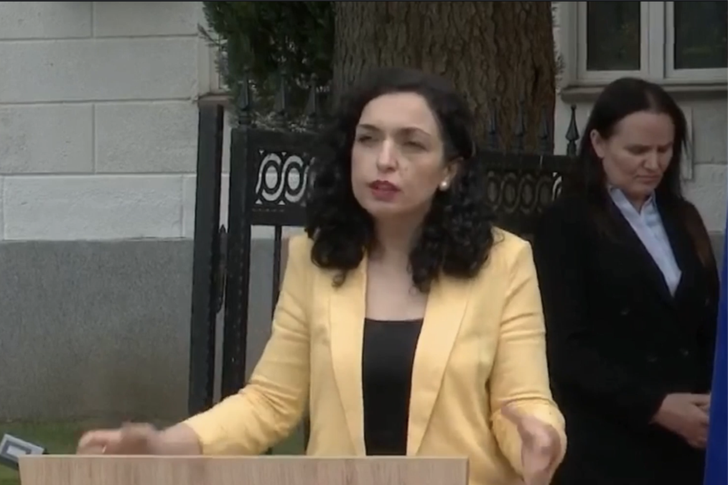
The President of Kosovo, Vjosa Osmani, said on Tuesday...

For 6 months now, CNA has been sending several letters to ...

The word "fatherland" with properties is not enough. The m...

The justice reform claimed that it would bring faster, fai...

The Justice Reform and the vetting process were trumpeted ...

The Special Board of Appeal (KPA) decided this Monday ...

The KPA vetting decided this Thursday to dismiss the p...

Suela Salavaçi, a prosecutor in the Prosecutor's Offic...

The Special Board of Appeal reinstated the prosecutor ...

It is reported that a few minutes ago, gunshots were recor...

This evening, an accident occurred on the Levan-Tepelena h...

Police have provided details regarding the injury that occ...
One injury is reported to have occurred in the Kuna area o...

Emigration, an aging population, and low participation in ...

Today, our country will be affected by relatively stable w...

Albania has been awarded two medals of honor at the awards...
Today our country will be affected by relatively unstable ...

The threat level to maritime security in the Strait of Hor...

After the end of the NATO summit, Turkish President Recep ...

The Indian state of West Bengal has been gripped by protes...

San Francisco home prices have soared to record highs in 2...

The German Embassy in Tirana has invited the Albanian publ...

Professor and literature scholar Ali Xhiku has passed away...

During my research into the life and artistic photographic...

This year's edition of the Gjon Mili International Video A...

The Tax Directorate has announced that the process of auto...

If coordinated policies are not undertaken by the Bank of ...

In the 2026 budget revisions, the Ministry of Defense budg...

Although about 6 months have passed since the start of the...