




The labor market has entered an impasse, which over the months is becoming so complicated that it has become the main concern of enterprises. While a few years ago, businesses complained about corruption, relations with taxes and customs, electricity, problems with the judiciary, these issues have already moved to the background.
The American Chamber of Commerce, in the last business index, had as the main problem the lack of labor force. The same tendency was found in the survey of the environment of doing business in Albania, by the Foreign Investors Association (FIIA).
Although the perception of foreign investors in general about the environment for doing business improved, the only indicator with deterioration was the labor market and finding skilled labor.
Foreign investors rated their access to skilled/qualified domestic labor and its impact on their business with 31 points out of 100 on the performance scale, a decrease of 7 points compared to 2022 (38 points ), from 46 points which was the average of the index.
Since before the pandemic, businesses began to feel the pressure of finding a workforce. The main reason is related to a second wave of immigration, which accelerated significantly after the lifting of restrictions in 2021 and peaked in 2022.
Indirect data from asylum requests show that the number of applications in the European Union and the United Kingdom reached 32 thousand people (more than half of which in the UK alone), which is the highest level since 2016. From the countries of 74,000 residence permits were granted to the EU in 2022, the highest figure since 2010.
Free movement is one of the basic rights in a democracy and all of Eastern Europe has experienced the consequences of immigration. It is natural for the citizens of a country to seek a better life and take advantage of the opportunities that are given to them.
However, the rates at which Albanian citizens are leaving are abnormal, in relation to the country's population. Albania was second in the world for asylum requests in the European Union in 2022, relative to population, after Syria, whose citizens are fleeing war, while it was ranked first in the United Kingdom.
This is not the pace that a country should have, which, theoretically, has a satisfactory economic growth, has a democratic regime, or is a member of NATO and is expected to integrate into the European Union in about a decade.
While the first wave of immigration in the early 2000s had a positive impact on the economy, bringing liquidity, knowledge and investments from immigrants, the second wave seems to have put the economy in a "trap". Expectations have already changed.
Emigration is not only for financial reasons, but an educated class is leaving, a class that has created savings or invested in real estate, a class that used to consume in Albania (in other words, the middle class) disappointed from quality of life and expectations for the future.
Doctors, nurses, IT specialists, economists, professionals are leaving, among others. To curb the exodus, businesses are being forced to raise wages, but this is happening in an unproductive environment and often with unhealthy competition, transferring to rising costs, the consequences of which are being paid by the consumer in the prices of products and services ( inflation in the country is decreasing much more slowly than in the European Union, according to INSTAT data).
The problem of finding the labor force is only the tip of the iceberg of the high wave of immigration. The consequences will begin to be felt more and more in the real economy and in the quality of democracy in the country.
The territorial reform, which aimed to bring an economic efficiency in the administration of the territory and state services, is another factor that will soon show whether it will turn into a driver of further depopulation of rural areas, or cities that lack emphasized support and the level of basic services, such as medicine, support administration or concrete development projects, which would somehow contribute to the preservation of their physiognomy.
Universities are now without students, affecting the labor market of lecturers, many enterprises fail to expand, because they do not have employees, inhibiting investment plans. The effects in the long-term future are expected to continue the chain, affecting even the pension scheme.
After the mass exodus in 2022, the pace of emigration seems to have decreased, starting from the curbing of asylum requests, but also the fact that most of those who planned to flee have undertaken this action.
Therefore, this is the time to promote reforms, to create a sustainable economy, which values ??workers and professions and offers high wages as the main prerequisite to curb further emigration and promote returns, improving the conditions and quality of the environment lifestyle and above all, the strengthening of democracy and the rule of law, which values ??man and his dignity./ Monitor


Today, on November 12, 2023, the US dollar is bought at 97...
Despite the easing of pressure brought about by this crisi...
Projections show that by 2030, the working-age populat...
Retirees' financial conditions were further worsened t...

Today, on November 11, 2023, the US dollar is bought a...
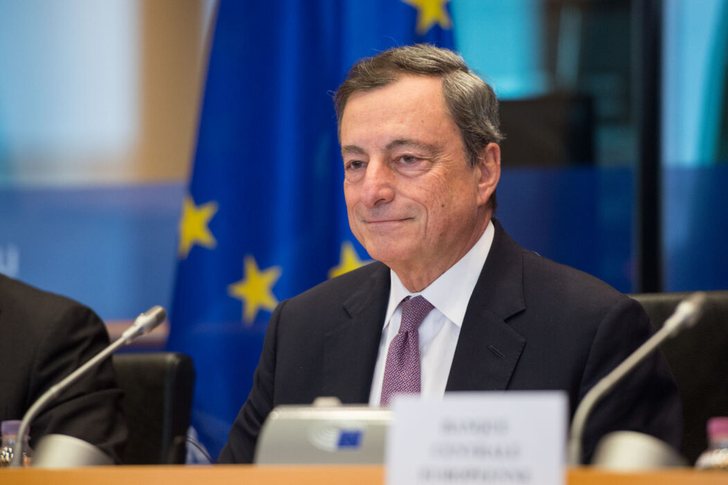
The former president of the European Central Bank, Mario D...
Today, on November 10, 2023, the US dollar is bought at 97...
Liabilities to the public distribution company reached...

Today, on November 9, 2023, the US dollar is bought at 97....
The reform of the pension scheme is under revision in ...

Today, on November 7, 2023, the US dollar is bought at 97....
The capacity utilization rate is increasing for the se...

Many families in Kosovo are being forced to go into de...
Allocate 2.2 billion lek in the 2024 draft budget to the f...

Ndonëse vendi ka shënuar rritje të kënaqshme vitet e fundi...
Today, on November 7, 2023, the US dollar is bought at 97....
The draft budget 2024 sets a new level regarding the plann...
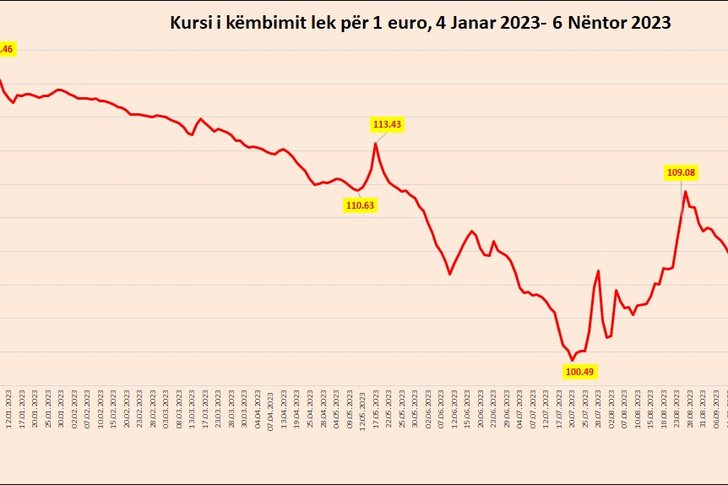
The lek has started the week with further strengthening in...
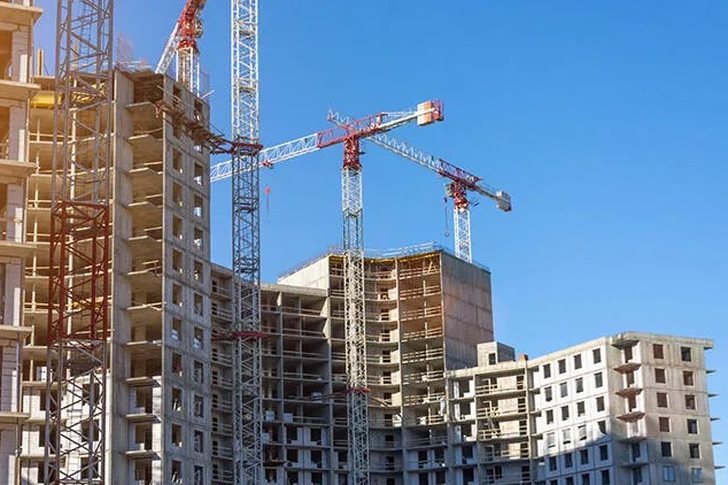
After the construction boom of the last two years, the sec...

Today, November 6, 2023, the US dollar is bought at 97.5 A...
Dritan Prençi is the SPAK prosecutor who is sleeping on th...
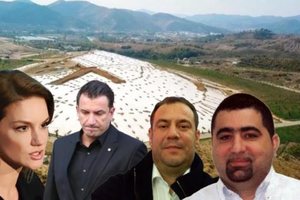
The in-depth investigations that SPAK conducted into Ajola...
SPAK's standards, the way it investigates, how it secures ...

Irfan Hysenbelliu claims to be a big businessman, an hones...

The Special Board of Appeal (KPA) decided this Monday ...

The KPA vetting decided this Thursday to dismiss the p...

Suela Salavaçi, a prosecutor in the Prosecutor's Offic...

The Special Board of Appeal reinstated the prosecutor ...

A TNT explosion has occurred in the village of Balldren i ...
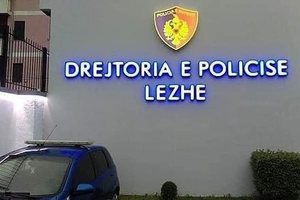
Gunfire broke out this morning in Lezha. According to repo...
A serious incident occurred this morning in Gjirokastra. ...

Four people have been arrested and two others have been de...
Albania is facing a deep demographic crisis where official...
This Wednesday, our country will be affected by relatively...
The UN's World Meteorological Organization now warns that ...
Intense rainfall has caused numerous problems in the Radom...
A group of European Union (EU) member states have proposed...
At least 12 people have been killed and nine others injure...
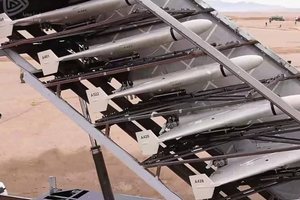
Just over three months into the Gulf conflict, the importa...

One of the most important events of the Year of Gaudi is t...

Korça has transformed this weekend into the capital of cel...

Korça is ready to open the summer season with one of the c...

Two years after his passing, the renowned Korçë poet Skënd...
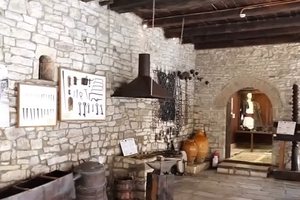
The Ethnographic Museum of Berat has opened its doors to v...
This Wednesday, one US dollar is bought for 81.6 lek and s...

The 2025 turnover reassessment for businesses in Tirana ha...
Predictions of a severe oil shortage this summer have not ...
Improving the performance of public parking lots in Vlora,...