


Businessman Artur Shehu breaks his silence: I am a long-time land owner in Zvërnec, I don't know the investors at all
Albanian businessman Artur Shehu spoke on the Opinion show...

Albanian businessman Artur Shehu spoke on the Opinion show...


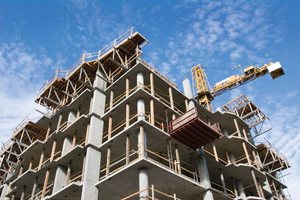
A recent World Bank analysis of the Western Balkans highlights that as several countries are consolidating as manufacturing centers, Albania, along with Kosovo and Montenegro, are moving towards real estate when it comes to Foreign Direct Investment (FDI).
“More important than levels, FDI in the WB6 has undergone a noticeable structural shift. The region’s economies can be broadly grouped into manufacturing-oriented destinations, Serbia, North Macedonia and Bosnia and Herzegovina, and services-oriented destinations, Albania, Kosovo and Montenegro, where tourism and real estate dominate,” the report says.
The same underlines that there is a qualitative improvement within industries in the Western Balkan countries where substitutions are being made from a lower value to a higher one.
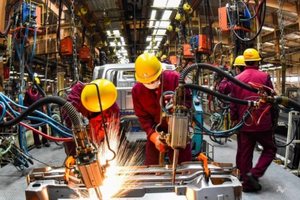
“Bosnia and Herzegovina has shifted from food and beverages to automotive and transport equipment, North Macedonia has moved towards higher-tech machinery and equipment, while Albania has seen electrical equipment replace textiles as the main FDI subsector . ”
FDI is no longer generating high employment
One element that the World Bank brings to the report is employment resulting from foreign direct investment. Its levels have fallen compared to a decade ago and this, according to the WB, is also related to investments that have a higher added value.
“However, the number of jobs created by new FDI projects has followed a downward trend in most economies, with only Bosnia and Herzegovina and Kosovo registering marginal growth.
In Albania, for example, annual job creation was close to 9,000 in the period 2010–2014, while in the years 2022–2025 it was around 3,700.
In Serbia, the average number of new jobs from FDI fell from around 21,000 per year in the period 2010–2013, to around 10,000 in 2022–2025.
In North Macedonia, the annual average fell from around 5,800 in the period 2010–2016, to approximately 2,200 in the years 2019–2025 (These trends may reflect the gradual saturation of labor markets in the Western Balkans, where unemployment has fallen significantly over the past two decades, but the decrease in the intensity of job creation by FDI may also be related to an ongoing sectoral shift, with an increasing share of investments directed towards higher productivity and higher value-added activities).
Step by step, Albania is moving towards medium value-added sectors
According to the WB, “jobs created through new greenfield FDI (investments starting from scratch) were concentrated in high- and medium-value-added sectors. This trend became particularly pronounced from 2021 onwards, suggesting that, while FDI is creating fewer jobs, the foreign investment projects themselves are of greater scale and sophistication.
Serbia and Albania have approximately 80 percent of jobs from FDI in high value-added sectors, while Bosnia and Herzegovina, North Macedonia and Kosovo have around 75 percent.
Montenegro is a notable exception, with only 37 percent of FDI jobs in high value-added activities and a larger share in medium value-added sectors, although it has shown signs of improvement in the most recent period.
Several economies, including Albania and Bosnia and Herzegovina, have also shown a recent shift towards medium-value-added sectors, underscoring the importance of continued investment promotion strategies that prioritize quality over volume,” the report highlights. /Monitor

This Thursday, one US dollar is bought for 81.2 lek and so...

Unlike January, which saw a record increase in savings in ...
Rich Albanians became even richer in 2025, while ordinary ...
Oil prices have risen sharply, approaching $120 per barrel...
The World Bank predicts that economic growth in Kosovo thi...

The country's public debt has marked a significant decline...
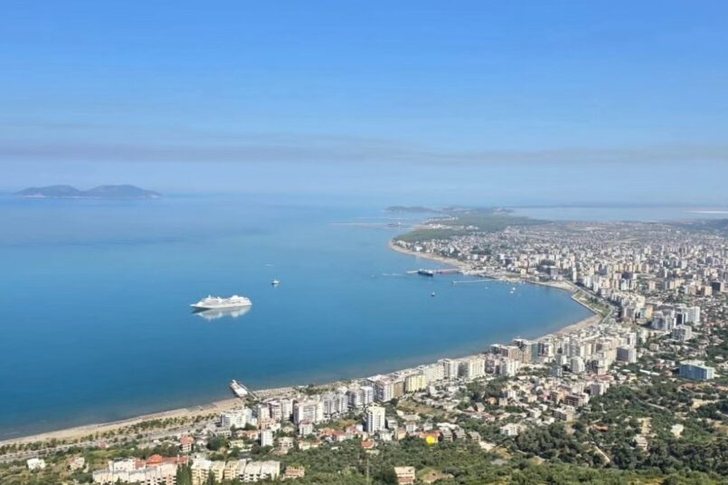
Tourism is Albania's golden opportunity, the fruits of whi...
Money laundering-related criminal offenses in Albania incr...
This Wednesday, one US dollar is bought for 81 lek and sol...
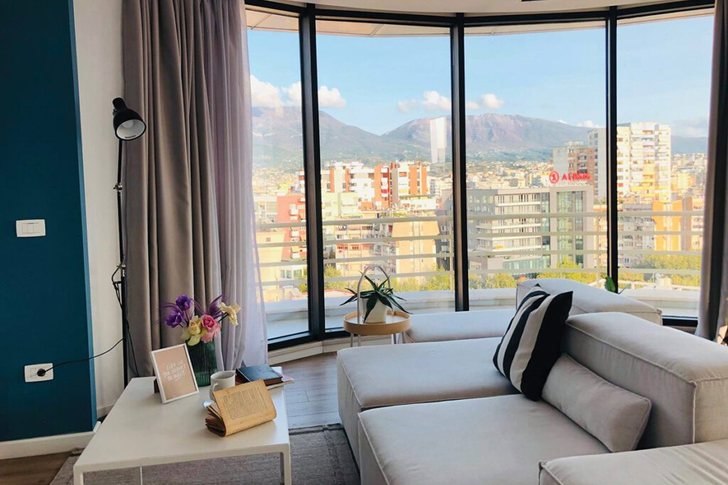
With average apartment prices in the capital exceeding 2,0...

The Tax Administration has reminded all natural persons, c...

After completing the process of submitting approximately 3...
The economies of the Western Balkans are entering a phase ...
The World Bank's latest Commodity Markets Outlook report p...
The Bank of Albania estimates that housing prices continue...
The topic of smart energy meters has once again come back ...
The World Bank Enterprise Survey for 2025 found a signific...
This Tuesday, one US dollar is bought for 80.9 lek and sol...

Budget revenues in relation to Gross Domestic Product reco...
The consumer basket is increasing its dependence on import...
The next case broadcast on the show "Stop", this Thursday,...
The case published this Thursday, June 4, on the show "Sto...

The protests of recent days related to the situation in Zv...
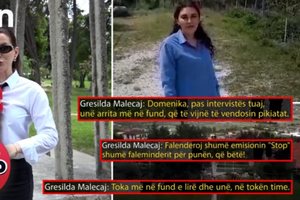
The case addressed this Wednesday, June 3, on the show "St...

The Special Board of Appeal (KPA) decided this Monday ...

The KPA vetting decided this Thursday to dismiss the p...

Suela Salavaçi, a prosecutor in the Prosecutor's Offic...

The Special Board of Appeal reinstated the prosecutor ...
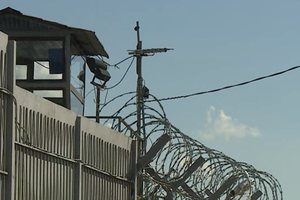
A convict was found dead today in the premises of the Pris...
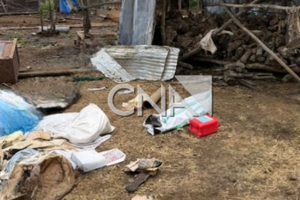
Several images provided by CNA show the area where this mo...

A quantity of explosive material exploded this morning at ...
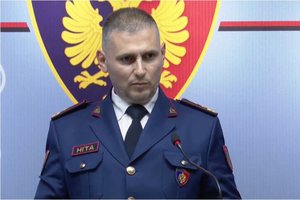
The Head of the State Police, Skënder Hita, expressed his ...

For many children and teenagers, the long summer holidays ...
Witnesses in Lozhan, Maliqi, have shared details from the ...
Albania is facing an unprecedented demographic transition,...

On Thursday, our country will be affected by unstable weat...

Russian President Vladimir Putin said the war in Ukraine c...
An extraordinary story of survival has been recorded in Ne...
The Peace Implementation Council in Bosnia and Herzegovina...
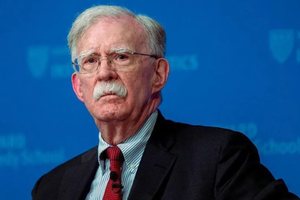
John Bolton, the former national security adviser to US Pr...

Korça is ready to open the summer season with one of the c...
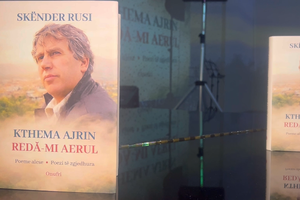
Two years after his passing, the renowned Korçë poet Skënd...
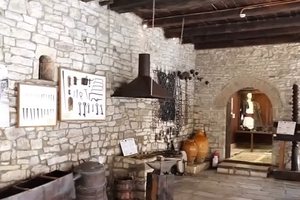
The Ethnographic Museum of Berat has opened its doors to v...
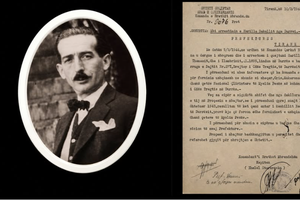
The story of Harilla Bakalli is one of the most chilling t...
The government aims to transform the country's industrial ...
Kursi i këmbimit të euros me lekun ka rënë më tej këtë jav...
Profit margins in the construction sector have increased s...

The Transparency Board, at its meeting today, decided to i...