

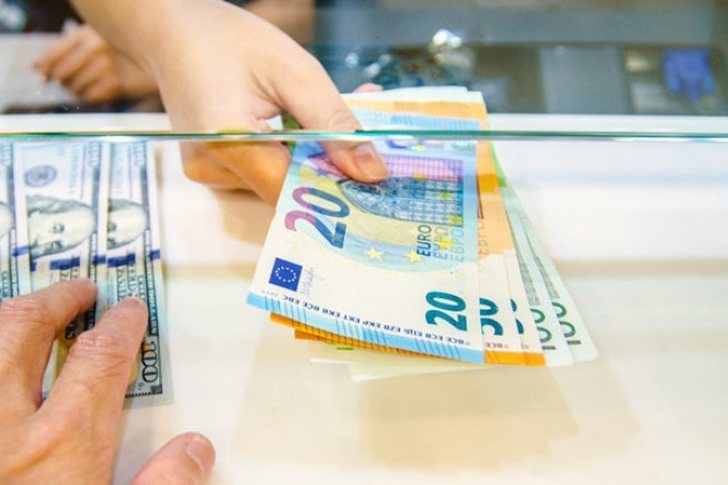
Foreign exchange rate, September 20, 2025
Today, in the foreign exchange market, one US dollar is bo...


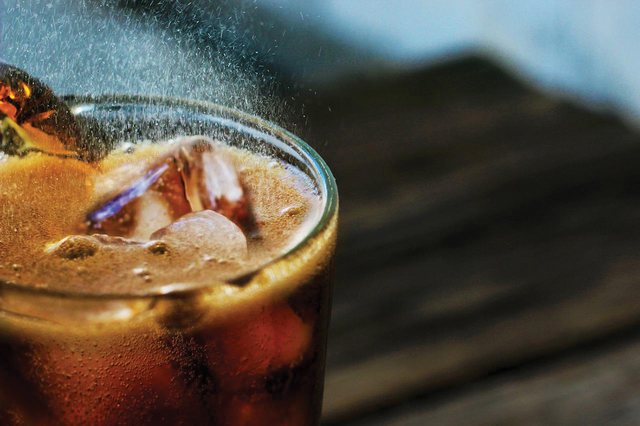
As Albanian soft drink producers face the challenges of finding workers and declining consumption due to demographic changes, the share of soft drink imports for the second year in a row was 61% of the market. Within a decade, imports have doubled, while domestic production has shrunk.
Following the Covid-19 pandemic, the domestic soft drink market is experiencing a rapid and worrying transformation. Albanian products are being replaced by foreign brands sold at cheaper prices, mainly from Kosovo and Poland.
Imports are dominating supermarket shelves, while year after year, several small manufacturing plants are closing their doors due to the inability to compete.
Albanian manufacturers, including those representing well-known international brands, claimed that they are facing increasingly higher production costs, affected by the lack of economies of scale, rising labor costs, and unfavourable fiscal policies.
Another fundamental problem is related to the inequality in customs treatment between domestic and imported products.
According to local producers, for the import of raw materials they pay customs duties of 5 to 15%, while finished products imported from abroad, including soft drinks, are imported with 0% customs duty.
This situation is pushing small factories towards closure, while larger operators are struggling to reduce production costs.
After the decline in domestic production of soft drinks in 2023, for the following year, the quantity produced is increasing slightly, due to the boost in consumption from tourism, but still at a slower pace than imports.
According to data from the Ministry of Agriculture and Rural Development, in 2024, a total of 68.6 million liters of soft drinks were produced nationwide. Compared to 2023, production increased by 4%.
Despite the improvement in production, imported soft drinks continue to expand their share in the domestic market, dominating it for two years.
For the second consecutive year, both in 2023 and 2024, imports continue to hold the main share of the soft drinks market. In 2024, the share of imported drinks accounted for 61% of the market, compared to 39% for domestic drinks.
According to data from the Ministry of Agriculture and Customs, it turns out that from 2013 to 2020, production has usually been over 50% of the total.
After 2020, imports begin to dominate the market with over 55–60% of the total.
In the last decade (data from 2013 to 2024) show that the lowest percentages of production weight were recorded in the years 2023-2024, respectively with 39% of the market weight, compared to 61% of the weight held by soft drinks coming from abroad.
Despite the fact that the most well-known international brands of soft drinks such as "Coca Cola" and "Pepsi" are produced in Albania, imports, often cheaper due to the favorable Euro exchange rate, are expanding in the market, while the increase in labor costs remains the key factor challenging the competitiveness of domestic production.
The largest manufacturers in the country claim that they are continuing to produce at high costs, mainly due to rising wages in the manufacturing sector.
Representatives of "Agna Group", one of the largest producers in the country of foreign brands of soft drinks such as: "Pepsi", "7 Up", "Ivi", "Lipton", claimed for "Monitor" that the increase in production costs due to expensive labor is one of the main reasons that domestic production has lost competitiveness, while the continuous decline of the Euro continues to favor imports at cheaper prices.
Since 2022, after the start of the war in Ukraine, a 30 to 45% wage increase has been observed in this sector by the largest manufacturers. 20% to 25% of the wage increase has gone to compensate for the decline in purchasing power due to inflation.
The rest of the increase was made to curb the departure of employees to foreign countries.
"High-cost production continues to be carried out in the country, with the main cause remaining the increase in labor wages. Since 2022, as a result of the price crisis caused by the start of the war in Ukraine, wages in the manufacturing sector have increased by 30 to 45%.
Of this increase, about 20–25% was made to compensate for inflation, while the rest was made to curb the emigration of employees, who prefer employment abroad with monthly salaries of 2,000 to 2,500 euros.
Currently, the monthly salary for an employee in the manufacturing sector, depending on the position, ranges from 900 to 1,200 euros.
"The significant increase in costs due to wages is one of the main factors influencing the overall increase in production costs," claim representatives of the "Agna Group".
Immigration slows demand growth
Despite the fact that the largest companies in the country claim to have increased production during the summer months, as a result of seasonal demand, for them, demographic changes and emigration continue to reduce domestic consumption, making it more difficult to compete with imports.
Based on population data according to the 2023 Census, where compared to the 2011 Census, the population has decreased by about 400 thousand inhabitants, representatives of the company "Agna Group" estimate that this has negatively affected demand with an average decrease of 2-3% per year or an average of up to 30% for the last decade.
According to the 2023 Census data, compared to 2011 data, it appears that the population has decreased in all regions of the country.
According to Census data, the largest population decline in percentage terms occurred in Shkodra with 28.3% fewer inhabitants compared to 2011 data and in Kukës with 27.3%, while the population of Tirana, during this period, increased by only 1.2%.
The increase in population in Tirana and the decrease in other regions results in an increase in the percentage of the population residing in Tirana, from 26.8% in 2011 to 31.6% in 2023.
On the other hand, the influx of tourists is not compensating for the decline in consumption due to the emigration of the population.
The amount of manufactured beverages produced by "Agna Group" in January-July 2025 is about 5% higher than in the same period last year.
For the group's leaders, the increase in production at these levels is considered normal for the summer months, unaffected by tourism, while the slowdown in growth from 10 to 15% that was years ago is affected by demographic changes.
imports
Imports of soft drinks continue their upward trend. In the months of January-June, according to Customs data, 49.7 million liters of soft drinks were imported.
Compared to the same period in 2024, the amount of imports increased by 2%.
While the annual quantity of imports for 2024 increased by 3% compared to the previous year.
In the last 9 years, from 2016 to 2024, the annual amount of imports has doubled.
For the year 2024, referring to Customs data, the highest quantity of imports was imported, of around 108 million liters, compared to the quantity of 54 million liters that were imported in 2016.
Since the Covid-19 pandemic, in Albania since 2021 imported soft drinks have had a higher market share than domestic production.
In 2021, the share of imports in the market increased by 7 percentage points, from 47% in 2020, and in the following year it reached 54%.
In 2023, when the quantity produced domestically also declined, the weight of imports in the market reached 61%, compared to 55% in 2022./ MONITOR

Today, in the foreign exchange market, one US dollar is bo...

Online sales channels are expanding year after year. Toda...

Today, in the foreign exchange market, one US dollar is bo...
The Euro continues to decline in its exchange rate against...

Today, in the foreign exchange market, one US dollar is bo...
Measured using Eurostat's methodology, the Harmonized Inde...

At the beginning of this week, new regulations of the Bank...

Today, in the foreign exchange market, one US dollar is bo...

Retail trade continued to grow in the second quarter of th...
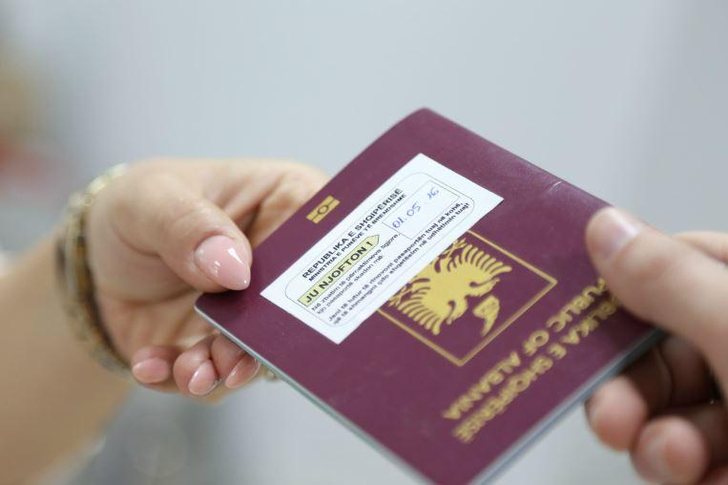
The state-owned ID card and passport production company, I...
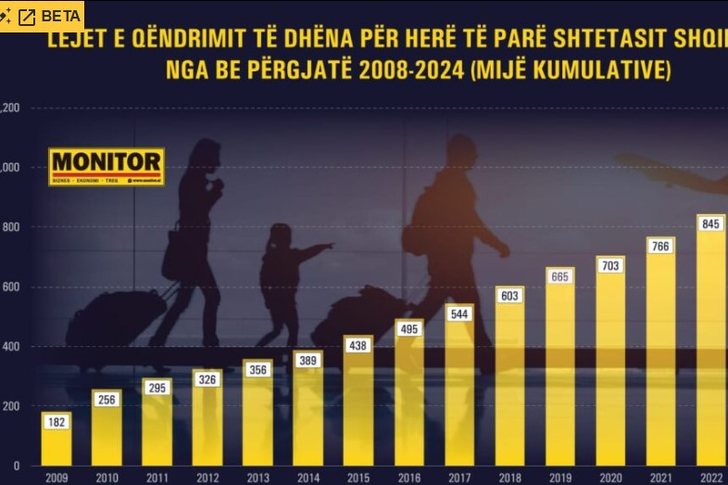
From 2008 to 2024, about 1 million Albanians received a re...

Over the past year, the economy further focused investment...
Today, in the foreign exchange market, one US dollar is bo...
In 2024, the average salary in the private sector was 22.7...
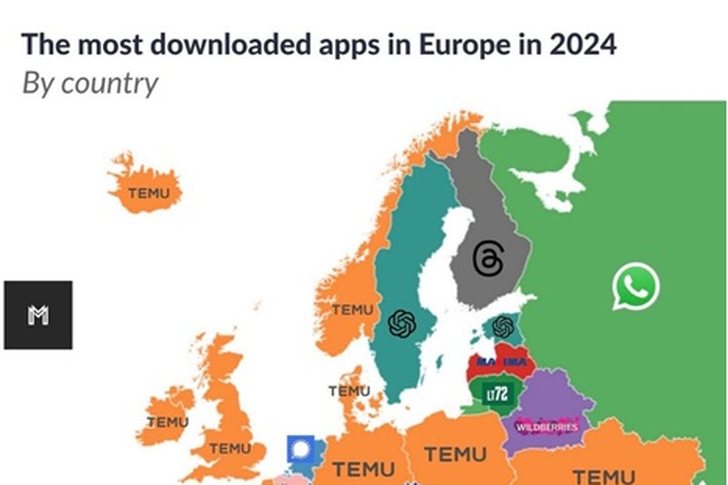
Albania followed the same trend as most European countries...
Today, in the foreign exchange market, one US dollar is bo...

Today, in the foreign exchange market, one US dollar is bo...

Communication services in Albania are more expensive compa...
Today, in the foreign exchange market, one US dollar is bo...
Today, in the foreign exchange market, one US dollar is bo...

Irfan Hysenbelliu claims to be a big businessman, an hones...

The murder of officer Enea Mekolli in the line of duty has...

The next case broadcast on the show "Stop", this Thursday,...
The case published this Thursday, June 4, on the show "Sto...

The Special Board of Appeal (KPA) decided this Monday ...

The KPA vetting decided this Thursday to dismiss the p...

Suela Salavaçi, a prosecutor in the Prosecutor's Offic...

The Special Board of Appeal reinstated the prosecutor ...

An accident was recorded a few minutes ago on the Pogradec...
Following the cooperation of Interpol Tirana with Interpol...

An accident occurred this Saturday morning at Shkëmbi i Ka...

A TNT explosion occurred in Lezha in the early hours of th...
Albanians are officially the hardest working people in Eur...

This Saturday will be characterized by mostly clear weathe...
Today our country will be affected by stable weather condi...

For many children and teenagers, the long summer holidays ...

US Defense Secretary Pete Hegseth declared that Europe is ...

A federal judge in Rhode Island struck down a Trump admini...

Thousands of Kosovo citizens living abroad are voting phys...

Pope Leo XIV arrived in Madrid this Saturday, where he beg...

Korça is ready to open the summer season with one of the c...

Two years after his passing, the renowned Korçë poet Skënd...

The Ethnographic Museum of Berat has opened its doors to v...
The story of Harilla Bakalli is one of the most chilling t...

The Transparency Board, in today's meeting, decided to red...

This Saturday, one US dollar is bought for 81.4 lek and so...

Despite years of efforts at regional cooperation and free ...

Albania is the country with the highest level of severe ma...