


VIDEO-The car crashes on the Tirana-Durrës highway
A vehicle on the Tirana-Durres highway was engulfed in fla...


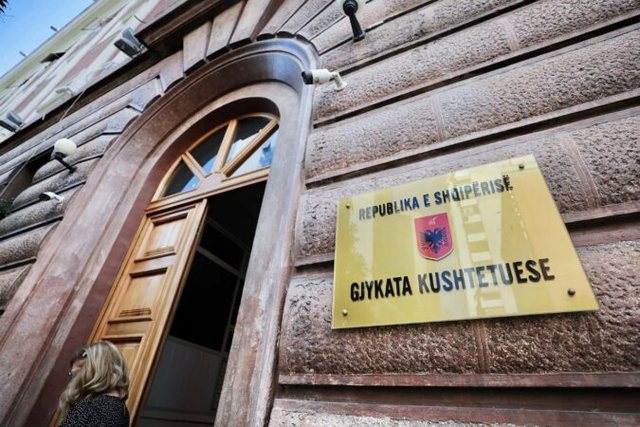
In Albania, the resignation of the member of the Constitutional Court, Elsa Toska, on September 19, and the announcement of a vacancy for her replacement, with a mandate until 2028, risks leading to a violation of the Constitution, which provides (Article 125, point 6) that "the composition of the Court is renewed every three years with one third of it, according to the procedure established by law". The scheme provided for in the law on the organization and operation of the Constitutional Court, in the part of transitional provisions, (Article 86, point 4) determines the way in which the renewal of judges would be done until 2022, to guarantee, as of vitt 2025, 2028 and 2031, the change could be implemented, with three members, one for each naming body (President, Parliament, Supreme Court). A scheme which reflected the transitional provisions of the Constitution (Article 179, point 3), amended in the framework of the reform in Justice, which provided for the limitation of the mandate.
Even the Opinion of the Venice Commission, of June 2020, regarding the appointment of members of the Constitutional Court, gives the same reading to the scheme, when in point 18 it is stated that "in this way, point 3 of article 179, intended to recreate three groups with from three judges whose mandate would end in the same year: three in 2025, three in 2028 and three in 2031".
For the group of three members whose mandate should end in 2025, the President of the Republic, in the decree of December 28, 2020, appointing the member Sonila Bejtja, determines that it is a temporary vacancy (the place left by the member Sokol Berberi, whose mandate ended in 2016).
In the same way, the Supreme Court, on January 16, 2023, even clearly stated that it decided "the election of Ms. Holta Zaçaj, member of the Constitutional Court with a partial mandate, until the renewal in 2025". Ms. Zaçaj, currently President of the Constitutional Court, took over the mandate following Ms. Vitore Tushe, which ended in 2017. If it had been 9 years, it would have ended in 2026, but to guarantee the rotation scheme with three members in 2025, this term was limited to one year.
Surprisingly, earlier, in 2019, the Parliament, the third body of the denomination, turns out to have been the one that did not respect the scheme, defined by the Constitution and the Law of the Constitutional Court, when for the subsequent mandate of Vladimir Kristos, concluded in in 2016, appointed, on November 11, 2019, Mrs. Elsa Toska for a full term. "Ms. Elsa Toska is elected a member of the Constitutional Court, for the full vacancy announced by the Parliament of Albania on 12.02.2018," reads the decision signed by the then president Gramoz Ruci. On the website of the parliament, there are no accompanying documents, nor the review report in the Commission. The Voice of America officially requested this documentation from the parliament, but did not receive any response, and in violation of the 15-day deadline, within which the authorities must provide information.
In the decision of the Constitutional Court, dated September 23, 2024, for the declaration of the mandate of Mrs. Toska, the decision of the parliament, which had given her a full mandate, is taken as a reference. However, the decision that is sent to the parliament as the body of the denomination, does not determine when its mandate ended.
A week later, the parliament, through Speaker Elisa Spiropali, announces the holiday. Referring to the decision of November 2019, in the notification for applications, it is determined that the mandate for those interested is until November 14, 2028.
From a formal point of view, Mrs. Spiropali seems to have followed the previous procedure of the parliament. But constitutional experts contacted by the Voice of America explained that Mrs. Toska's resignation was a good opportunity to correct the previous mistake, also because the composition of the Constitutional Court is renewed every three years, with a third of it, according to defining the Constitution itself, prevails over any other act.
Practically, by following this path, the renewal according to the provisions of Article 125, point 6 of the Constitution, is clearly violated. In 2025, 2 members will have to leave, while in 2028, four members. And such a thing will be inherited even afterwards, eventually ruining the whole scheme.
The Voice of America officially addressed the parliament, asking for the legal evaluation on the basis of which President Spiropali announced the vacancy until 2028, and if it was considered, the fact that such a thing contradicted the definition of the Constitution for the renewal of Court, as well as the scheme that was in force when Ms. Toska was appointed. The request to the parliament is dated October 8. Although the mandatory deadline for the institutions to provide the requested information is 15 days, there is still no response from the parliament today.
In contrast to the parliament, the Supreme Court, another nominating body for members of the Constitutional Court, in response to the request of the Voice of America, for an assessment of the importance of renewal, states that "this process is as important as it is binding, both for the Supreme Court and for the other two institutions", the parliament and the president. The Supreme Court further emphasizes that "due to the importance of the renewal of the Constitutional Court, on an ongoing basis, once every three years by one third of its members, the constitutional amendments of 2016, specifically, Article 179 have provided for a clear scheme for its implementation...", and that this constitutional regulation is further clarified in the organic law of the Constitutional Court, "where in Article 86 the scheme for carrying out the renewal for the transitional phase (until 2022) is provided ), while after this period, every three years (year 2025, 2028 and following) the renewal returns to normal".
The Supreme Court specifies that "as a naming body, it has the constitutional and legal obligation to adhere strictly to the rules, which serve a transparent and comprehensive process, with the aim of timely fulfillment of the constitutional standard of renewing the composition of the Court Constitutional, every three years, in one third of its judges".
For an assessment of the created situation, the Voice of America officially addressed the Constitutional Court, but the answer by phone was that the members of the Court are not allowed to make interpretations of the constitution, and that the only references are the two articles of the Constitution, that 125, point 3 "Judges of the Constitutional Court remain in office for 9 years, without the right of re-appointment", and article 129 according to which "The Judge of the Constitutional Court begins his duty after taking the oath before the President of the Republic". However, the case of Mrs. Toska is included in the scheme provided for the election of members of the Court until 2022, provided for in the transitional provisions of the Constitution./ VOA

A vehicle on the Tirana-Durres highway was engulfed in fla...

The ship with 2100 tons of hazardous waste is anchored in ...
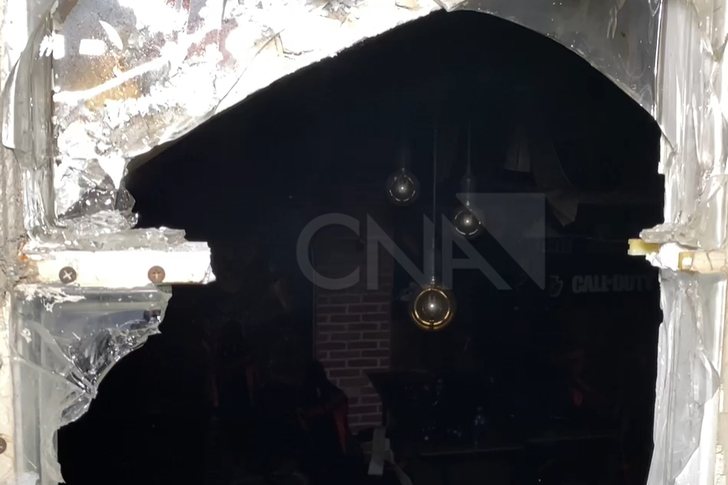
An Internet cafe bar in Pogradec was engulfed in flames. ...
A building in Lezha was engulfed in flames. Residents in a...

In Albania, a ship loaded with 2100 tons of industrial was...
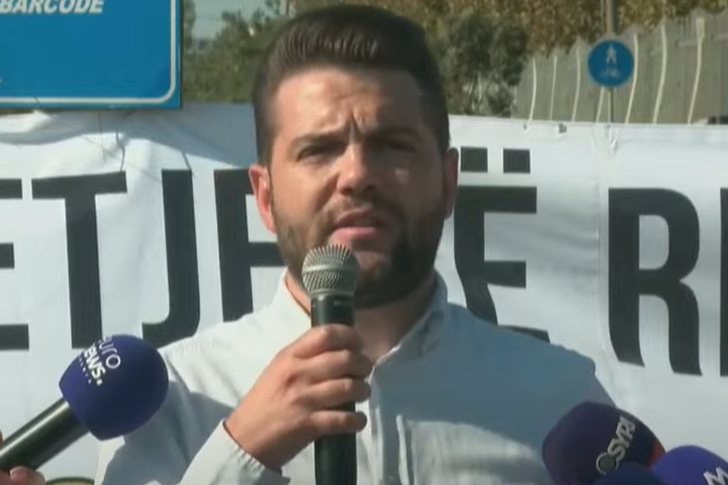
The member of the Presidency of the DP Grigels Muçollari f...
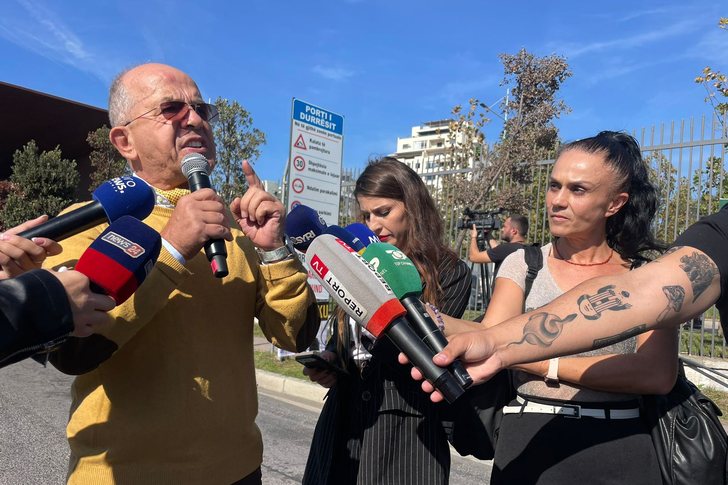
Environmentalist Sazan Guri was present at the protest tak...

The Special Prosecutor's Office against Corruption and Org...

The Minister of Health and Social Protection, Albana Koçiu...

Clashes were recorded at Prime Minister Edi Rama's meeting...
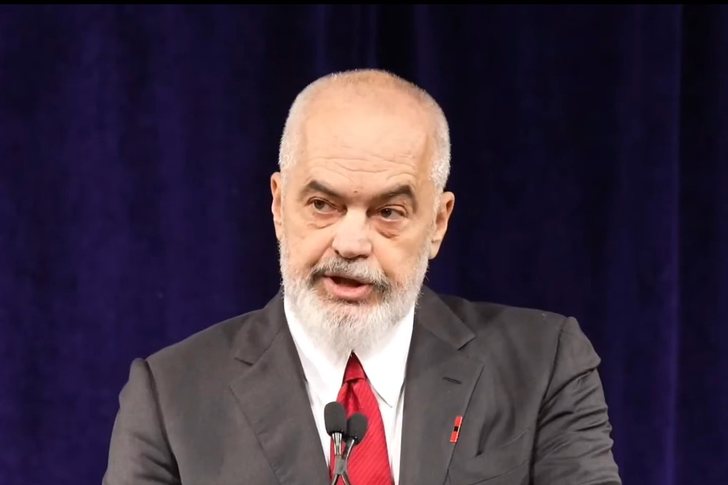
Prime Minister Edi Rama, at the beginning of his speec...

A detail was noticed in Prime Minister Edi Rama's meeting ...

The Minister of Hajj and Umrah, Dr. Taufik al-Rabiah, ...

Wineries had more tourists, with high interest in tasting ...

At 11:00 in New York, Prime Minister Edi Rama will hold a ...

The Special Prosecutor's Office completed the prelimin...

The icon of American conservatism, journalist and comm...

On Tuesday, August 6, sisters Antonela and Mariela Ber...
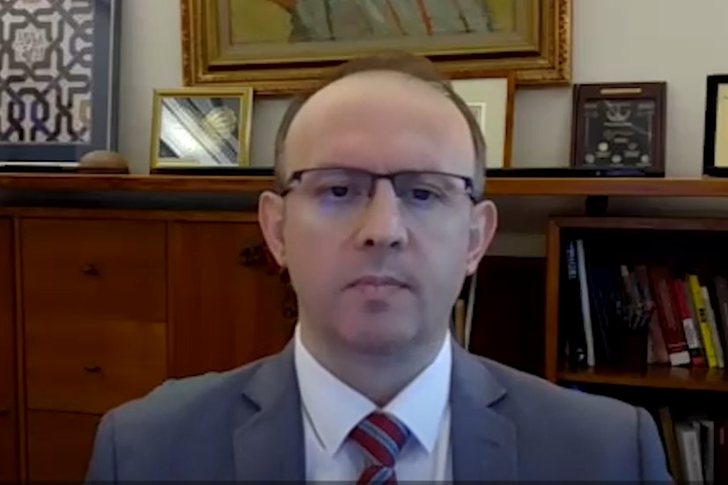
Afrim Gashi, the speaker of the Assembly of North Mace...
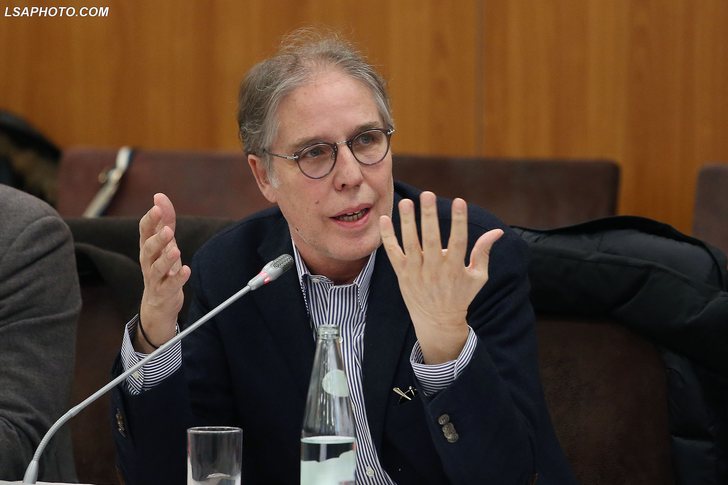
It is not unexpected that Carlo Bollino comes out and ...
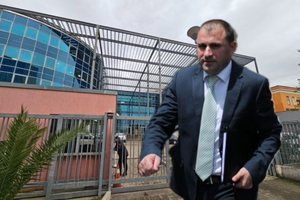
Dritan Prençi is the SPAK prosecutor who is sleeping on th...

The in-depth investigations that SPAK conducted into Ajola...
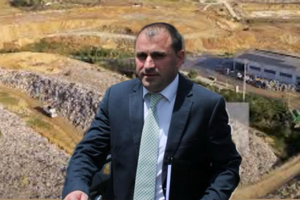
SPAK's standards, the way it investigates, how it secures ...

Irfan Hysenbelliu claims to be a big businessman, an hones...

The Special Board of Appeal (KPA) decided this Monday ...

The KPA vetting decided this Thursday to dismiss the p...

Suela Salavaçi, a prosecutor in the Prosecutor's Offic...

The Special Board of Appeal reinstated the prosecutor ...

A 33-year-old Albanian citizen was arrested in Italy after...

One of the perpetrators of the explosion that occurred yes...

A case of heroin trafficking from North Macedonia to Alban...
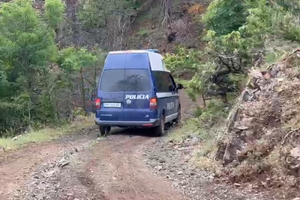
Details have been revealed from the investigation file for...

On Thursday, our country will be affected by relatively un...

Albania is facing a deep demographic crisis where official...
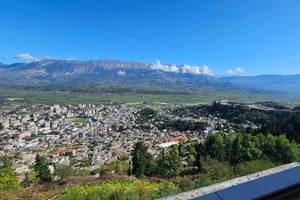
This Wednesday, our country will be affected by relatively...

The UN's World Meteorological Organization now warns that ...

Serbian President Aleksandar Vučić said he was considering...

An incident with hazardous materials put the Pentagon on l...

Explosions have been heard near the Iranian city of Sirik,...

The Basic Court in Pristina has lifted the one-month deten...

At the Museum of Fine Arts in Chambéry, France, an exhibit...

Korça has transformed this weekend into the capital of cel...

Korça is ready to open the summer season with one of the c...
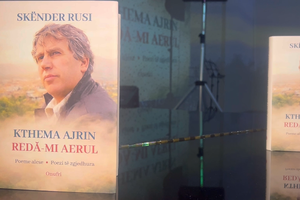
Two years after his passing, the renowned Korçë poet Skënd...

Businesses reduced their borrowing abroad last year. Bank ...

Payments and withdrawals in online sports betting will be ...

This Thursday, one US dollar is bought for 81.6 lek and so...

The first three months of this year have brought a record ...