


Foreign currencies fluctuate/ How much are the dollar, euro and pound exchanged for today?
Today, in the foreign exchange market, one US dollar will ...


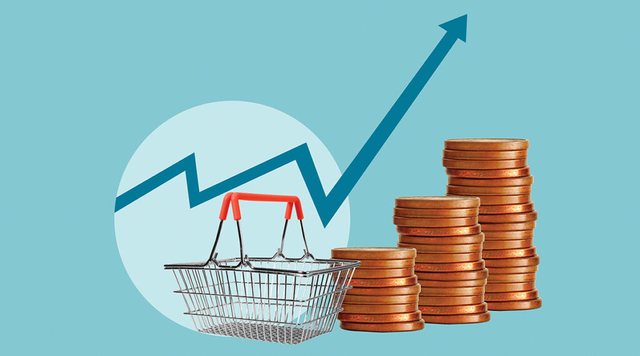
The cost of living for the middle class has increased more than income in the past year, the results of a “Monitor” survey of 271 participants, 95% of whom were educated with high salaries, showed. 49% claimed that the cost of living had worsened compared to the beginning of 2024. About 70% claimed that the largest part of their monthly income went to buying food, followed by housing and health services. Dual employment, professional growth, emigration, cutting entertainment expenses, etc., are some of the responses to the rising cost of living. Tax cuts and wage increases, along with improved education and health, are suggested as solutions.
The increase in living costs from higher prices of food, rent, health and educational services over the last year has put the middle class in difficulty, according to a survey that "Monitor" conducted with 271 people in February-March 2025, where 95% of them had higher education and postgraduate studies.
The survey results showed that educated people (58% had a family income of over 100 thousand lek per month) spend the majority of their monthly expenses on food and shelter.
Nearly 49% said that living costs had worsened compared to the beginning of 2024, while 12% said their standard of living had improved, the rest were the same. Most said they had difficulty meeting their monthly needs for food and shelter.
To cope with the rising cost of living, a large proportion were working more than one job or had cut back on entertainment expenses, etc. Most believed that increasing wages and improving educational and health services, along with reducing taxes, would help them.
Comparing the data shows that the cost of living in the capital has increased more than the income of the middle class from wages and business.
The prices of rent, housing, food and educational services have increased more than their salaries. Of the 271 people who completed the survey, 95% of them lived in Tirana and 75% of them were in the 35-54 age group. The majority of participants, 66%, were married.
The "Monitor" survey was with a random sample and did not aim for scientific findings, but rather "photographed" the financial situation of the well-educated middle class with above-average salaries in Tirana.
After the Covid-19 pandemic, prices of goods and services mainly in Tirana became more expensive. Demographic developments have increased pressure in the capital and, on the other hand, more and more young people are choosing to emigrate.
Businesses in the capital are suffering from a shortage of employees at a time when demand is increasing from the influx of foreign visitors. These developments have helped prices in Tirana rise faster than in the regions, but meanwhile wages have not increased enough to cover rising costs, survey participants claimed.
"I asked for a salary increase, but nothing. I try not to get sick and have my parents cook for me. I also try not to spend too much on my children, I don't take them to parks, we stay home on weekends," said one respondent.
Meeting monthly food needs is not only stressful for the poor, but also for the high-income earners with higher education and good salaries in the Albanian market.
Of the 271 survey participants, 70% of them claimed that the majority of their monthly income went to purchasing food.
58% of them claimed to have salaries over 100 thousand lek per month, a level higher than the average salary in the country. About 16% of them claimed to have salaries between 80-100 thousand lek per month, 18% received salaries between 50-80 thousand lek per month, 6% had salaries between 40-50 thousand lek per month and another part, 2.6%, had salaries lower than the minimum wage of 40 thousand lek per month.
Food prices in Albania always increase more than the general average. Our country is a net importer and consumption of a large part of goods is covered by imports. Last year, the average inflation in the country increased by 2.1%, while average food prices increased by 2.6%.
"I have reduced my outings, I buy food at cheaper prices, even though it is of poorer quality, I have reduced car trips and visits to relatives," commented one survey participant.
The increase in the cost of living, especially food, is exposing a large portion of citizens to food insecurity. To keep costs under control, they are looking for cheap purchases that are not very safe.
In the basket of goods for inflation, INSTAT estimates that food accounts for 40% of the monthly expenses of Albanian families. However, "Monitor" surveys have shown that food has a much higher weight in the budgets of pensioners and those on minimum wages.
The latest survey even showed that people with above-average incomes were unable to cover all their monthly expenses with the foods they wanted, such as bananas and other fruits.
"We have reduced unnecessary purchases, we don't buy exotic fruits or too many fruits. Everything we don't need, we don't buy now. Scary prices," said another respondent.
Now, supermarket corners with offers are the most frequented. Managers say that previously, offers were preferred by a quarter of shoppers, but now this percentage has increased. Consumers have become more attentive to the opportunities offered by prices, often changing the place of supply.
"I stock up on food at the cheapest price (when I find it). I only shop for fruits and vegetables, wherever there are discounts," said another participant.
Consumers have reduced the quantity of purchases due to price increases. For example, if previously supplies for basket items were made in several kilograms, now supplies in quantity have decreased, retailers claim.
Supplies that were purchased for a long time have been avoided. The biggest change in shopping habits is occurring among the middle class, as above this level, consumers have maintained their approach unchanged.
The majority of survey participants, over 44%, claimed to spend over 50 thousand lek per month on food, 35% spent between 30-50 thousand lek per month, 20% spent 10-30 thousand lek per month and 0.4%, less than 10 thousand lek per month.
For middle-class families, in 2025, the costs of housing, healthcare, and education are weighing on their budgets.
More than 14% of survey participants stated that their main monthly expense was housing (loan or rent), for 4.4% of respondents, the main expense was health services; for 3.7% it was educational services, and for 5.5% of participants, the main monthly expense was related to other needs.
About 41% of participants had no housing expenses such as rent or mortgage, but the rest are facing increasing costs in this regard.
27% of respondents claimed that they had monthly expenses over 40 thousand lek for loan repayments or monthly rent, 20% claimed that housing expenses were between 20-40 thousand lek per month, 6.6% claimed that they spent between 10-20 thousand lek per month on housing and 5.1%, less than 10 thousand lek per month.
"I need to expand my housing, but the prices are so high that they force me to continue living in a small apartment, even with teenage children in my care," said one survey participant.
"I am 31 years old and I work in a very good department in the banking sector. My income is over 100,000 lek. The apartment I live in (2+1, 87 m²) was purchased from my parents' savings and my own savings in 2020.
The value of this apartment has increased today by up to 125% of the sale price, but without a reasonable increase, either in real demand for housing, such as in improving the area around the apartment, or an exponential increase within these 5 years in construction costs (I know because I was the 'head of audit' in a construction company).
"To conclude the reasoning, I think that this increase in the value of my property is just a piece in the mosaic of the real estate bubble in our country," said a participant in the "Monitor" survey.
The increase in the share of education expenditures is more visible among respondents living in Tirana.
For 8% of survey participants, education and health account for the majority of monthly expenses.
For 4.4% of the participants, health services were the main expense in their families, while for 3.7% of the respondents, education. People who have pensioners in their families face large monthly expenses for examinations and medicines.
Other data shows that year after year, the burden of disease in the population is increasing and young people are being affected by non-chronic diseases.
Alongside these developments, people are becoming increasingly health conscious, putting more funds at their disposal. “I buy some of my clothes and medicines abroad. They are more expensive here,” said one survey participant.
Another commented that "we are reducing our spending on food and health services, we sometimes take half of our medications when the need arises." While another claimed that "I take care not to get sick to reduce my medical expenses."
35% of people who completed the survey claimed that they spend 5-10 thousand lek per month on health (visits, treatments, medicines), 24% spend less than 5 thousand lek, 22% spend between 10-20 thousand lek per month, 10.7% spend more than 20 thousand lek per month and 9.2% do not spend, because they cannot afford it.
For families with children, it seems that the main expenses are those for education, especially for families that send their children to private schools.
One respondent said that "I cover education expenses through loan financing and have completely given up on entertainment."
Of the 271 survey participants, 25% claimed to spend over 20 thousand lek per month on educational services; 16% between 5-10 thousand lek per month; 14% less than 5 thousand lek and 32% claimed to not face any education expenses, as they do not have children or have completed their studies.
The increase in private school fees in Albania after the pandemic has been on a continuous upward trend.
Teachers in private schools, especially those with experience and high qualifications, demand competitive salaries, especially in a market where the emigration of professionals has created a shortage of specialists.
After the pandemic, some schools increased salaries to retain and attract quality staff, reflecting this in tuition fees.
Data shows that tuition fees have increased by at least 300 euros per year since the pandemic. The average monthly cost for a child in a private school is 600 euros – tuition, food, transportation, and after-school programs.
High fuel prices, toll fees, parking fees, and car service fees, along with water and electricity bills, are a significant part of the monthly costs of educated people who live mainly in Tirana.
45% of respondents claimed to spend 5-12 thousand lek per month on transportation services, 20% spend 15-30 thousand lek per month. 3.3% spend more than 30 thousand lek per month and 7.4% have eliminated expenses in this item due to impossibility.
Electricity and water bills account for a significant portion of monthly expenses. Over 38% of participants claimed to pay 10-15 thousand lek per month for water and electricity, 36% claimed to pay between 5-10 thousand lek per month, 18.5% claimed to pay bills between 15-20 thousand lek per month, 5.5% claimed to pay over 20 thousand lek per month and 1.1%.
When it comes to rising costs, the biggest spending cuts fall on entertainment. One respondent said that “every day I try to save and reduce expenses as much as possible, giving up non-essentials, like entertainment.”
About 66% of participants claimed to spend less than 10 thousand lek per month on entertainment. 10.3% claimed to have completely eliminated entertainment expenses because they cannot afford them.
About 15% claimed to spend between 10-15 thousand lek per month, 11% between 15-20 thousand lek per month, and only 8.5% more than 20 thousand lek per month.
A large portion of the middle class, over 41%, are unable to save due to the inability to meet current needs. 28% of participants stated that they cannot save due to inability, while 14% stated that not only do they not save but they are also in debt.
A significant portion, around 17%, claimed to save over 30 thousand lek per month, 15% claimed to save between 10-20 thousand lek per month, 14% save less than 10 thousand lek per month, 7% claimed to save between 25-30 thousand lek per month and 4.8%, between 20-25 thousand lek per month.
About half of the survey participants claimed that their standard of living has worsened in the last year, 39% claimed that it has remained the same, and only 12% claimed that it has improved.
This finding suggests that wealth is not being distributed evenly. As the economy grows, the benefits are spread to a few people, while others are further burdened by rising prices for goods and services.
59% claimed that monthly income is not enough to cover basic needs and 41% claimed that it was sufficient.
About 25% of participants said they had difficulty meeting all monthly food needs, 25% had difficulty with housing expenses, 5% had difficulty affording children's education, 5% health needs, and another 41% said they could not afford unexpected expenses, travel, entertainment, clothing, vacations, large purchases, loan installments, etc.
Dual employment, cutting entertainment expenses, shopping on offers, professional growth, emigration, etc., are some of the measures that the educated middle class has taken in response to the higher costs of living.
One respondent commented that “I have not taken any action at the moment, but I am considering another job or leaving the country.” Another said that “I cannot work anymore because I want to spend more time with my children.”
A significant majority claimed to be working two or three jobs to cope with rising costs. “I work three jobs,” said one survey participant.
Another said "double employment and tax evasion. The state takes you and gives you nothing in return. It's bad for future pensions, but we're dying today. What do I need tomorrow, at least we can take the children abroad, so they can see a future," commented another.
Others are cutting back on spending to cope with rising costs. “I only buy the essentials and basics,” commented one participant.
Another said that "every day I try harder to save and reduce expenses to the maximum, giving up unnecessary expenses."
One participant referred to “skimping on the quantity and quality of food and reducing the value of entertainment.” “By never taking vacations,” commented another.
Another part claimed that they are considering emigrating precisely because of the high cost of living. "I am working in a European country but re-registered in Albania. And I am thinking of moving permanently from Albania."
Most survey participants claim that wage increases, tax cuts, and improved health and education services ease the burden of living costs for the educated middle class.
Respondents gave more than one suggestion for easing costs, but 79% (214 people) think that the main tool is increasing wages.
Of the 271 respondents, 150 of them think that tax cuts are an efficient tool, and 185 claimed that improving educational and health services leads to cost relief.
82 people think that one of the three solutions is financial support for low-income families and 62 participants consider electricity and water subsidies as an important tool.
One participant suggested that "we need social policies, so that our children don't grow up like us with the stress of how we will get through the month. We need to think about the future, eliminate jobs with friends like teachers, who directly affect the growth of generations. The police must be incorruptible."
Another commented that "there should be very strict controls on the quality of foods that are marketed so that citizens do not get sick but are healthier. This way, the costs of the healthcare system will be reduced."
Another participant referred to "the fight against corruption/informality, control over profit rates for businesses, blocking the use of money from illegal activities are measures that ease the costs of living."
Another suggested "social support for children (monthly) and improving health services in the state (time) so that it is not spent on private hospitals."
"Proposing supportive policies for housing young families through soft loans, low-cost housing, subsidies," said another.
One participant suggested “reducing VAT on basic foods because sometimes I go to Kosovo to get supplies and I'm telling you they are at least 20-30% cheaper than food here”.
Another said, "I live in Tirana. The increase in apartment prices is crazy. The state should find ways to stop this pace."
The state should take initiatives to allow young people (students, high school students) to work 'part time' through fiscal incentives for businesses that employ them."/ Monitor Magazine

Today, in the foreign exchange market, one US dollar will ...

Today, in the foreign exchange market, one US dollar will ...
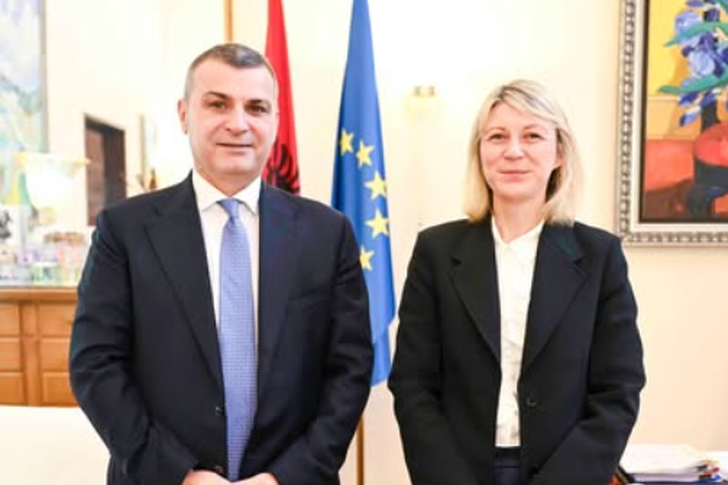
The Governor of the Bank of Albania, Gent Sejko, received ...

The Bank of Albania has published in the Official Gazette ...
Today, in the foreign exchange market, one US dollar will ...

The Bank of Albania has published in the Official Gazette ...
Today, in the foreign exchange market, one US dollar will ...
The European Commission has published its spring forecasts...
Applications by Albanian citizens for temporary protection...
Today, in the foreign exchange market, one US dollar will ...

The country's economy is growing faster than the number of...
Today, in the foreign exchange market, one US dollar will ...
With the Dollar's Fall, Europeans Have an Opportunity, The...

Today, in the foreign exchange market, one US dollar will ...
Today, in the foreign exchange market, one US dollar will ...

Today, in the foreign exchange market, one US dollar will ...

Today, in the foreign exchange market, one US dollar will ...
Today, in the foreign exchange market, one US dollar will ...
Today, in the foreign exchange market, one US dollar will ...
Today, in the foreign exchange market, one US dollar will ...
Irfan Hysenbelliu claims to be a big businessman, an hones...

The murder of officer Enea Mekolli in the line of duty has...
The next case broadcast on the show "Stop", this Thursday,...
The case published this Thursday, June 4, on the show "Sto...

The Special Board of Appeal (KPA) decided this Monday ...

The KPA vetting decided this Thursday to dismiss the p...

Suela Salavaçi, a prosecutor in the Prosecutor's Offic...

The Special Board of Appeal reinstated the prosecutor ...

A 38-year-old man was arrested today near the Kamza turnof...

A money changer in Durrës lost 60 thousand euros after bei...
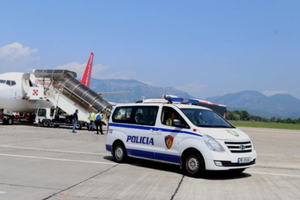
The 6 citizens captured in Dubai, members of criminal grou...
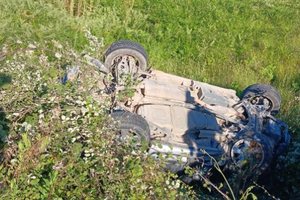
A serious accident occurred on the Kardhiq-Delvinë axis, i...

Today our country will be affected by stable weather condi...

For many children and teenagers, the long summer holidays ...
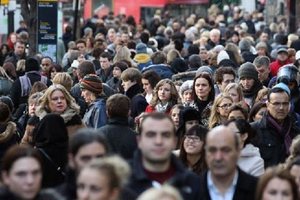
Albania is facing an unprecedented demographic transition,...

On Thursday, our country will be affected by unstable weat...
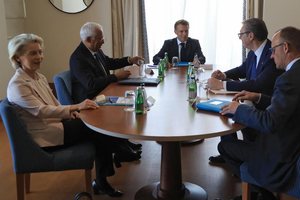
Leaders of the European Union and Western Balkan countries...
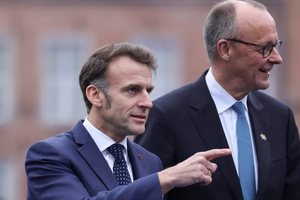
On the eve of the EU-Western Balkans summit, Germany and F...

Russian President Vladimir Putin said the war in Ukraine c...

An extraordinary story of survival has been recorded in Ne...

Korça is ready to open the summer season with one of the c...

Two years after his passing, the renowned Korçë poet Skënd...

The Ethnographic Museum of Berat has opened its doors to v...

The story of Harilla Bakalli is one of the most chilling t...
Despite years of efforts at regional cooperation and free ...
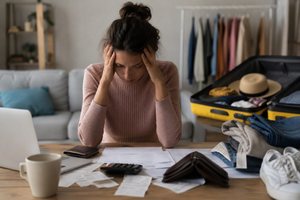
Albania is the country with the highest level of severe ma...

This Friday, one US dollar is bought for 81.3 lek and sold...
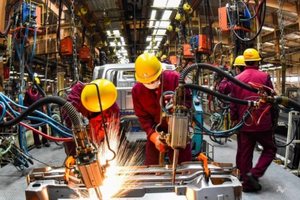
The government aims to transform the country's industrial ...