

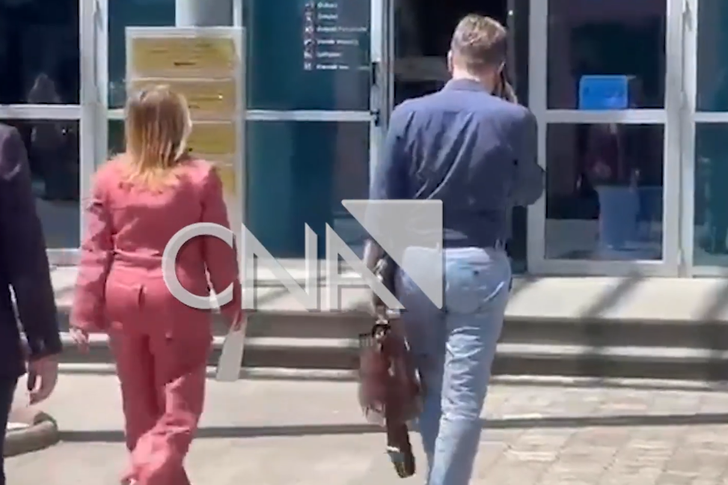
Video - The socialist mayor appears at the GJKKO
The Mayor of Roskovec, Majlinda Bufi, appeared before the ...


The obstacles that journalists and cameramen have encountered in Albania, due to the non-allowance of cameras in court hearings, has prompted some of the main television stations in Albania to turn to institutions.
Through a letter addressed to the High Judicial Council and for information, the High Court, the Court of Appeal of General Jurisdiction, Tirana; the Administrative Court of Appeal, the Court of First Instance of General Jurisdiction, Tirana; the Administrative Court of First Instance, Tirana; the OSCE Representative on Freedom of the Media, Jan Braathu and the Council of Europe Office, Tirana, it is emphasized that this situation is becoming a cause for violation of the public's right to information.
Full letter
For your information:
Supreme Court
Court of Appeal of General Jurisdiction, Tirana
Administrative Court of Appeal
Court of First Instance of General Jurisdiction, Tirana
Administrative Court of First Instance, Tirana
OSCE Representative on Freedom of the Media, Jan Braathu
Council of Europe Office, Tirana
Honorable President of the High Judicial Council,
Dear members,
We are writing to express our concern about the recent situations regarding the presence of cameras during court proceedings.
Since 2023, the Supreme Court of Kosovo has adopted the “Standard Guide to Court Relations with the Public and the Media”. Article 14, point 7 provides that the introductory part of the session “is recordable and broadcast without any restrictions”. The fact is that this provision has been openly ignored until now, and was only implemented after recently, some defendants, important public figures, requested the presence of cameras.
Article 13, point 1, of the HLGJ Guidelines stipulates that “court hearings are open to the public and the media.” However, this provision remains limited in practice.
According to the instruction, the media is obliged to submit a request for its presence with a camera 24 hours before each session. This automatically means that the judge should also be obliged to evaluate it each time it is presented, and to express a reasoned decision to reject it (so far every request has been rejected). But in practice we are encountering cases where the rejection refers to decisions made several months ago.
Article 2, point 1, of your Instruction provides that “The relationship of the court with the public and the media is based on the principles of equal access to the courts, the public nature of the judicial process, the maximum openness of judicial activity to society through communication with the public, the right to information, the protection of human dignity, privacy and personal data, reputation, and the presumption of innocence.”
In the balance of these principles, clearly, the right to information, sanctioned in the Constitution, seems to be ranked last, by the judicial bodies, without any attempt to find a proper balance with the other principles. In practice, we are faced with the reference of the violation of other principles, to hinder the right to information.
Your provision in Article 14, point 8/b, for rejecting the request “when one of the subjects in the trial does not want the session to be recorded”, is being widely used as a reason for not allowing the presence of cameras, although the same article, in point 6/b, recognizes the right of the judge “to allow or prohibit the partial recording of the session”, i.e. to apply this right when it is the turn of the defendant’s testimony who does not want to be recorded, and not to prohibit the recording of the entire session. Doesn’t this case constitute a violation of the rights of the other parties in the trial who request recording?
Furthermore, Article 14, point 8/b, expressly stipulates that the lawyer and the prosecutor cannot object to requests for recording the hearing. Yet we are witnessing cases where they have also expressed themselves in the hearing.
Honorable members of the Supreme Court of Kosovo,
Public court hearings cannot only mean the public in the courtroom. Otherwise, this notion would be automatically limited, if only due to the physical conditions of the environment where the process takes place. The media are what serve in this case, so that this notion includes the general interested public.
This role of the media becomes all the more important when none of the Albanian courts offers a central audiovisual broadcasting system. Even audio recording is offered, surprisingly, only to interested parties in the process, while journalists are not even allowed to do it themselves in the courtroom. A minimal requirement that would only reinforce the guarantees for a faithful reflection of the statements of the parties in a judicial process. Audio recording of court sessions through a tape recorder, which every journalist has always carried with him, has been a practice implemented for years by all Albanian journalists, but which surprisingly has now been banned, along with video recordings.
The right to information and public hearings, as provided in principle and in the KLGJ Guidelines, represent a rule. Unfortunately, experience to date shows that they are being treated in an inverted manner, as an "exception to the rule".
Among the obstacles that burden journalists' daily work in covering court hearings, we must also mention the prohibition of the right to study court files, now also available in digital form. Unlike what happens in European countries, journalists do not even have the right to read the court files that are publicly discussed during the hearings. The only "papers" that journalists have at their disposal today are those that are made available in a very selective manner by one of the parties to the trial.
In this situation, we request the intervention of the Supreme Court of Justice as soon as possible, so that a solution can be found that does not violate the right to information. The Supreme Court of Justice can provide a more detailed interpretation, which would allow the media to carry out their mission without hindrance, narrowing the discretionary space for refusing their requests to follow court hearings and enabling reporting to public opinion with maximum accuracy, as can only be guaranteed through audio and video recordings. /CNA

The Mayor of Roskovec, Majlinda Bufi, appeared before the ...
The National Bureau of Investigation landed in Devoll toda...
Minister of Justice, Toni Gogu, in a statement to the medi...
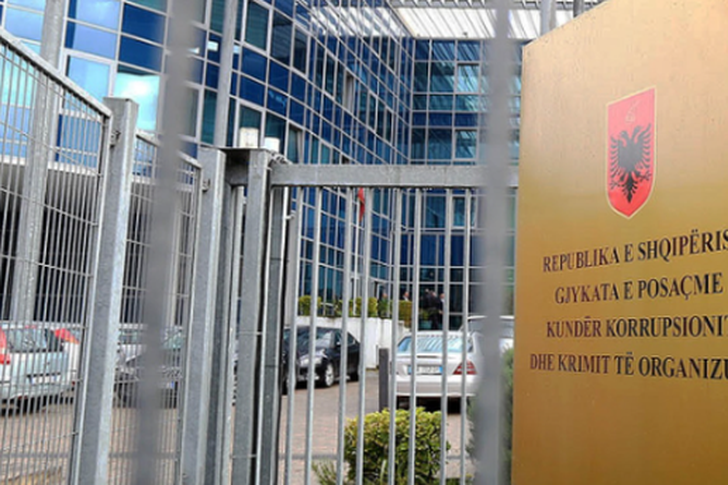
The Special Court of Appeal has decided to reject the requ...
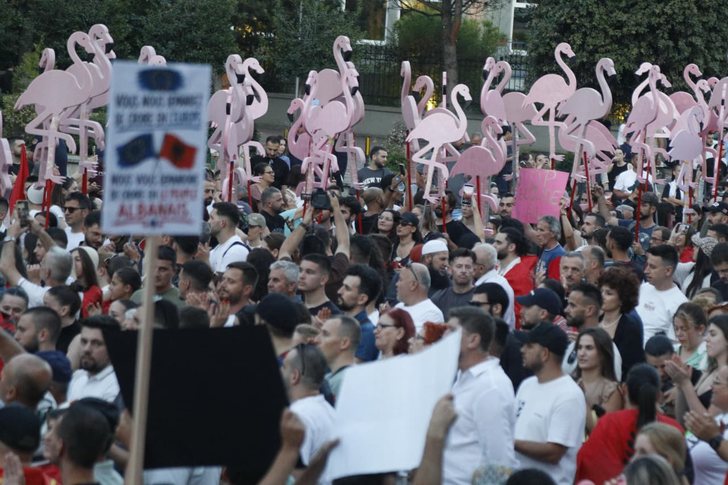
The 18th day of the protest in the capital took place this...
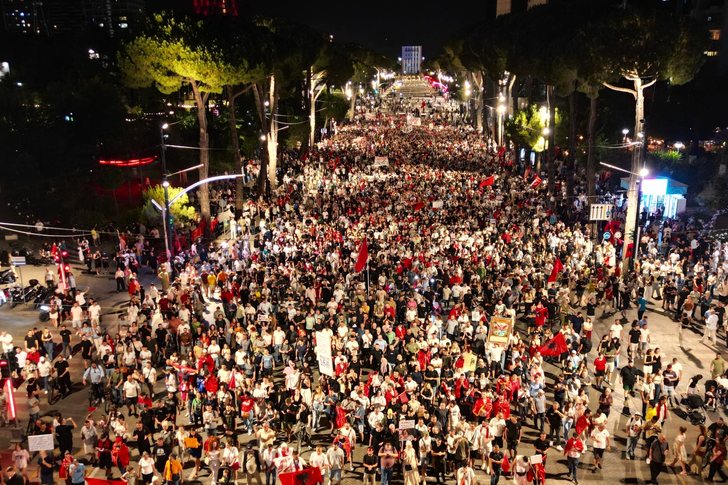
The protest held in front of the Prime Minister's Office b...
DP leadership member Grigels Muçollari has called the prot...
Gazetarja Anila Basha ka qenë e ftuara e radhës në podcast...
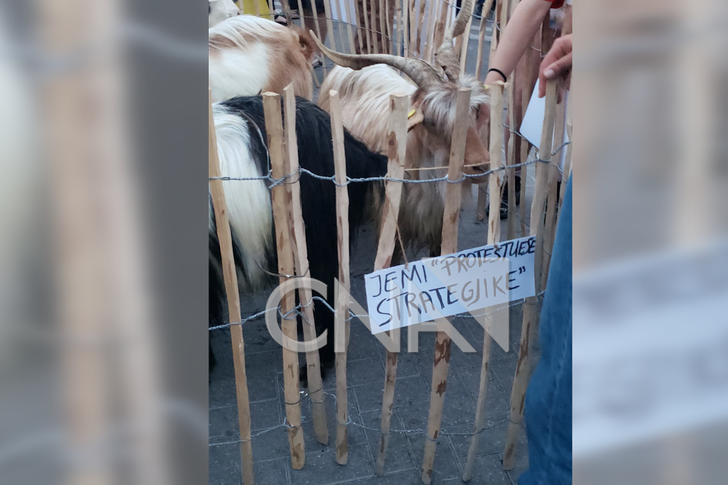
Today's protest was not only attended by citizens. Animals...
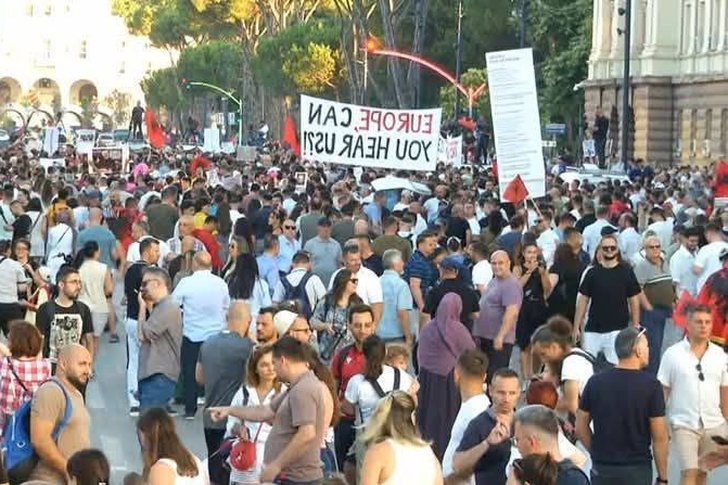
Albanian academics abroad have expressed support for the p...

Protesters continue to convey their ironic messages agains...
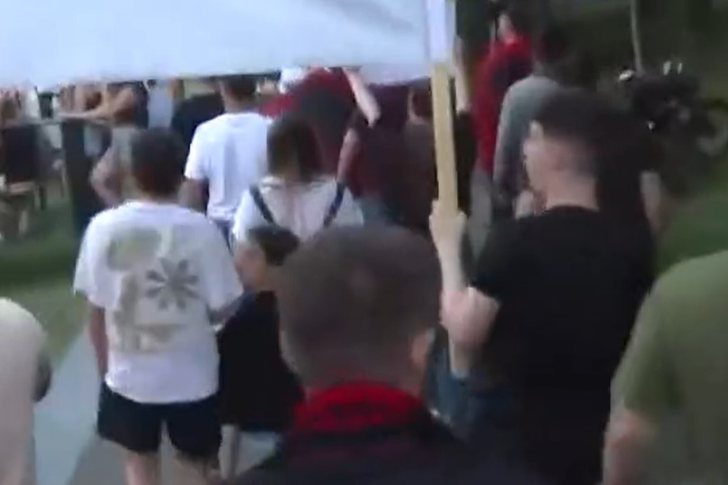
Today is the 18th protest against the government and Prime...
Albanian academics abroad have expressed their support for...
The Chairwoman of the Committee on Culture, Tourism and Di...
The European Parliament approved this Wednesday the progre...
Shqipëria është zgjedhur anëtare e Komitetit Ndërqeveritar...
The Appeal Court of Kosovo has dismissed the defamation la...
DP MP Belind Këlliçi has published the messages that a cit...
Prime Minister Edi Rama reacted to the debate on the Vjosa...
The prestigious media outlet "The Economist" has written a...
Erion Isufi is the man known in the media as Lulzim Basha'...
There have been 12 days of protests in the capital, which ...
Dritan Prençi is the SPAK prosecutor who is sleeping on th...
The in-depth investigations that SPAK conducted into Ajola...

The Special Board of Appeal (KPA) decided this Monday ...

The KPA vetting decided this Thursday to dismiss the p...

Suela Salavaçi, a prosecutor in the Prosecutor's Offic...

The Special Board of Appeal reinstated the prosecutor ...
A road accident occurred this Thursday afternoon in the vi...
A debate that began after the publication of a video on so...
A serious incident occurred this Thursday on the "Tirana-E...
23 protesters are under investigation by the police for co...

On Thursday, our country will be affected by stable weathe...

On Wednesday, our country will be affected by relatively s...
Meteorologist Tanja Porja shared some predictions today re...
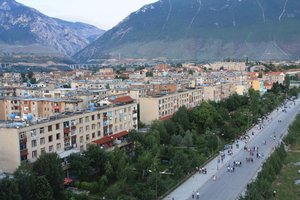
The large regions of Northern Albania are experiencing a s...
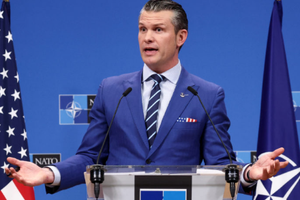
US Secretary of Defense Pete Hegseth was present this Thur...
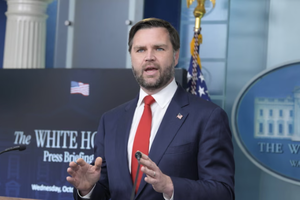
US Vice President JD Vance defended President Donald Trump...

US President Donald Trump has rejected criticism that he h...

Foreign media have published close-up images of the US-Ira...
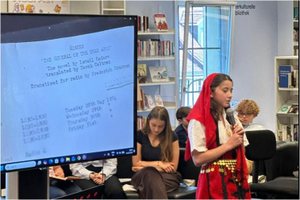
The Albanian Embassy in Switzerland has organized an eveni...
This Wednesday, the prominent actor of Albanian cinema, Gj...
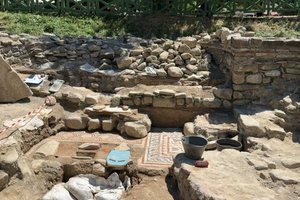
Several archaeological excavations conducted during this s...
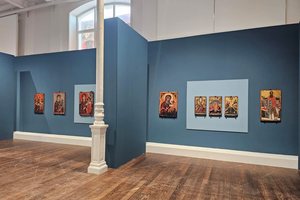
At the Museum of Fine Arts in Chambéry, France, an exhibit...

A new draft law submitted for public consultation by the M...

While budget revenues are being collected at enviable rate...

This Thursday, one US dollar is bought for 81.5 lek and so...
Net electricity production in the country reached 4.4 mill...