


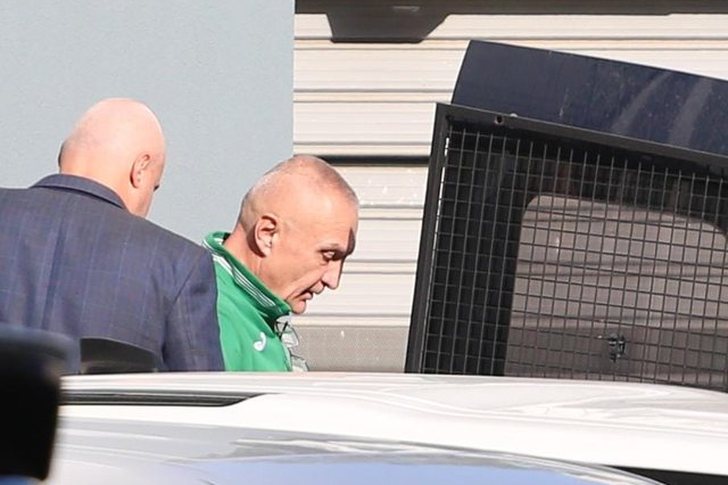
Requested the revocation of the measure/ The appeal of the GJKKO "overthrows" Meta
The appeal of the GJKKO has rejected the request of the le...

Kryepiskopi i Tiranës, Durrësit dhe gjithë Shqipërisë, Fortlumturia e Tij, Joani, ka zhvilluar një intervistë në emisionin “Opinion” me gazetarin Blendi Fevziu, ku ka folur për jetën e tij, rrugëtimin shpirtëror dhe përvojat që e kanë formuar si njeri dhe si klerik. Ai ka ndarë kujtime nga fëmijëria, periudhat e vështira të jetës, përballjet me sfidat e kohës, si dhe për mënyrën se si dashuria për Zotin dhe dëshira për dijen e udhëhoqën drejt besimit. Fortlumturia e Tij ka treguar se për herë të parë, kur ishte ende fëmijë, ishte futur në një kishë në qendër të Tiranës dhe se në momentin që hyri brenda, ndjeu sikur po hynte në një botë tjetër.

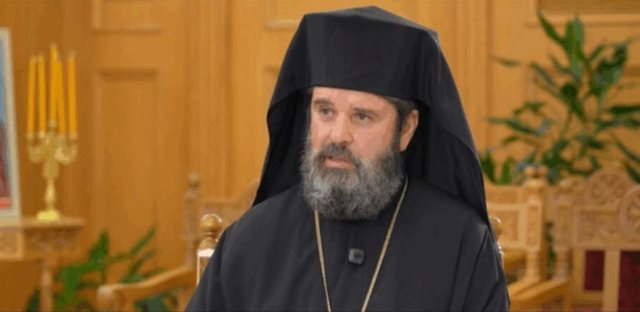
Fevziu : Your Holiness, thank you very much for the interview and best wishes for your election as head of the Albanian Autocephalous Orthodox Church.
Archbishop : Thank you too.

Fevziu : Your story is very interesting, it is the story, I would call it, of the first generation that emerged from a completely atheist state and dedicated itself to religious belief. You were born in a period when religion was forbidden in Albania, or you grew up because you were probably born in the only atheist country with a constitution in the world. What was life like at that time?
Kryepiscoi : Without a doubt, it was not an easy period. When we were young and children, we probably couldn't understand everything, the oppression, etc.
Fevziu : Did you have a memory of religious beliefs as a young child?
Archbishop : Very little.
Fevziu: Very little.
Archbishop: Very little. I remember once, a neighbor of ours took us, along with some other children, and it was Easter. Yes, I was very young. I was in the center.
Fevziu: I had a church where the Tirana Hotel is today.
Archbishop: Hotel Tirana. And that image of it has always stayed with me. Even now.
Fevziu: The mystical atmosphere of the church, which it should be for a child.
Archbishop: The incense, the icons, the clothing of the clergy, all of these created a kind of feeling as if you were entering a dimension of another world. That's what I've left of it. Just like we visited some buildings at that time that were a tekke, a mosque that could have been nearby, because I grew up and was born on "Qemal Stafa" street, not far from the Red School.
Fevziu: That it was a typical gathering of autochthonous tyrants with newcomers from Dibra and little by little with the Korça people.
Archbishop: From Përmet, they were.
Fevziu: Yes, it was a very interesting area.
Archbishop: Actually, when we lived there, we didn't notice it. Later, when we grew up a little more and went to other neighborhoods to look, we realized that it was really a completely special neighborhood.
Fevziu: Completely different from the rest of Tirana, it's very true.
Archbishop: And from the conversations that were taking place. The conversations, so to speak, were non-conformist. All the people expressed certain opinions. Even now when I think about it, I say, how come they weren't all arrested at that time?
Fevziu: Yes, it was a neighborhood that surprisingly was not affected by the terrible habit of eavesdropping, surveillance, and spying on others, and above all, it maintained a sense, I can't say dissident, because it's impossible to say, but a sense of realism in relation to what was happening, I believe it maintained.
Archbishop: And respect for others.
Fevziu: Yes. That was the main thing.
Archbishop: No, that's why there were no denunciations. It was a respect for every other family.
Fevziu: Even families knew each other and it wasn't easy for this spirit of espionage that communism introduced to happen within the family.
Archbishop: The street we lived in was a dead end. We weren't like many families, and I remember that none of the houses had a key to lock them.
Fevziu: Today it seems unbelievable when you say this.
Archbishop: We would enter each other's yards, play, and it seemed normal to us at the time. Because we had seen that. But it was a different spirit. That was what was different from many other neighborhoods, it was a different spirit.
Fevziu: And when you moved to another neighborhood in Tirana, did you feel this difference as you said a little while ago?
Archbishop: The difference was felt, but at that time we were even older. And those relationships had not been established as they were in that neighborhood there. But again, in all of Tirana I believe there was one, as in all of Albania, there was a different relationship with the neighbors, with the people around, but not as it was in this neighborhood.
Fevziu: Not with that trust and that closeness that you had.
Archbishop: Not with that spirit, the spirit you had in the old neighborhood. But in the meantime, you were at a different age, you had begun to understand more how the system worked, what was happening, what was not happening. That the child is always happy even in, yes it will be, even in hell as if it were, in a certain sense he tries to find happiness. Whereas when a person reaches adolescence, he begins to have his own dilemmas. But I was in that neighborhood until I was 20 years old. So...
Fevziu: So you received your full training.
Archbishop: More complete formation, because formation is a continuous process.
Fevziu: When did you really realize that you were living in a repressive system and feel within yourself the need for freedom?
Archbishop: I believe that perhaps...
Fevziu: Around what age?
Archbishop: From the fifth or sixth grade. From the conversations we heard from our parents, from the neighbors who would come and talk to our parents. And always, not because it was a, as you said, dissidence, it was being talked about.
Fevziu: Yes, it was a kind of resistance, but not dissidence, dissidence.
Archbishop: A kind of resistance, they talked, for example, about how times were different back then.
Fevziu: For the time of Zog.
Archbishop: They could have taken much greater liberties, and these were also transmitted to us.
Fevziu: Did Italian television have any influence on you at that time?
Archbishop: It hadn't started massively yet.
Fevziu : Massively.
Archbishop: They listened to some radio, for example, generally, as far as I remember, all those old people in that neighborhood there, always listened to a foreign radio. Often even "Voice of America" ??maybe in Albanian.
Fevziu: To get information.
Archbishop: To get more information. And intentionally or unintentionally, the information was passed on to us, because in a house when you talk, the children will also hear the conversation.
Fevziu: What did you know about religion at that time?
Archbishop: Not that we knew much, but human life is a process. I remember...
Fevziu : A process that never stops.
Archbishop: Yes. And I often say this, I grew up in a big family, eight children. And when I was little, I was very happy. Because not only were we eight children, the uncle there had six, the other neighbors as well. I felt very protected. And I believe that big families create a very good emotional state for children to grow up in, because they felt protected by brothers, sisters and you also become a social person, because you communicate with them. You communicate with them, even if you are arguing.
Fevziu: Yes, yes, every type of communication is included within all of them.
Archbishop: And today, sometimes it makes you feel sad because the children are isolated.
Fevziu: This is a global phenomenon.
Archbishop: World, it's very true. At that time I was very happy and I really wanted to read. Books without end.
Fevziu: Where did you find the books?
Archbishop: By learning Italian and French at a young age, young to say, not young, I had the opportunity to come into contact with books. There were…
Fevziu: I believe they were very old books, even before World War II, that were in family libraries.
Archbishop: Everyone. There were at least two people in that small alley where we were, Estref Frashëri, and one more…
Fevziu : Pipi, famous, yes.
Archbishop: The son of Estref was Pipi.
Fevziu: It was Pipi, yes.
Archbishop: There was also an Austrian engineer who had been in World War I.
Fevziu: And that he had remained in Albania.
Archbishop: He had stayed in Albania because he had married an Albanian from Korça named Fedra. These two had many books. And a large part of those books were given to me, another part I took, read, and returned. And at first, maybe I didn't understand that great desire I had to read. Much later, I realized that perhaps the human being is always a being in search, looking for something. The problem is often that we don't know what we are looking for.
Fevziu: A sophisticated human being, because there are human beings who have much smaller aspirations and desires.
Archbishop : But how will it be, every human being I believe has, I believe what is said in the holy scripture that is created according to the image of God, that every person has the image of God. Some more covered, some a little more purified, but everyone has it. And everywhere there is this desire to search. Perhaps the articulation of this thing is missing, but the deep desire is to search.

Fevziu : Yes, the desire to explore.
Archbishop : To find something.
Fevziu: The question is then, will you explore in shallower waters or go into the deeper waters of human being.
Archbishop: While looking for these books, I accidentally came across a Gospel. I was in my fourth year of high school. It was in French.
Fevziu : At the graduation ceremony.
Archbishop: At the matriculation.
Fevziu: A Gospel in French.
Archbishop: In French.
Fevziu: I guess you didn't know anything about the Gospel.
Archbishop: I knew something had been discussed, but not that we had read the book. And when I read it, I felt something different. I call it a kind of, like, psychological truth.
Fevziu: So, did the Gospel impress you when you read it?
Archbishop: I believed it was true. There are some truths, for example, the way it was written, the way the words were used, you are convinced that it is the truth. This also happens with people when we talk once. When someone talks and tells you something, sometimes the way they say it and the words they use, you are convinced that it is the truth. This happened there. And I also experienced something else that was very important. As you said, for example, when you are little you have this joy, when adolescence begins other problems begin.
Fevziu: Definitely.
Archbishop: You start to get more interested in issues, some book on philosophy, not these things, but slowly the joy goes away. When I read the Gospel, I felt that joy came back to me.
Fevziu: And at a very delicate age.
Archbishop: And the words I said in my mind, because I had no one to talk to. I thanked God for giving me back the joy of childhood.
Fevziu: What happened to you from the Gospel?
Archbishop: From the Gospel, from its reading.
Fevziu: However, religious literature has a kind of mysticism within it that is not easy to digest. Speaking of which, I have read religious literature, I have read a lot of literature, I graduated in literature and I know how difficult it is and how much attention and concentration literary literature requires and how many dilemmas or question marks it gives you afterwards, that you have to answer not at that moment, but perhaps for the rest of your life. Somewhere you agree, somewhere you disagree.
Fevziu: How did you respond to these dilemmas that came to you from reading the Gospel?
Archbishop: Actually, actually from reading, when I read it, I didn't read it in an intellectual sense. I felt a kind of spirit that didn't need explanations. Later, for example, I read a lot of literature, I studied theology, I began to understand that the famous saying that God is above reason, but not outside reason, means that not everything can be explained by reason. There are some, we will call them mysteries. Because the word mystery doesn't just mean something secret.
Fevzi: Yes.
Archbishop: It means something that you can't explain all of. You can savor it, but you can't explain all of it. For example, in the Orthodox Church, the sacraments are called mysteries.
Fevzi: Yes.
Archbishop: Well, not mysteries because they are hidden, but precisely because of this.
Fevziu: Because you can't give a definitive explanation.
Archbishop: Knowledge will come later. And rightly Saint Augustine writes that we do not know in order to believe. We believe in order to know. Which means that through faith comes knowledge. That it is through faith that comes the answer to some questions that at first may seem surprising. Many commandments we may not understand all of why they must be done that way. We believe that we must and then we understand why.
Fevziu: And at the age of 18, reading the Gospel, you felt an, I call it an inner message of yours that you connected with religious faith, at the same time all the dilemmas that a religious text evokes. Who were your mentors in your first relationships with religious faith? I'm sure you've talked to someone about it. It's very difficult to talk about it with an 18-year-old peer.
Archbishop: I talked to some.
Fevziu: Did you talk to some peers?
Archbishop: Yes. I talked. I even gave some of them the Gospel to read.
Fevziu: Well, they didn't have the same effect as you.
Archbishop: Maybe in different ways, people are never the same. I also believe that God does not create copies. Every person is created uniquely.
Fevzi: Yes.
Archbishop: And this is perhaps the love that God has for every person.
Fevziu: It has its own originality, or in modern language they would say its code.
Archbishop: Then at a slightly older age, around 24 years old or something, I had a friendly relationship with Petro Zheji.
Fevziu: This is well known, even one of the Catholic priests today, the caretaker of St. Paul's Church in Detroit, told me how you called Petro Zheji at the moment you decided?
Archbishop: When I was in Boston.
Fevziu: When were you in Boston? When did you decide to dedicate yourself to your religious faith? How did you meet Petro Zheji? Under what circumstances?
Archbishop: I met Petro Zheji through a friend of mine.

Fevzi: Yes.
Archbishop: And we started having a little deeper conversation about the Gospel, about faith, about these things.
Fevziu: Petro Zheji was an extraordinary mind, an erudite of great proportions.
Archbishop: A genius. He was a genius and a profound man and he didn't look at faith from a superficial point of view, just a few rules. He looked at a deep faith, a deep relationship with the other dimension. And these discussions that sometimes went on until three or four in the morning.
Fevziu: Meanwhile, according to the data, Petro Zheji's house was completely under the complete control of state security, which tried to eavesdrop on who entered, who left, what was said in his house, and he was still indifferent to this.
Archbishop: I believe that God has preserved us in some way. Because at that time I was not, we were not very aware of the danger. Not that we were not aware, but carried away by this passion.
Fevziu: Or communism was dealing with its own, because it was a period when it was carrying out its internal purges and perhaps forgot those it considered its first opponents.
Archbishop: But, later I learned something. I learned it when I was in America.
Fevzi: Yes.
Archbishop: The one who was, for a time, party secretary at hospital number five, had his grandfather or father, an American citizen, come to America.
Fevzi: Yes.
Archbishop: And he told me an episode that I didn't know, we found out about it later, yes. He told me that once two people came from security to check your locker. Each person had a locker at work.
Fevzi: Yes.
Archbishop: And the rule was that the director and the party secretary had to stay. The director didn't let them. The director was Nestor Polimeri.
Fevziu: I didn't leave them.
Archbishop: I didn't leave them.
Fevziu: A director who said no to State Security.
Archbishop: Yes, there was some protection, I believe. His uncle was Spiro Koleka. And he called him.
Fevziu: However, the gesture is courageous.
Archbishop: He called Sokol Koleka, who was the director of the Police for Tirana at that time. And he told him that I have the best worker. And he said, give them to me on the phone. They talked to him. I didn't hear him, he said, this one tell me what he said, but they left. If they had opened the cupboard, I would have had a Bible there.
Fevziu: Did you have a Bible in the closet?
Archbishop: Apparently one, one of those employees there. One of those employees might have seen it and might have reported it.
Fevziu: Did you carry the Bible with you?
Archbishop: I had it with me, I had one in the closet there.
Fevziu: And you kept him at work.
Archbishop : And this Bible has a very beautiful story. When I was young, I had a great desire.
Fevziu: Yes, it must have been a sign from God that saved you. Saying no to the State Security must have been one of the miracles that...
Archbishop: The miracle was real.
Fevziu: Absolutely, it's impossible.
Archbishop: And we had the Gospel, for example, which we read. I would like to find an Old Testament that would be the complete Bible. The Old Testament, the Old Testament and the New Testament.
Fevzi: Yes.
Archbishop: Yes, it was hard to find.
Fevziu: Why?
Archbishop: It didn't exist in Albanian. It hadn't been translated into Albanian yet.
Fevziu: Not even the old translation of Kristoforidhi?
Archbishop: No, it was just a few books. It was Genesis, Exodus, it wasn't the entire Old Testament.
Fevziu: Because I know that there is a translation by Kristofori in 1810.
Archbishop: Two or three. Two or three of his books. And when I was young, I was very interested in these old languages. And there was a moment when, seeing those books by Champollion who had deciphered the hieroglyphs of Egypt, I went to get them with Petra, I went to get a book by Champollion from the national library, because it existed. I made the request to have the card made. The card went, they brought the book, at that time the person who was working there, called someone while talking, filled out the card, gave it to me, I took the book. I always thought it was Champollion's book. When I went outside, I opened the book, it was the Bible. I still have that Bible.
Fevziu: Yes, too?
Archbishop: They didn't even ask me.
Fevziu: They didn't ask you back?
Archbishop: No. Maybe even those who worked could have been, they were afraid of why it came out.
Fevziu: Why did it come out and it would be a fatal mistake for them too, it could cost them their job and beyond.
Archbishop: Very much.
Fevziu: And you always kept this Bible?
Archbishop: Yes, I had it in the hospital, in my work cupboard, because I had another one at home. Another Bible.
Fevziu: But you never found the Old Testament?
Archbishop: No, the Old Testament was there.
Fevziu: It was.
Archbishop: It was in this book.
Fevziu: What about the Testament?
Archbishop: Both are, in the complete Bible are both the Old and New Testaments...
Fevziu: Did you have both in the Bible then?
Archbishop: I only had the new one at first. And another book that we found, we bought it. Maybe you can recognize those people too. The wife that Lik Toptani had. She was Catholic from...
Fevziu: Rita.
Archbishop: We worked together at the hospital. And we talked sometimes about religion and things. And she had a Bible.
Fevziu: And they believed, right?
Archbishop: We were believers. And they had a book that they wanted and sold. It was an extremely large format one, both the New and Old Testaments.
Fevziu: Both together.
Archbishop: Yes, illustrated by Gustav Dore.
Fevziu: In what language?
Archbishop: In Italian.
Fevziu: Italian. Yes.
Archbishop: And I told him how much you want, he said let's take 2,000 or 3,000 lek because at that time it was difficult. I said I'll take it. And I put 1,000 lek, 1,000 lek to a friend of mine, Agim Muja who has now passed away. Yll Mujo's brother. And Petro Zheji. The three of us put 1,000 lek each and we bought it.
Fevziu: Do you still keep it?
Archbishop: I have the second part. He probably had the first part or I have the first part, Petro had the second part. Maybe it could be now, maybe his son had it or I don't know.
Fevziu: Someone who inherited his library. At this time, was there a mini-religious community in Tirana in the late 1980s that talked and discussed religion?
Archbishop: Yes. It was an underground church.
Fevziu: Where was it? Because that's what makes me very curious.
Archbishop: There was a group that was in Korça.
Fevziu: Korça yes, Korça has always had it.
Archbishop: It was, yes, it was a well-known group, there were three sisters, two were biological sisters, and they also had another one who they called sister, yes, sister Cico. In Tirana there was Theofan Popa, there was a Koço Fështi, and the one who gathered them was Father Kozmai. A priest from Vlora, who during the communist era performed 3,000 services, crowns and baptisms.
Fevziu: In secret?
Archbishop: In secret.
Fevziu: You know that for a baptism, Father Shtjefën Kurti was shot in Shkodra and the trial took place exactly in the church where he had performed his religious services. That is, Father Kozmai risked the death penalty if anyone told anyone.
Archbishop: He was a hero priest, without many words, without much trumpeting or boasting, he kept the faith alive throughout this time. Wherever he went.
Fevziu: In Tirana?
Archbishopric: In Tirana, in Korça.
Fevziu: Did it reach 1990?
Archbishop: Yes, I have a personal history with him too. He was the priest who baptized me.
Fevziu: The priest who baptized you. In the basement of his house?
Archbishop: Always in secret.
Fevziu: In secret. In what year?
Archbishop: In '84.
Fevziu: In '84? You escaped twice, you got into debt with communism, and with the Bible and with baptism.
Archbishop: Yes. And his son.
Fevziu: Was it just you and him?
Archbishop: Me, him and Petro, because the godfather is a witness.
Fevziu: What about a witness?
Archbishop: And his son was standing around to make sure that no one would find him, that he wouldn't do it. We came to Vlora, then from Vlora to Bestrovë where his house was, we came on the same bus but not together and he entered from one side of the village, we entered from the other side so that the villagers wouldn't see us together. His son was guarding the area.
Fevziu: He must have been under security surveillance too, I believe?
Archbishop: He's a priest now. His son, his son. And in the year the churches were opened, he was one of the first.
Fevziu: And the baptism took place in Bestrovë?
Archbishop: In Bestrovë. In the basement. In the basement of his house. The house is still there. When I was there on the occasion of the 25th anniversary of the change of his life, the Municipality of Vlora gave him a decoration. We went, visited the house and I saw that basement again.
Fevziu: The same place where you were baptized in 1984.
Archbishop: With that, he became a necessary priest and when he was a little older, he also became a Bishop.
Fevziu: When did you become a Bishop?
Archbishop: He became a Bishop. And I was one of the three Bishops who participated in his consecration. I have not heard, I have not read anywhere, perhaps there could be such a case that the priest who baptized you, you being one of those Bishops, would make you consecrate that Bishop.

Fevziu: Yes, these are the coincidences of history, especially in a country like Albania that has gone through abnormalities, not the normality of things.
Archbishop: And this priest, perhaps he could not have had an external education, because these schools did not exist, but he had a very deep spiritual education. For example, when we talked to him, he constantly quoted from the Holy Scriptures, he knew almost everything by heart. And quoting came naturally to him.
Fevziu: He had become a priest before '67, meaning he had practiced the profession?
Archbishop: Visarion, Visarion Xhuvani. He actually wanted to become a monk. But his mother went and begged Visarion, saying that I have four daughters, this is the only son who will take care of them. And she called Visarion.
Fevziu: Visarion Xhuvani is dead, he passed away in Elbasan, if I'm not mistaken?
Archbishop: In the monastery of Saint John Vladimir.
Fevziu: And buried in Saint John's.
Archbishop: And he said, no, you will become a married priest. But at the end of his life he became a monk again.
Fevziu: Did you become a monk at the end of your life?
Archbishop: At the end of his life. And he became a Bishop.
Fevziu: What a story! By the way, when did you think that religious faith would be the future of your life?

Archbishop: I believe the first spark was the moment I read the Gospel.
Fevziu: Since the age of 18?
Archbishop: Since I read that. Wasn't it because I had made an oath? Because, I didn't see another way of living, a life of my own.
Fevziu: When did you make the decision that you would actually become a priest?
Archbishop: Almost even before the baptism. With the desire always because we didn't know what would happen.
Fevziu: Not necessarily. In '84, communism seemed uncontestable and immovable.
Archbishop: And when I told others, sometimes some close friends, they looked a little surprised. What priest, where is he?
Fevziu: When you talked to your friends, did you think that communism could fall?
Archbishop: The hope was always that one day, if we didn't know it would...
Fevziu: Yes, it didn't materialize.
Archbishop: No, we didn't know it would happen in our lifetime or that it would happen sometime later. Because I believe that evil destroys itself. It can't continue for long.
Fevziu: It depends on how you look at it, in Russia it lasted 70 or so years.
Archbishop: Yes. It could last, but it will still break. Yes, for a moment, yes, definitely. That thing can't hold up.
Fevziu: When did you feel that communism was falling?
Archbishop: But from the late 1980s, something started to move. Especially after the events in Romania, it became almost clear that it was understood by everyone.
Fevziu: It was a matter of days or months, not even a year could have captured it.
Archbishop: And then in the '90s we left. It was me, Petro Zheji and a cousin of his and he was sentenced to 17 years in prison for attempting to escape. They were released, then they were released and we went first to Italy. From Italy then to America.
Fevziu: You went to the United States of America. Where did you settle in the United States of America?
Archbishop: Initially, I was in Florida. And there I came into contact with the Albanian Archbishopric, who also sponsored me for scholarship studies.
Fevziu: Who was the Archbishop at that time?
Archbishop: No, they didn't have a bishop, but there was Father Arturi, the chancellor, its chancellor. But I told them this too, that if a church opens in Albania, that will function, I will return, I told them. But they said with their minds that whoever comes to America doesn't return.
Fevziu: He's not coming back. And you moved from Florida to Boston to start.
Archbishop: Because it was a school in Boston.
Fevziu: To begin theological studies. How many years did they last?
Archbishop: It all lasted four years. I did it, and with a kind of interruption, I came here for a while in '93, then I went back.
Fevziu: How many years did you stay in the United States of America?
Archbishop: From '90 to '93, the first part. Then I went back to study after '95 and '96.
Fevziu: Fortulturi, how was your first arrival in America? Was it a cultural shock?
Archbishop: Actually, not much, but there was a friend, and there was even a friend from Italy there.
Fevziu: And from Italy, of course.
Archbishop: It was different because everything was on a very large scale. Everything. And what I noticed in America, at least before, in the '90s, is that now America has changed.
Fevziu: It has changed a lot. Today, the media and social networks have created a more global world.
Archbishop: And simplicity, in America people seem to me to be the most courageous. “Yes” was “yes”, “no” was “no”. For example, in Italy, as well as here, sometimes they don't say either yes or no. From one office to another, we don't have that, we don't have that there. There, people were more enlightened, not that they were better than us, as people, but they are more enlightened. For example, they are more direct in communicating. I am grateful for those years that I was there.
Fevziu: You decided not to stay.
Archbishop: Yes, I told you at the beginning, without a doubt.
Fevziu: Were you not tempted for a moment?
Archbishop: To be honest, no. No, and although they brought me some things to stay there because they needed the church.
Fevziu: They needed it, right?
Archbishop: They had a need.
Fevziu: I talked to Father Artur Lioli about what he definitely wanted.

Archbishop: He didn't like it when I left, but I was, so to speak, fair with him, I had told him that I would leave. The reason I decided was this. I thought that in the United States, one more priest, one less will be the same. America didn't need me much. In Albania at that time, there was a need. Almost everything was destroyed. And what we learn, exactly what do we learn in theology? We learn exactly, that we must respond to the call. If there is a need, this is the call. The call to become a cleric will not come, because God will come to tell us to become a cleric tomorrow. When you see a need, it means that you have a call. If you see someone on the street who is starving, what need do you have for a call? You must help them, give them something. This is the call. And here there was a very great need. I have never even seen this sacrifice, because many people have left their countries, gone to other countries as missionaries.
Fevziu: But anyone who takes on a religious mission cannot think of comfort first.
Archbishop: Returning to your country is not even a mission, it is a duty you have for your country. It raised you, it helped you, you were born there, so you have a duty.
Fevziu: When was the last meeting with Petro Zheji?
Archbishop: The last meeting with Petro Zheji was after the meeting we had in America. It was when he returned from America. Then I was in Korça and I didn't have the opportunity to be with him.
Fevziu: You have stated earlier that in a broad measure of Albanian society, being Orthodox is often identified with being Greek.
Archbishop: This is a reality that we have seen often.
Fevziu: We are talking especially in the southern areas.
Archbishop: Maybe from...
Fevziu: That an Orthodox person from Shkodra does not identify with Greek. But an Orthodox person in Korça or Gjirokastra often identifies with…
Archbishop: This is a very important topic and maybe let me explain it a little. The Albanian Orthodox in the south had the opportunity to change some things. They could have declared themselves as Greeks from the beginning. After independence. At that time, all of them declared themselves, or most of them declared themselves as Albanians and they have preserved that thing. The rapprochement was cultural with the Greeks, because it was the same faith, the same rite that is done as it will be, as it is felt, for example, a Catholic feels a spiritual rapprochement with the Catholics in Italy or with others, or with other Catholics who are. I believe this has been more of a media impression. By constantly repeating these things without knowing history well, because the participation of the Orthodox in the Renaissance and in independence is evident.
Fevziu: But why did they participate? Naum Veqilhaxhi, in my opinion, is the man who started the National Renaissance and that Naum Veqilhaxhi's clique is the first document of the National Renaissance. In my opinion, and I believe I'm not wrong.
Archbishop: If they didn't feel Albanian, they wouldn't do that. Yes, they were Albanians and they felt Albanian. And I believe most of them, or at least the ones I know, have always had this. Cultural rapprochement has been something else. This has often taken on dimensions in the media.
Still not knowing many parts of history well.
Fevziu: Not only that, I have the impression, there is a claim or a perception that Greeks have often been unified with religious belief. So, nationalism, nationality and religious belief have been one. Among Albanians, due to belonging to four religious beliefs, we are dividing two and Muslims into Shiites and Sunnis, that is, into Bektashis and Muslims. Nationality could not be identified with religion, because otherwise we would have very big problems. This was probably one of the first misunderstandings.
Archbishop: And this has not only happened in Greece, it has also happened in Serbia. Identification of religion.
Fevziu: Even in Serbia, definitely, very strong.
Archbishop: Ethnicity is something we don't change. We can change our faith. Everyone is free.
Ethnicity is something you are born with, but you cannot choose it, while religion is something you can choose in your life.
I even believe that denying ethnicity is a denial of God. Because if God has born you as Albanian, as Italian, as Greek, it is not you who changes it. It is like the work of gender, you cannot change your gender either, it is something that you are created in that form.
Fevziu: Now they are coming around with laws and we can see it like this.
Archbishop: Exactly, that's why we oppose this. We also oppose it as an insult to God, because you can't change these things, not even ethnicity.
Fevziu: Who chose your gender at birth?
Archbishop: Even in the holy scriptures it is always said that all peoples, all languages, everyone has a certain ethnicity. But faith is a choice that each person makes about what they believe. And nationalism..
Fevziu: So, we are born with our ethnicity, but we choose our faith.
Archbishop: We choose. It is the right of every person to believe or not to believe or to change their religious belief. But not ethnicity. Ethnicity cannot be changed.
Fevziu: No, you can't change your ethnicity. You can change your passport, but not your ethnicity.
Archbishop: That passport is another thing, but it can never change ethnicity.
It cannot change it. And in the deep religious sense we must be careful that ethnicity cannot always be identified with faith. You can be, for example, a member of an ethnicity, but maybe you don't have faith.
Fevziu: Yes, it could be a Serb and a Greek, they are not the same ethnicity, but they could be of the same religious faith.
Archbishop: Ethnicity should always be something personal to a person that does not change. And we constantly have it in all, at least in theory, non-Orthodox conferences constantly, there is even an Ecumenical Synod that has condemned philo-ethnicity. In the sense that you put it above all others. The Church is universal. The Church is Catholic. Catholic comes from the Greek that includes all. Katholikos that includes all.
It does not divide because the church is not for the uniformity of an entire ethnicity, it is for unity.
Fevziu: I have the impression that, if we go back to historical relations, there is also a kind of prejudice that came from the engagement of Greek clergymen of Greek origin in the first moments of the declaration of independence of Albania: the battles not to recognize the Albanian language, other battles not to allow the creation of an Albanian Autocephalous Church. You know very well the story of Fan Noli, who surrendered himself as a priest to a Russian bishop because he was not allowed to make his attempt to create one.
Fevziu: So, was there a misunderstanding created in these relations between the Greek Orthodox Church and the Albanian one that led?
Archbishop: Yes, without a doubt, as long as you look at it this way, there will always be clashes. But we also need to understand the historical processes. At first, nationalism in the Balkan countries seemed like a great need for liberation.
Fevziu: Definitely, with a strong connection to religion.
Archbishop: And often even the clergy support this form. But sometimes this backfired. In the sense that it created division, that one ethnicity would exclude another ethnicity.
Another bloody war was fought between the Greeks and the Bulgarians. Both were Orthodox. But it was an interethnic war, not an interreligious one.
Fevziu: Not interfaith, it had nothing to do with religion, it had to do with Thessaloniki.
Archbishop: With their problems, what did they claim. And in the ecclesiastical sense, for example, a very famous theologian, Alexander Schmemann, from the White Russians who went to France and then he called this process “the ethnic plague within the church.”
Fevziu: So, when ethnicity began to transform faith.
Archbishop: Ethnicity is abused for political, geostrategic reasons, whatever the different countries may have. What the church must constantly do and the church must constantly preach is precisely this: that ethnicity cannot be changed.
And all peoples are invited to be part of the church. It is not that there are privileged peoples and less privileged peoples.
Fevziu: Is there as much harmony as is said between religious beliefs in Albania?
A friend of mine, for example, Fatos Lubonja, says that this harmony comes from the lack of deep faith among Albanians. Not from deep faith, but from distrust.
Archbishop : One of the elements, but not all of the elements. Because conflicts occur when religion is abused.
When you go to some extremes that you no longer accept the other at all. Those big conflicts that are incited happen. Until now in our country, the very fact that none of the official, canonical clergy of any grouping has come out and spoken against others, against the other religion.
We don't have speeches.
Fevziu: No, we don't have any. Neither rhetoric nor gestures.
Archbishop: Yes, this is not a small thing. What would happen if we had such things?
Fevziu: Anti-religious, inter-religious rhetoric would be terrible.
Archbishop: The very fact that we visit each other for religious holidays, we are not an instrument to measure what people think in their hearts, but the very fact that we give a testimony is a very important testimony. Even in Korça, when they saw me together with the mufti, everyone felt good that there was nothing wrong with him. If they saw them arguing, the community would also be divided, without a doubt.
And in this form, I believe it is an element to be praised.
Fevziu: Many people mention your relationship with the mufti in Korça, in delicate moments of religious tensions that can never be avoided.
Archbishop: It could always be property, there are many things.
Fevziu: What about your relations with the leaders of religious communities now that you lead the autocephalous Orthodox Church?
Archbishop: I believe that these are exceptionally good relations and can rarely be found in countries around the world. We have an interfaith council, which is chaired by rotation every year by one of the leaders, in which we do not have discussions, theological debates, we are having discussions of life, dialogue of life.
For example, on ethical issues, we have the same position, on issues of property, justice, and here we have the same position. The fact itself shows that in the case of this law on gender, the church, the Muslim community, the Bektashi, all Catholics, we made a joint statement. Always with respect towards others and the people who are responsible for the legislation.
Fevziu: So, you have harmony among yourselves? There are two issues that remain problematic in the Orthodox community. The first is the property problem. What is happening with the properties?
Archbishop: This is a problem not only for our community.
Fevziu: The entire religious community, definitely.
Archbishop: More precisely, this has been a strategic mistake of the Albanian state from the beginning. If they had returned the properties to the religious communities, they would have been more independent. What is the autocephaly that is being talked about?
Fevziu: Independence.
Archbishop : Economic independence. Or what are the conditions for granting autocephaly?
First, you have to have the financial independence to maintain the church. And second, you have to have the education, the entire educational infrastructure to create the clergy, the Bishops and everyone else.

Fevziu: So that you don't get them from another country.
Archbishop : That you will be independent. Now how can you be independent when you have none of these?
And during these years, two very important things were accomplished that perhaps people don't notice.
Fevziu : What are they?
Archbishop : Which are, first of all, the construction of an educational infrastructure. Which we opened from the beginning to study all our candidates in this country.
Fevziu : Until the final level.
Archbishop Joan : Until university.
You can also send them to other countries for postgraduate studies because they are more mature.
Therefore, the issue of property is not only a legal issue, it is a legal and justice issue. It would also be a matter of national security. Because if they are not independent, they will depend somewhere and the state should have helped a little in this, because it was the state that destroyed the religious communities. The Albanian state destroyed them.
Fevziu : Yes, despite the fact that the communist state...
Archbishop : It doesn't matter, they should have helped them. And the greatest help would have been to return their properties. It was very easy at first. They were dealt with by a decree.
Fevziu : And they returned with the same decree.
Archbishop : With a decree, the solution would be complete. But this was not chosen, this other was chosen.
Fevziu : Today we are in chaos not only for religious beliefs, but for the entire Albanian people, it is one of the wounds that is actually damaging Albanian society.
Archbishop: Yes, destroying the cadastre of a country is the destruction of a country.
Fevziu : Absolutely. Of the foundations on which it is based.
Archbishop: That's why I call this something strategic for our country. Regulating property from the beginning. And it's also a matter of national security.

Fevziu: How could a political class that came to power regulate property, which had grown up without property and without knowing what property was?
Archbishop: That's why we are suffering the consequences.
Fevziu: That's why we are suffering the consequences, today is a product of this. And the second problem that the Orthodox Church faces is the issue of the census. Do you have data on what percentage of the population is Orthodox?
Archbishop: According to us, what do we have, because we haven't done a census, we believe that the minimum could be 20%.
Fevziu: 20%?
Archbishop: Yes, at least. Let me say something about the census. In the last census, I wasn't registered either. They didn't register me.
Fevziu: You're not registered either?
Archbishop: Yes. Even a large part of the clergy I know in Korça are not registered.
Fevziu: The Archbishop is not registered?
Archbishop : Now, in the villages, in many villages, no one has gone. She has only written to them.
Fevzi : Yes.
Archbishop : I'm not saying there was a conspiracy, but not a well-trained one.
Fevziu: A negligence or a mistake in the recording.
Archbishop: Even in the questionnaire, even the way you ask how it was raised, it's all there.
Fevziu: Is there a crisis of religious beliefs in general?
Archbishop: Actually, the word crisis needs to be elaborated a little. There is a crisis all the time. Both in a person's personal life and in society. Society is always looking for something. And a phenomenon that may appear for a while, even for 100 years, does not mean that it will continue in that form. Recently, I read something very interesting in France. A country renowned for secularism.
Fevzi: Yes.
Archbishop: About 20,000 young French people were baptized before Easter last year. And a survey was conducted that this had never happened before in France, such a large number of young people in the church. And most of them responded from a personal experience that they may have had with the faith.
Another smaller part of the friends were influenced. Which means that people will always be searching to search for something. I believe that many civilizations, especially the last civilization that we are today, not the last that will be the last, but that so far is, has a very big problem, because it is the only civilization that does not have an answer to the question of human existence. All other civilizations, just, unjust, believe it or not, have an answer. This one does not.
Fevziu: Do you think that modern civilization doesn't have one?
Archbishop: There is no answer, why is there life? Why are you and not be? Heidegger's most famous book of modern philosophy.
It begins with this question. Why is there something and not nothing? Why does something exist? Without this answer, it is very difficult for a person to direct his life.
Fevziu: And you think that religious beliefs still give some kind of orientation to this thing?
Archbishop: Everyone gives it the purpose. I said, it may be right, it may be wrong or even Freud, an atheist, says this. We can say he says for sure, I'm not quoting him word for word, but the idea, that the purpose of existence falls or rises only with the religious dimension.
That if you were created by chance, by a few molecules coming together, there is no purpose. What is the purpose of human life? The ultimate purpose? Not just a part of life.
Fevziu: There are several crises in the modern world today that are related to technology, to how human beings will adapt to it, AI. Of course, there are also much deeper ones that are related to human existence.

Fevziu: You came to office after the passing of Archbishop Anastasios and for a long time you were considered one of his collaborators and students. How has the Archbishop influenced you personally?
Archbishop: Every great man, through his example, his life, his work, his word, influences, we all influence each other in different ways. The Archbishop and I met in 1992 in Boston, at school we had a professor, who later became the Archbishop of America of the Greek Archbishopric, Dimitri Vrestrenos, who was almost the same age as the Archbishop and they had been in a very long friendship since before.
He told me that someone had come who would be a blessing to your church. He told me about his life and in 1992 I contacted him. I told him that as soon as I finished my studies I would come back. He was happy when I told him this and when I came here we started and for 33 years we have been together and with other collaborators.
I was among the first because I was also the first Albanian Bishop to surrender, and it was a day of great joy for the Archbishop.
Fevziu: I was also surprised when I saw the fact that an Albanian came and was ordained as a bishop. It was pretty big and positive news after an absence of many, many years.
Archbishop: I have seen his life up close, the great efforts he made to establish a church. His vision was to build a solid local church.
Fevziu: Did his Greek affiliation harm Albanian autocephaly?
Archbishop: Maybe often in the media, but the work he did strengthened autocephaly. If he had not done the great work with HECE for the church, we would have gone bankrupt today, this was a work to preserve the autocephaly of Albania and when the Archbishop who was sent by the Patriarchate came first, he set some conditions: one of the conditions was that autocephaly should not be violated because some theologians had come out in Greece who said that the church does not exist and that Autocephaly is over.
Fevziu: So, it has fulfilled its mission since the Berat Congress and onwards.

Archbishop: One of the conditions that Archbishop Anastasios set for the Patriarchate was the construction of a solid local church and not a colony, as without it being solid there would be no future and autocephaly would not be violated.
One of the conditions that Archbishop Anastasios set was because in his vision he understood that if a solid local church was not built, there would be no future for that thing. In the last interview he gave in Greece, he said exactly this: “I did not go there (to Albania) to build a colony, but to build a church.”
In Greece, the people, for the most part, honor and worship him, but there were people who did not find him as Greek as they thought he was.
Fevziu: Normal because there are radicals, for Albanians it wasn't Albanian enough, for Greeks it wasn't Greek enough and this happens often.
Archbishop: The work shows.
Fevziu: Is it true that he was of Albanian origin on his mother's side? Because in the CV published by the church it says that he comes from the Malltezi family?
Archbishop: They are probably from Preveza, they may have been, I can't say what they were.
Fevziu: How was your daily life?
Archbishop: Archbishop Anastasios was a deep, compassionate man, he tried to understand everyone's needs in order to fulfill them, but at the same time he was also consistent in his work.
Fevziu : The breaking of Archbishop Anastasios in relation to the media was the issue of the bones of Kosina, where the bones of some local residents of the villages of Përmet, not through the fault of the Church, even though the relatives themselves took and sold their bones to Greek soldiers. At that time, the Church did not keep the necessary distance from such a thing because the bones of the persons exhumed from the graves were the bones of Albanian Orthodox.

Archbishop : The church was not clear from the beginning what had happened to those people. They were not reconciled by the church, it was a program of the Greek government to gather them.
The mistake was that the priest was involved in this event, but the priest at every exhumation must be there to perform the service, it is a mandatory part, whoever the person is exhumed and today when someone is exhumed we perform a short service and when they are reburied and moved somewhere else in the service we perform it. I don't know the extent to which he was involved in other things, but this was not from the church. That the local priest should have been, it should have been that even today if he is an Orthodox Christian and wants a service we are obliged to do it, like the work of a doctor. The doctor and the priest have the same thing, whoever is wounded and the wounded enemy must heal him. The priest also performs the service, the service is not a decoration it is an obligation, it is a prayer.
Fevziu : What are the most important Orthodox holy sites in Albania?
Archbishop : I believe these are the old monasteries, for example, like St. John Vladimir's. There used to be St. Naum's, which was part of it. And St. Podhromi's in Voskopoja.

Fevziu : These are?
Archbishop: They have been historically. Historically.
Even the bishop, the former bishop of Korça, Evlogji Kurila, says so, in the triangle Voskopoja-St. Naum-St. Joan Vladimir, the Albanian language took on flesh and bones, he says.
Fevziu : Yes, it's true.
Archbishop : They contributed to this. And there were also very famous monasteries. Other monasteries include the Ardenica monastery, it is a place, of Saint Cosmas, which is also a place of pilgrimage. And there are also some churches and monasteries, for example we have the church of Saint Mary in Bënjë i Përmet, it was a place of pilgrimage.

It is the Pepeli monastery in Dropull.
Fevzi : Yes.
Archbishop: When they constantly brought people to be healed, especially for miracles, for things. These were some of them, because we can't mention them all.
Fevziu : What is the main challenge that you as Archbishop face in your daily work?
Archbishop: I believe that the main challenge is the spread of values, to build a society that has certain key values.
Fevziu : Which is, that is, many today are in a complete crisis of values.
Archbishop : And our duty is precisely this, both before the nation and before God, to try to form some citizens who have values. The rest they will do themselves.
Fevziu: Who is called a citizen with values?
Archbishop : Value means that in the sense, as I see it, to live according to the commandments of God. It says, do not steal, do not kill, do this, do this, all of these are values ??that remain. That have been centuries-old values ??in a society.
Fevziu : Which are simultaneously turned into moral codes.
Archbishop: From a moral code, we can also call them forms of being honest.
Fevziu : And they are somewhat universal in other faiths as well.
Archbishop: And the main thing, the most important thing of all, is that as we try to explain, that man is a communal being. It seems simple. The Church sees man as a person. And person has a very big difference from the word individual. And from the etymology of the word, person was initially associated with the mask. When in antiquity, in the Greek theater, the role of Andromache could be played by a man, he would put on her mask. And then this took on the meaning of person in relation to others. Which means that we are communal beings. One cannot be good when the other is bad. Yes. The Church sees all the people in the church as a single body, and it is the analogy that Saint Paul makes. If the hand hurts, the whole body hurts. This has now been lost, because it has become a kind of individualism only for oneself. And if there is selfishness, there will be no unity, there can be no family. Two selfish people can't stay together, they'll break up, because they don't make sacrifices. As a communal being, you also feel responsible for the people around you.
Fevziu : Does material well-being influence this?
Archbishop: Sometimes it affects the sense that he thinks it gives the wrong impression that he can be, can do it alone. That is an illusion. We cannot do it alone. Tertullian, a great Christian apologist from the second century, wrote these words “Unus Christianus, nullus Christianus”, “A Christian alone is not a Christian”. Which means we are communal beings. If we want to build a state, we want to build a society, we must also feel the responsibility we have for the people around us. We cannot be indifferent. If someone is suffering, we try to ease that suffering a little.
Fevziu: It's just that the constant perception of religious beliefs has been the idea of ??a contradiction between faith and well-being. A correlation between faith and suffering, we're saying, or sacrifice. Does it still hold? In a modern, materialistic world.
Archbishop: In the teaching of the Gospel at least. Yes. Wealth in itself is not condemned. Wealth is neutral. It depends on how you use it. Abraham was very rich, he was saved. Job was very rich, he was saved. The relationship that we establish with wealth is condemned. They saw themselves as guardians of this thing. Because as the psalmist says.
Fevziu: So, the dependence on the material.
Archbishop: Material. Life which is, as a very famous poet, Khalil Gibran, says, that money is a good servant, but a very bad master. If it owns you, it destroys you. Like a servant.
Fevziu: Definitely, definitely.
Archbishop: And the relationship we establish with wealth, if we call wealth mine, mine alone, for ourselves, it will destroy us, and it will destroy the people around us. They saw themselves as guardians of this thing, that God had given this wealth and he did not use it only for himself, but also for others around him, and for the community. That is why they were the benefactors at that time. Who gave so much to build.
Fevziu : So you think that charity slightly liberates the person who owns the material.
Archbishop: Yes, of course, it will save him.
Fevziu : Are there any charitable acts in Albania?
Archbishop: I've noticed lately that something has started.
Fevziu: Because it was non-existent.
Archbishop : Yes, it was a period of confusion, they were not clear. So, now that people have perhaps contributed something, they have started to think about others. Here I was looking at the canteen that we had to feed people in need. When we first started, most of the aid came from abroad, which we asked for. For almost 15 years and more, it has all been with local contributions.

Fevziu: Contributions here?
Archbishop: Local. People have started giving now. They used to rejoice often.
Fevziu: How many people does your canteen serve?
Archbishop: We serve, we served in Korça 150 rations every day.
Fevziu: Lunch and dinner?
Archbishop: They ate lunch and took dinner with them.
Fevziu: They ate lunch and took it with them. 150 people every day?
Archbishop: Yes. And for a large part of them it was probably the only food. The only opportunity for it. The poor and the needy were fed there. Without a doubt, if it were a more inclusive society, even if the municipalities were involved to help a little more, there are opportunities now to do something.

Fevziu : I'm afraid it's also related to a kind of awareness beyond Albania. It often happens to me that I travel, to be in hotels in Africa, where you go out to eat breakfast and it's a breakfast set with a lot of things, half of which are thrown in the trash because they can't be served anymore because the fruit has been cut and so on. And as soon as you walk through the door, you find children who are longing for a drop of water or to see a candy that you can take to give them. So, this is a non-solution all over the world.
Archbishop: The only solution will be this, for example, if we feel the sense of community. Without a doubt, we will have a responsibility for those around us. They can be.
Fevziu : So, just community feelings.
Archbishop: It does that, because it gives us the full dimension. Man is created as a communal being. And the first community is the family. The first community that is the cell of this thing. Today the tragedy is that the family is being destroyed.
Fevziu: Is he in crisis?
Archbishop: It's in crisis.
Fevziu: It is the modern world that imposes this.
Archbishop: But that doesn't mean that being modern means it's good. Not everything is good. There are good things, but not everything is good. Some values ??remain eternal.
Fevziu: That they are universal.
Archbishop: They are eternal.
Fevziu: What are your relations with politics?
Archbishop: We need to understand that sometimes politics is confused with parties alone. Even the etymology of the word politics comes from the polis of the city.
Fevziu: Yes, definitely.
Archbishop: As long as we live in the city, we've all been involved in some kind of politics, all of us. But not party politics.
Fevziu: Yes, man is a political being. Politics determines everything, daily life, that's all.
Archbishop: In the party sense, because sometimes here politics is understood only in the party sense. The church has tried not to get involved in the party sense. Because we have believers from all parties in the church. We are not the ones who can determine whether to vote for this party, or not to vote for the other party. And the relationship that we must maintain with local authorities must always be a relationship of cooperation, preserving the independence of both parties, because we will not order them what to do. Often we can give our opinion, but not because we will order them. But, they are elected by the people themselves, we are not the ones who elect them. We respect whom the people elect. Whoever is elected to the municipality, for example, we respect that. That has been the case continuously and that is how it should be, because we do not determine who will be.
Fevziu: You live here, you are busy most of the day, but in the meantime you were born, you grew up, you spent the most beautiful moments of human formation, despite the fact that you said that formation is a process, in Tirana. Tirana looks completely different now.
Archbishop: It is.
Fevziu: When you go out, do you miss that Tirana?
Archbishop: I feel it. I remember once I passed by “Qemal Stafa” street and saw the Red School. It was a very beautiful, urban, classical building, with an inner courtyard. Now they had just made a circle with windows.
Fevziu: I've also said that from an identical, Albanian identity school, they turned it into a school that you can find in Africa, Asia, Latin America.

Archbishop: I've seen such a school, but it was only elementary, in Boston, in Brighton. It was similar to this one. Yes, the Red School was more beautiful. Yes, similar, and it was founded in 1926.
Fevziu: More or less at the same time in the 25th Shkolla e Kuqe.
Archbishop: They haven't touched it. And it was an elite school.
Fevziu: And when it was demolished, I made a lot of noise because I thought they would preserve the central building that was built in 1925 and could build the modern part in the back part built during communism that didn't exist. And unfortunately, there is cultural heritage in Albania.
Archbishop: Yes, it is also the historical memory that is being destroyed. The reason, for example, why we in Korça started rebuilding the old Cathedral was not just because we needed another church. It was to preserve the historical memory. Because the city also developed around the church. And it is part of history and it should not happen like it happens with our history, here this was, there that was and they all were. But where are they?
Fevziu: Usually this belongs to peoples who don't have very strong roots, who don't look back on their past, they are ruining it behind.
Archbishop: Yes, historical memory is also a part of the love that loves that place. If a historical memory is preserved, how will you create your own identity?
Fevziu: It's like the issue of ethnicity that we said you can never change. Wherever you go, you have the graves and the memory of your ancestors on your back your whole life. You can live in America, you can live in Asia, you can live in a modern city like Dubai or in an older city somewhere, but whether you like it or not, you have your parents and grandparents on your back your whole life. They are.
This was from when I saw the Red School there and it felt a little like...
Fevziu: Then thank you very much for this interview. Thank you very much and I wish you all the best.
Archbishop : You too. Thank you.

The appeal of the GJKKO has rejected the request of the le...
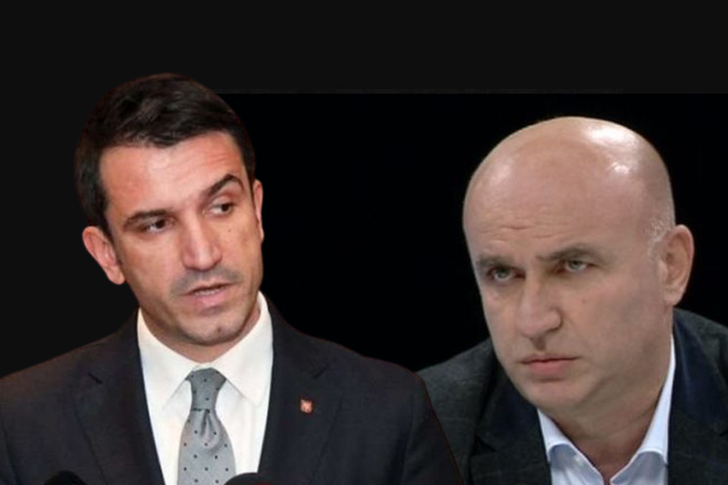
Erion Veliaj and Mero Baze continue their public deception...
The preliminary hearing for Freedom Party leader Ilir Meta...
The President of the High Judicial Council, Ilir Rusi, was...
The Durrës Court today handed down a prison sentence for m...
This Thursday, the third phase of the evaluation of candid...
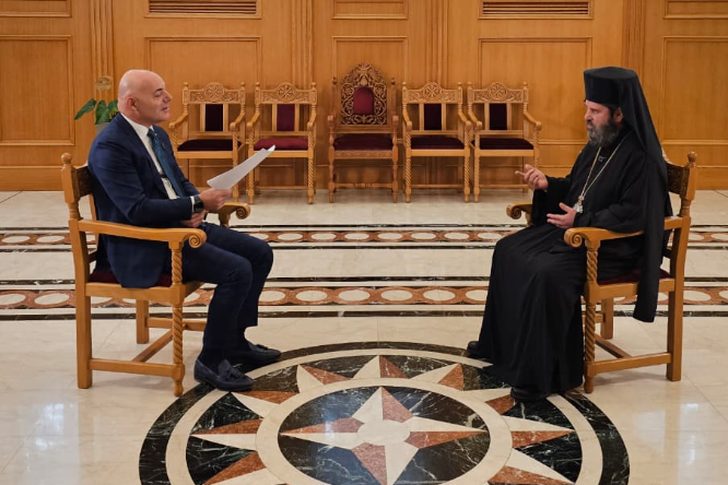
The Archbishop of Tirana, Durrës and all of Albania, His B...
The Archbishop of Tirana, Durrës and all of Albania, His B...
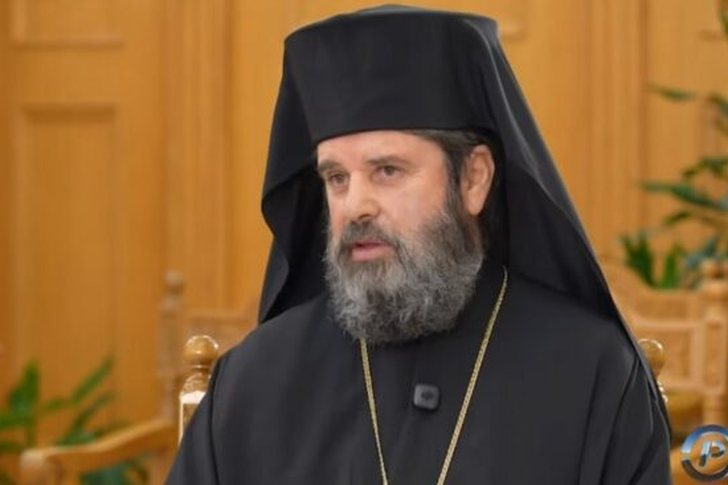
Archbishop Joan, in an interview with journalist Blendi Fe...
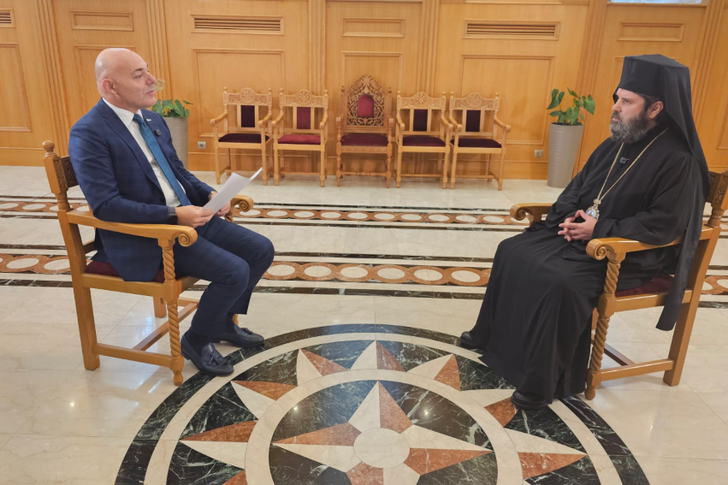
The Archbishop of Tirana, Durrës and all of Albania, His B...
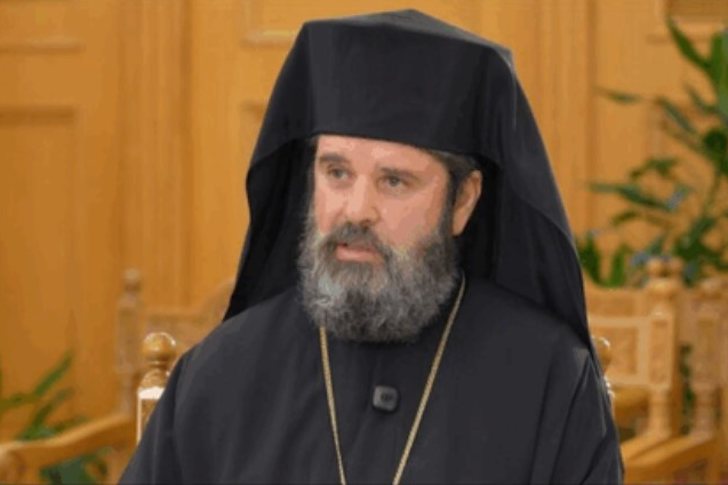
The Archbishop of Tirana, Durrës and all of Albania, His B...

This Thursday we are introducing you to some of the main h...
Archbishop Joan stated on the show Opinion that 20% of the...
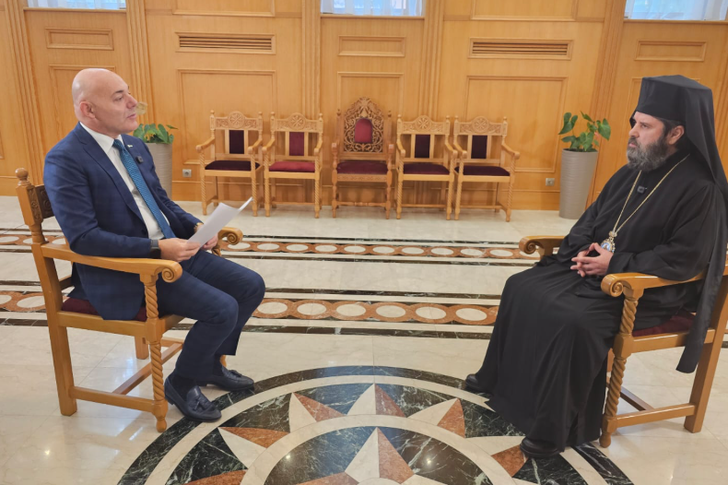
Archbishop Joan, on the show Opinion with Blendi Fevziu, s...
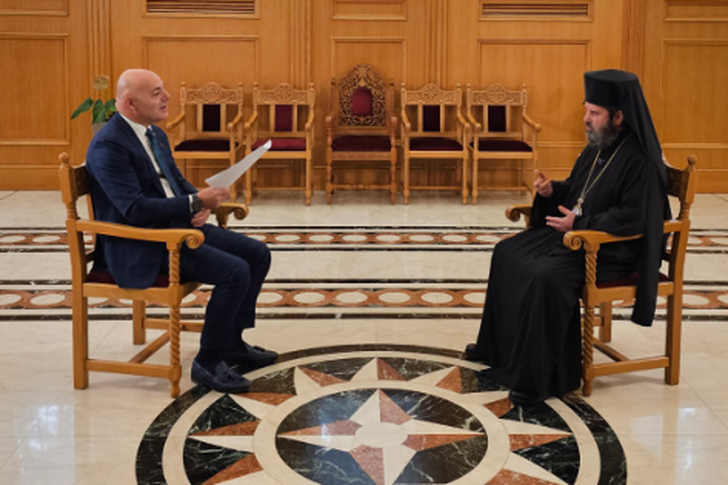
In a rare interview with journalist Blendi Fevziu on the O...
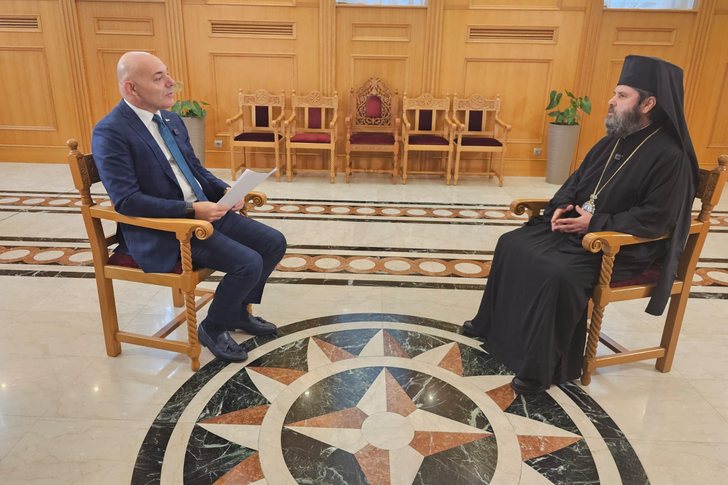
Archbishop Joan, in a different account of his life, told ...
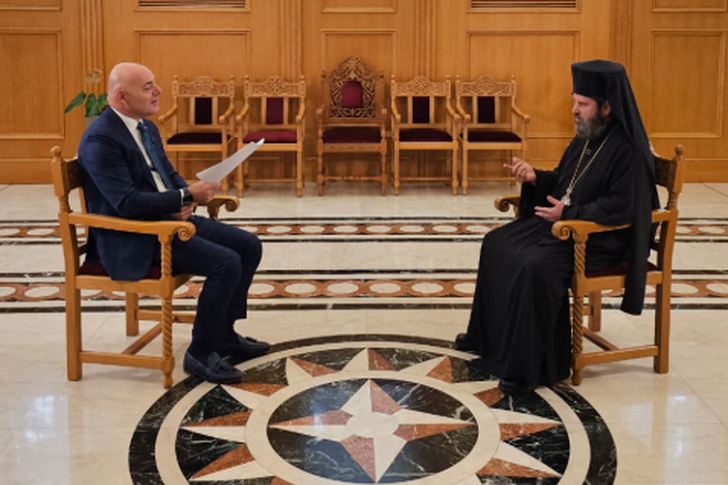
On the show Opinion with Blendi Fevziu, Archbishop Joan sp...
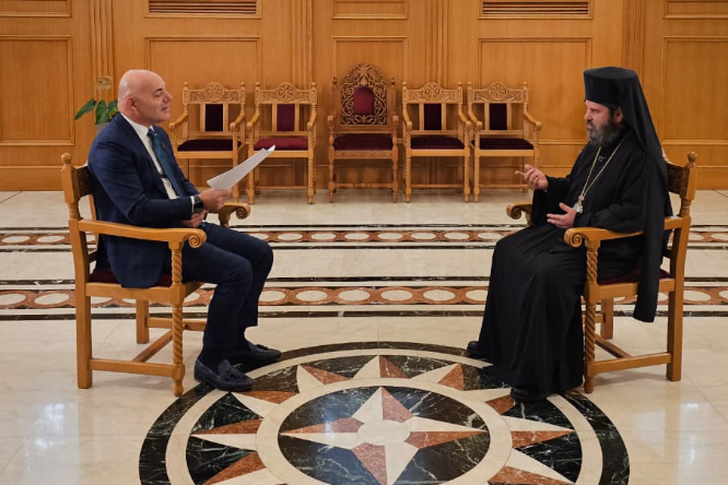
Journalist Blendi Fevziu conducted a very special intervie...
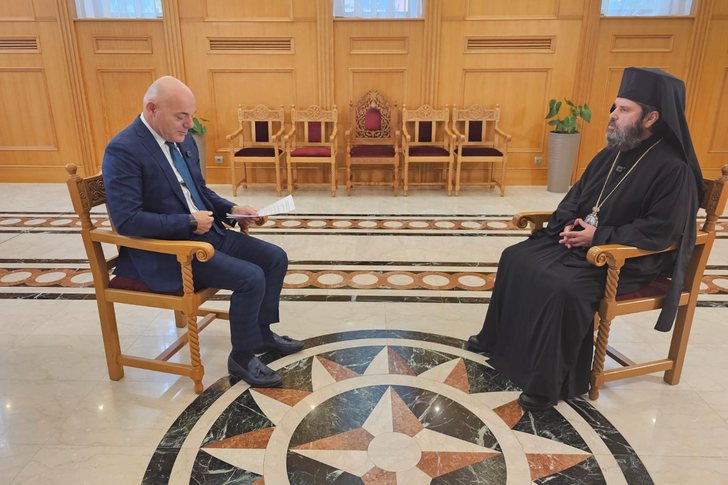
The Archbishop of Tirana, Durrës and all of Albania, His B...
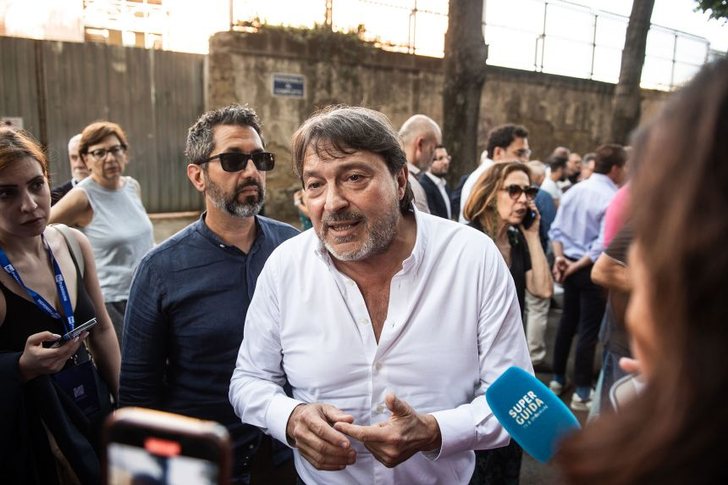
Italian journalist Sigfrido Ranucci spoke this evening abo...
Dritan Prençi is the SPAK prosecutor who is sleeping on th...
The in-depth investigations that SPAK conducted into Ajola...
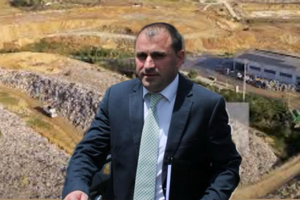
SPAK's standards, the way it investigates, how it secures ...
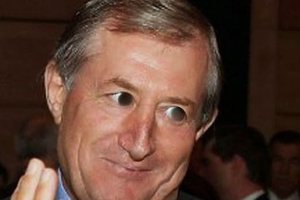
Irfan Hysenbelliu claims to be a big businessman, an hones...

The Special Board of Appeal (KPA) decided this Monday ...

The KPA vetting decided this Thursday to dismiss the p...

Suela Salavaçi, a prosecutor in the Prosecutor's Offic...

The Special Board of Appeal reinstated the prosecutor ...
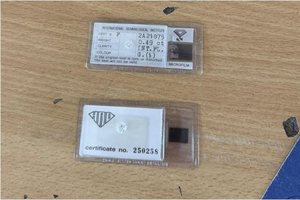
Durres Customs has announced that today, during checks car...
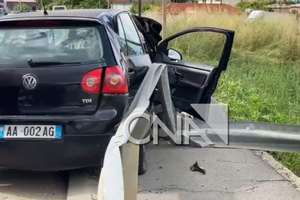
A road accident was recorded a few minutes ago on the Pogr...
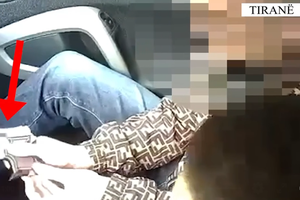
The State Police has published new footage from the operat...
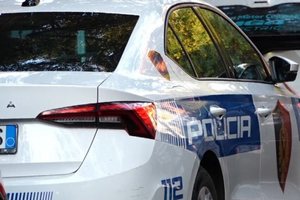
A TNT explosion has occurred in the village of Balldren i ...
Albania is facing a deep demographic crisis where official...
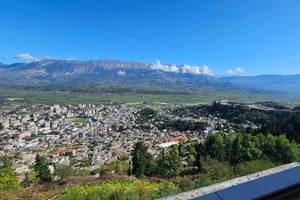
This Wednesday, our country will be affected by relatively...

The UN's World Meteorological Organization now warns that ...
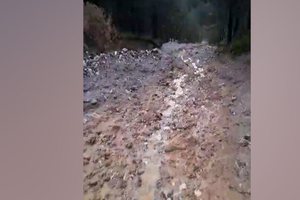
Intense rainfall has caused numerous problems in the Radom...

Donald Trump has said the US will hit Iran "hard" on Wedne...
The United States, Australia, European allies and other co...
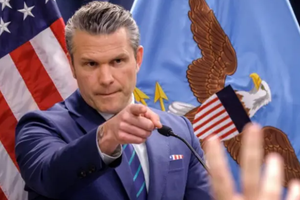
United States Secretary of Defense Pete Hegseth visited th...

Prices in the US in May rose at their fastest pace in thre...
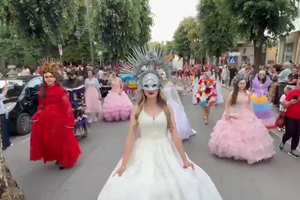
Korça has transformed this weekend into the capital of cel...

Korça is ready to open the summer season with one of the c...

Two years after his passing, the renowned Korçë poet Skënd...

The Ethnographic Museum of Berat has opened its doors to v...

The first three months of this year have brought a record ...

The non-performing loan ratio returned to decline in April...

This Wednesday, one US dollar is bought for 81.6 lek and s...

The 2025 turnover reassessment for businesses in Tirana ha...