

Ghosn's 100,000 signatures for justice, like Iranian hackers and Rama's patrons
Agron Shehaj's latest action to collect 100,000 signatures "...


Artificial intelligence company Anthropic, inspired by 'anthropos', the Greek word for "human being", used artificial intelligence to ask 81,000 people what they use artificial intelligence for.
An AI interviewer.
Asking people.
About AI.
In 159 countries, in 70 languages.
It's all a bit confusing. For a moment, I'll leave the results aside and focus on the methodology.
Gallup has built an empire on polling. Ethnographers make their careers living inside different communities to understand their cultures and customs. Anthropology was born out of the belief that a society can only be understood by seeing itself through others.
And here comes the day when a machine has done something that no social scientist can do at this level.
The result is not just a statistic. It's something closer to a collective narrative. Tens of thousands of people talking about what they believe technology can do for the world. And perhaps because the interviewer was a machine, people turned out to have given more honest answers.
Anthropic's interviewer formulated four open-ended questions, listened to the responses, and adapted follow-up questions. Like a professional anthropologist. Then an AI subordinate :) analyzed, coded, and categorized the responses, and then produced the results.
What the study found, essentially, is that people are not clearly divided into optimists and pessimists about the AI ??boom in their lives.
They are divided by their needs, and those needs are shaped by where they live and what their societies have, or have failed to provide.
In wealthy, technologically advanced countries, people want AI to give them time to manage the complexity of life.
In developing and transition economies, people are looking for something completely different. They are looking for access to opportunity.
Southeastern Europe (with the Western Balkans within it) is at exactly this turning point. Not yet wealthy enough to ask AI for convenience, but largely asking it for something more urgent: a way out of difficult economic situations.
The Balkan Barometer 2025 Regional Cooperation Council - RCC has a figure worth stopping at: 29% of citizens in the Western Balkans now use AI, up from just 10% in 2024.
Almost a threefold increase. In one year.
The 29% of people using AI today are disproportionately young, educated, and digitally connected, precisely the population the region is losing to emigration to Western Europe.
For them, AI opens up two paths: to stay in their countries and use digital skills to work remotely, earning more without crossing the border, or to use the same skills to become more attractive to European labor markets and leave more quickly. Which path prevails will determine the trajectory of the region in the next decade.
In Western Europe , most people use AI for personal matters, lifestyle, and personal space.
Southeast Europe has the most “serious” users: entrepreneurship and financial independence rank significantly higher than the European average.
An employee in Copenhagen, for example, asks AI to clean up his email so he can think more clearly. His counterpart in Skopje or Tirana asks AI to help him build something from nothing, a business, or an idea for how to earn income that he doesn't have.
Both are asking AI to solve a problem. Although diametrically different.
Where the difference seems even greater are fears.
-In Western Europe, the top concern is privacy (17%), above the global average (13%), followed by governance gaps (18–19%). These are institutional fears: anxiety about who controls technology and how it could be used against citizens by governments or corporations.
-Southeastern Europe focuses more on insecurity and jobs.
Concern about work and the economy was the strongest indicator of negative attitudes towards AI in the entire study (34.1%), and precisely in regions like the Western Balkans, where unemployment is above 10% and 68% of young people are considering leaving, this fear is strongest.
However, one concern we share with the world is the loss of the ability to think.
Whether you are a lawyer in Vienna or a student in Sarajevo, the fear that you are delegating your thinking to a machine and gradually losing the ability to think for yourself crosses all borders, income levels, and languages. It is perhaps the most human fear of all.
Students are 2.5 to 3 times more likely than average to be affected by this phenomenon. That critical thinking and schooling are in crisis, there is no longer any doubt.
Most likely, we can all agree: the benefits of digital technology and its harm are sister and brother.
Western Europe is dealing with the legal regulation of AI, the European AI Act and obligations for users.
We are pinning our hopes on AI to give us jobs.
AI is studying humans, while humans are still trying to understand themselves.
The question is whether the technology that is giving people new reasons for hope is also shaping the decision-making about their destinies.
AI enhances the capacity of the individual. Governance determines the quality of the system.
But this is not a problem that AI can solve for us.

Agron Shehaj's latest action to collect 100,000 signatures "...
At a time when Albania is suffering from the consequences ...
Vlora Airport has returned to the spotlight, amid uncertai...
Ministry The appointment of a professional minister in th...
In Albanian politics, the communist axiom: "Whoever is not...
Although the joint paper by Albanian Prime Minister Edi Ra...
European Union Commissioner Marta Kos has alluded today th...
The patronage-based Republic of Youth governance model fai...
The leadership of SPAK by Altin Dumani gave a great impetu...
The firing of journalist Ilir Babaramo, who with great eff...
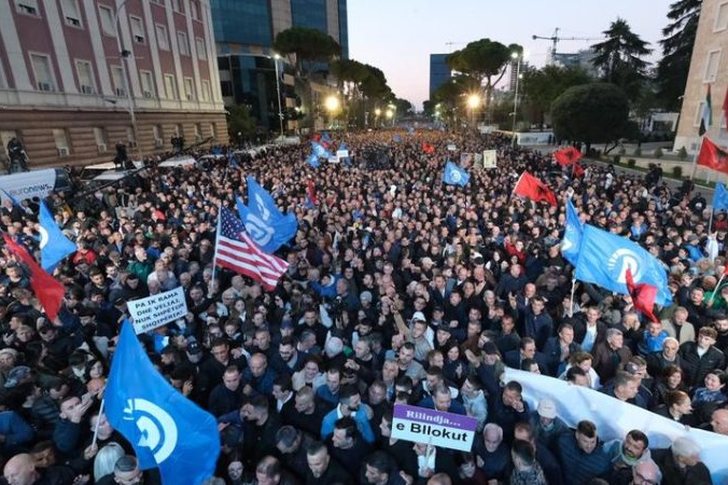
A person who does not protest is a person who has given up...
There is a paradox that only Albanian politics knows how to ...
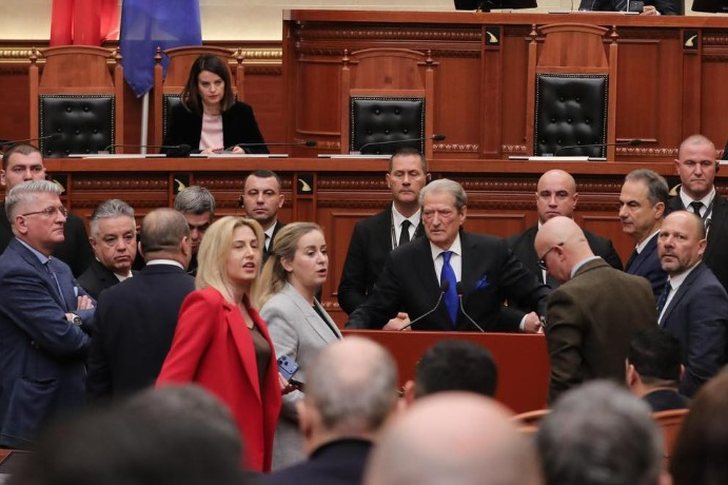
They accuse Rama of wanting to annihilate the opposition. ...
To get away from the daily political noise and return to h...
He, through others, tells you (he has been telling you for 3...

The increase in fuel prices to 200 lek/liter is not simply...
-What I am writing is not an analysis of Ramadan, nor of t...
Who knows what those hundreds of demonstrators who gathere...

When the screen rewards ignorance and society accepts it a...

In these days of new and escalating conflict between Israe...
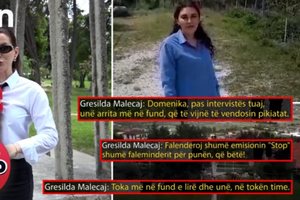
The case addressed this Wednesday, June 3, on the show "St...
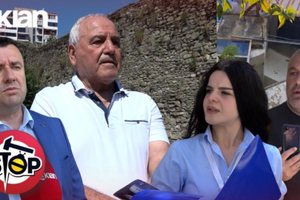
The show "Stop" broadcast this Wednesday, June 3, the case...

Irfan Hysenbelliu claims to be a big businessman, an hones...
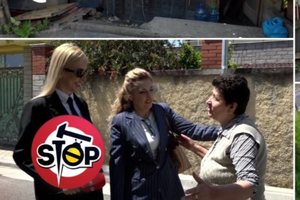
The show "Stop" dealt with a denunciation case this Tuesda...

The Special Board of Appeal (KPA) decided this Monday ...

The KPA vetting decided this Thursday to dismiss the p...

Suela Salavaçi, a prosecutor in the Prosecutor's Offic...

The Special Board of Appeal reinstated the prosecutor ...

A road accident occurred this evening on the Tirana-Durres...
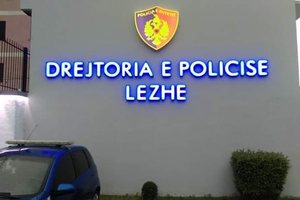
Policia e Lezhës ka dalë me reagim zyrtar lidhur me ngjarj...
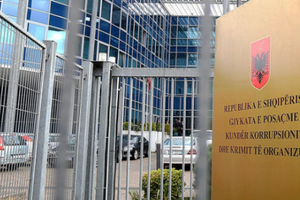
The Special Court against Corruption and Organized Crime h...

Një banesë është përfshirë nga flakët në lagjen nr. 4 në q...
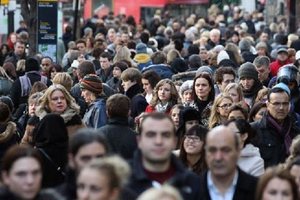
Albania is facing an unprecedented demographic transition,...

On Thursday, our country will be affected by unstable weat...

An alarming figure of more than 166.4 thousand Albanians a...

The weather today will be mostly clear and temperatures wi...

United States President Donald Trump announced in a post o...
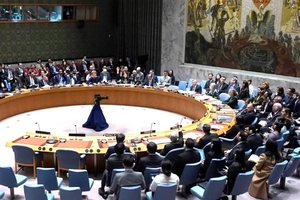
Asambleja e Përgjithshme e Kombet e Bashkuara ka përfundua...
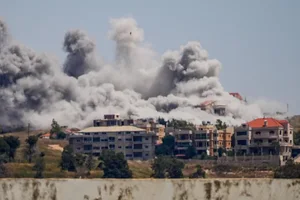
At least nine people have been killed in Israeli airstrike...
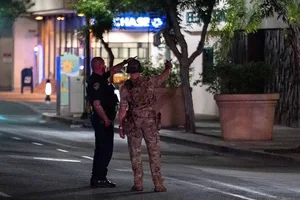
A serious incident has occurred in Bakersfield, California...

Korça is ready to open the summer season with one of the c...
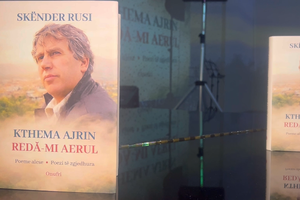
Two years after his passing, the renowned Korçë poet Skënd...

The Ethnographic Museum of Berat has opened its doors to v...
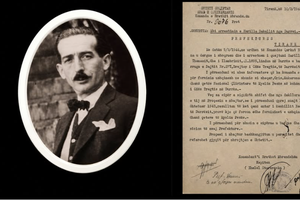
The story of Harilla Bakalli is one of the most chilling t...

Today, in the foreign exchange market, one US dollar is bo...
The Minister of Finance, Petrit Malaj, announced today a n...
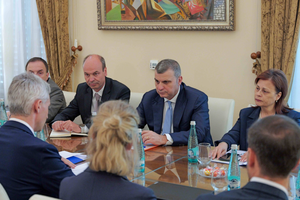
Guvernatori i Bankës së Shqipërisë, Gent Sejko, priti m...
Today, in the foreign exchange market, one US dollar is bo...