


“Albania in the Eyes of Byron - The Voice of Heritage”/ Folk Song and Dance Ensemble, in the heart of London
A historic evening for Albanian culture was marked in the ...

A historic evening for Albanian culture was marked in the ...


New vehicles in the EU must be equipped with a camera that checks whether the driver is distracted while driving. The measure aims to increase traffic safety, but has also sparked criticism.
More than 9,500 accidents were recorded in Germany in 2025 because drivers were distracted while driving. This was announced by the German Road Safety Council, referring to new data from the Federal Statistical Office. One of the measures, with which the European Union aims to reduce the risk of accidents caused by inattentive drivers, came into force on Tuesday (07.06.). All new vehicles in the EU must now be equipped with a camera that detects if the driver is distracted and, in such cases, warns him.
The system is called "Advanced Driver Distraction Warning" (ADDW) and is part of a wider package of safety systems that have been introduced simultaneously for road traffic.
Internet users concerned about surveillance
This innovation has also caused uncertainty and debate on social networks. There are growing concerns that the new cameras in vehicles could violate the privacy of drivers. While critics warn of the dangers of constant surveillance, supporters of the measure emphasize that the main goal is to increase traffic safety. "Big Brother travels with you," writes the Kettner Edelmetalle portal in the title of an article, speculating that this technology could be just the first step towards creating a much broader surveillance infrastructure.
Are these concerns justified? What do EU data protection rules say? And what is actually being filmed inside the vehicle?
How does camera technology work?
Cameras used to monitor driver movements and behavior are usually fixed and installed in the vehicle at the factory. In most cases, they are located behind the interior mirror or integrated into the vehicle's dashboard. There are also additional devices that can be purchased separately and mounted in various parts of the vehicle's cabin.
The monitoring is indeed continuous: The camera monitors the direction of gaze, head movements, eye position and other behaviors that may indicate that the driver is distracted or looking at a mobile phone. If the system detects a lack of attention for a certain period, it issues a warning to bring the driver's attention back to the road.
EU Regulation 2023/4523 defines precisely in which directions the driver can direct his attention without being considered distracted. It also includes areas that are considered harmless, such as looking towards the passenger window or towards the indicators and displays of the instrument panel. The aim of the system is not to record every movement of the driver, but to identify moments when attention is diverted from the road for a time that could endanger traffic safety.
The warning system is activated depending on the vehicle speed:
At speeds between 20 and 50 km/h: the warning is activated if the driver takes their eyes off the road for six seconds or more. At speeds above 50 km/h: the system reacts more quickly and is activated if their eyes are off the road for three and a half seconds or more. This means that the higher the speed, the sooner the system considers the distraction as a risk and warns the driver to return their attention to the traffic.
No endless video archive
Contrary to what many online rumors fear, the camera system does not create a multi-hour video archive of all car trips. Manufacturers are prohibited from recording more data than is necessary for the ADDW (Advanced Driver Distraction Warning) system to function. This means, for example, that no audio is automatically recorded alongside the video.
Also, the video data is not permanently stored in the vehicle's memory. It is continuously overwritten, so as not to create a long-term database of the driver's movements or behavior. In other words, the system is designed primarily to analyze the driver's level of attention in real time and warn him in case of distraction, not to record or store all his trips.
Who has access to the data?
One of the most important questions for the acceptance of these systems is what happens to the data that is recorded. Under current regulations, the data is only processed locally within the vehicle and is not transmitted over the internet – neither to the car manufacturer nor to any state authority.
This means that there is no automatic sending of videos or driver behavior data to external servers. The system analyzes the information in real time to determine if the driver is distracted and, if necessary, issues a warning.
For this reason, continuous state surveillance is not possible with the current system configuration, unless further technical changes are made to the vehicle's functions in the future that would enable the transmission of this data. Currently, the EU regulation does not provide for this.
Strict data protection regulations
The European Union regulation provides for very strict criteria for the protection of privacy. Biometric data and personal data are not allowed to be collected by the ADDW camera.
This means that the system should not be able to identify the specific person behind the wheel. Its purpose is only to analyze whether the driver is paying attention to the road, and not to determine his identity. Furthermore, any data processing must be carried out in accordance with the EU General Data Protection Regulation (GDPR).
The fact that this regulation would come into force is not new. EU Regulation 2019/2144, on which this measure is based, has been in force since the beginning of January 2020. As of July 2024, all new vehicle models had to be equipped with these new safety systems. Now, the obligation has been extended to all new vehicles entering the EU market.
The only exceptions are heavy commercial vehicles and trucks, for which this requirement will apply from 2029. Existing vehicles, meanwhile, do not need to be equipped with this technology at a later date. Their owners can continue to use them normally throughout Europe even without the driver attention monitoring camera. So the new rule only affects new vehicles, not those already on the road./ DW


The extreme heat waves that hit Europe at the end of J...

According to the German government, at least 110,000 cases...

A large fire has engulfed the Fontainebleau forest, about ...

Tensions between the United States and Iran have escalated...

A massive fire has engulfed a bar in Bangkok, Thailand, ki...
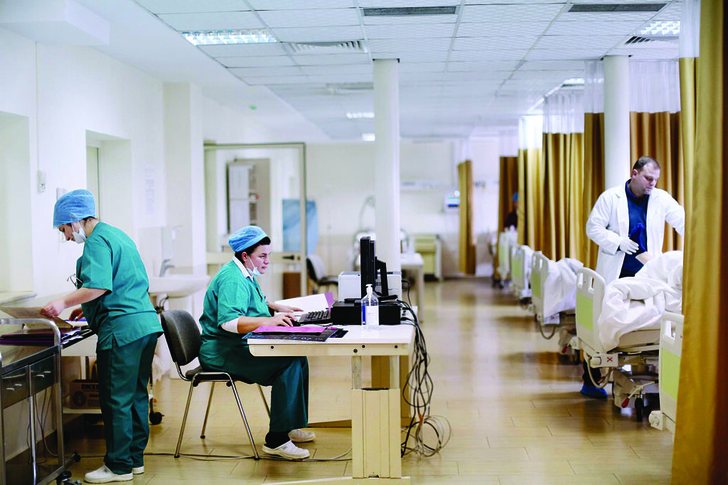
An aging population, emigration and a growing burden of ch...

While the West thought that mass expulsions of Russian dip...
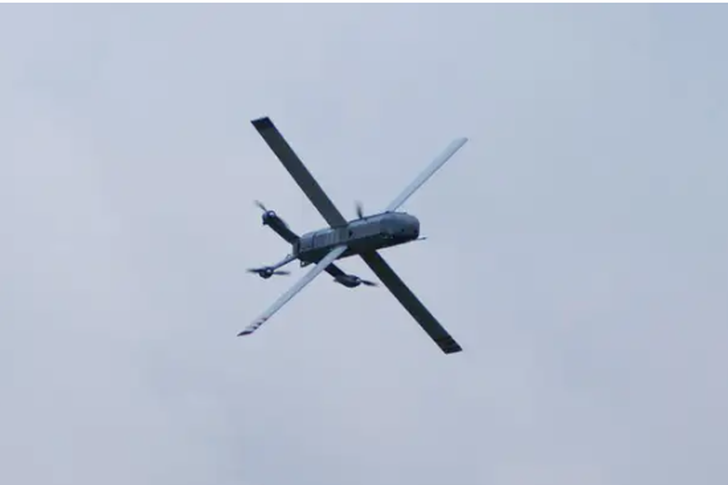
Germany is funding 50,000 attack drones for Ukraine. Euro...

US President Donald Trump assured today that the Strait of...

Ukrainian President Volodymyr Zelensky announced today tha...

Apple's allegations: aggressive efforts by OpenAI to recru...

The new EU control system is causing problems at airports ...

Republican U.S. Senator Lindsey Graham has died after a br...

Many people believe that mosquitoes prefer those with "swe...

Two people have been killed and four others injured in a s...

Typhoon Bavi has hit China, becoming the second typhoon to...

The US has launched a new wave of airstrikes on military t...

The defense of former Kosovo President Hashim Thaçi has fi...

Ten people have died after a Cessna 402 plane crashed in t...

Businessman Vasile Tofan was nominated this Saturday as th...

On the morning of July 7, 2026, the Ministry of Culture ur...

After the disclosure of the portfolio of properties an...

For 6 months now, CNA has been sending several letters to ...

The word "fatherland" with properties is not enough. The m...

The Special Board of Appeal (KPA) decided this Monday ...

The KPA vetting decided this Thursday to dismiss the p...

Suela Salavaçi, a prosecutor in the Prosecutor's Offic...

The Special Board of Appeal reinstated the prosecutor ...

A 43-year-old man was arrested in flagrante delicto after ...

A serious road accident occurred this Sunday at the exit o...

A serious accident was reported today on the Gjirokastër-T...

A serious incident occurred today in the village of Orizaj...

Albania was included in the band of above-normal temperatu...

Today, our country will be affected by mainly stable weath...

Today, our country will be affected by mainly stable weath...

A serious incident occurred this Saturday in neighborhood ...

New vehicles in the EU must be equipped with a camera that...

The extreme heat waves that hit Europe at the end of J...

According to the German government, at least 110,000 cases...

A large fire has engulfed the Fontainebleau forest, about ...

A historic evening for Albanian culture was marked in the ...

When I turned 10, another building was built in front of o...

A special scientific conference was held by the World Bekt...

The German Embassy in Tirana has invited the Albanian publ...
Albania has lost almost a quarter of its population since ...

This Monday, one US dollar is bought for 81.5 lek and sold...

This Sunday, one US dollar is bought for 81.5 lek and sold...

The new old-age pensions in 2025 were on average 16,500 le...