


Strike on the Greek side, movement in Kakavija temporarily suspended on Monday
Movement at the Kakavija Border Crossing Point will be tem...

Movement at the Kakavija Border Crossing Point will be tem...

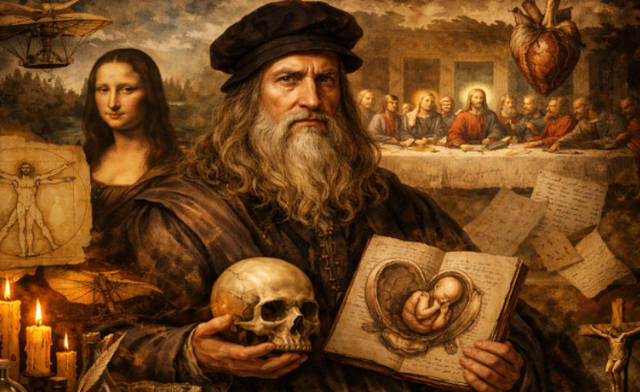
Leonardo da Vinci was not just a Renaissance genius. He was a living enigma, a mind that challenged the boundaries of his time, and a soul that dared to see the world differently than everyone else.
Behind the paintings that have fascinated for centuries and the inventions that preceded future eras, lies the story of a rebellious man, thirsty for knowledge, wandering between art, science, and mystery.
From his controversial birth to his unusual obsessions, dangerous experiments, and ideas that could have branded him a heretic, Leonardo's life is a story as extraordinary as his works. This is a true portrait of a man who never stopped seeking the impossible.
It is April 15, 1452 when Caterina, a peasant in Campo Zeppi, in the village of Vinci, gives birth to an illegitimate child: Leonardo. His father is Ser Piero, a Florentine notary who does not want to ruin his reputation. Ser Antonio, his father, intervenes, and the violation is kept secret.
It is he who, five years later, when Albiera, Piero's wife, discovers that she is sterile, takes Leonardo from his natural mother to prevent the bloodline from dying out. However, the child does not take it well and invents a play on words: in a note he writes "di spero", which can be read as the surname he does not have (from Ser Piero), but also as "despair". "A joke that reveals a hopeless relationship", says Costantino D'Orazio in the book Leonardo the Secret, which summarizes the secrets surrounding the mystery of the Florentine genius.
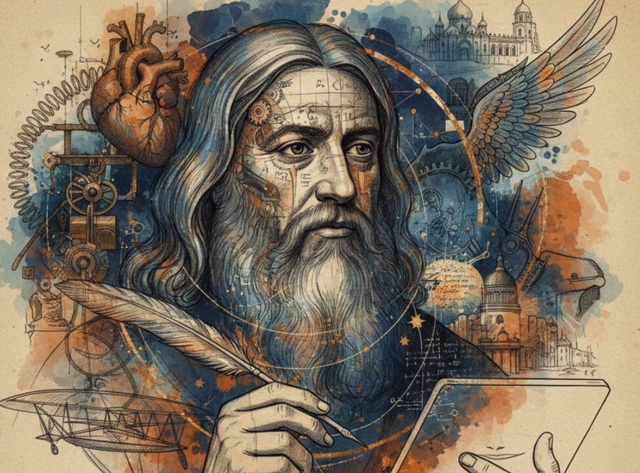
This is how Lorenzo the Magnificent defines it. In fact, Leonardo's only point of reference is Verrocchio, an artist to whom he goes to learn the craft. In those years "painters remained within the Arte dei Medic and Speciali, where they shared interests with barbers, spice sellers and potters", writes D'Orazio. But Leonardo Da Vinci immediately shows his talent. The occasion comes when his father asks him to decorate a piece of wood brought by a farmer, who intended to make it a work of art. Leonardo decides to use it to represent a scene rich in animals and collects insects, lizards and snakes. He keeps them all in his room: "He is so concentrated that he does not even notice the stench of all those dead animals in his room", says D'Orazio. The result is surprising: Ser Piero keeps it and then sells it for a hundred ducats.
He gives the peasant another work, bought for a small sum. But how is Leonardo so precise in reproducing faces, bodies or animals? He spends hours examining them. It's called the lenticular technique, which makes you think that a magnifying glass is used to better see the details. So he creates a botanical inventory: hundreds of drawings that he will later use in his paintings. For example, in the Annunciation, where the lilies that the angel holds in his hands are all different: "Each of them appears at a different stage of maturity, from their petals no pistil emerges equal to the other, as happens in reality", explains D'Orazio. Not only that.
The passion for detail also comes into play in studies of the human body, which make him a kind of forensic doctor who tries his hand at autopsies of corpses. It is a frequent practice at that time: some artists steal bodies from cemeteries, others buy them from needy families. Leonardo Da Vinci enters and leaves hospitals and it is precisely while studying the body of a man that he discovers an obstruction in the circulatory system, thus recording the first atherosclerosis in history. He is also interested in pregnancy. Until then, the woman was considered a kind of incubator and the man the true creator of life.
Leonardo Da Vinci revolutionizes this concept and declares that it is the mother who transmits the soul to the child, in addition to the nourishment for nine months through the “umbilical vein”. Studying children who have died in the womb, he goes on to argue that “a mother’s fear can kill the fetus and this means that the emotions of the mother’s body are transmitted to the child”. However, he is careful not to spread his new theories in a context where the Church would call him a heretic, who denies that the soul is injected directly by God. According to him, the center of the soul is located at the top of the spine, at the junction with the skull: the evidence comes from lizards, which, hit at that point, die immediately.
Leonardo Da Vinci, a revolutionary spirit
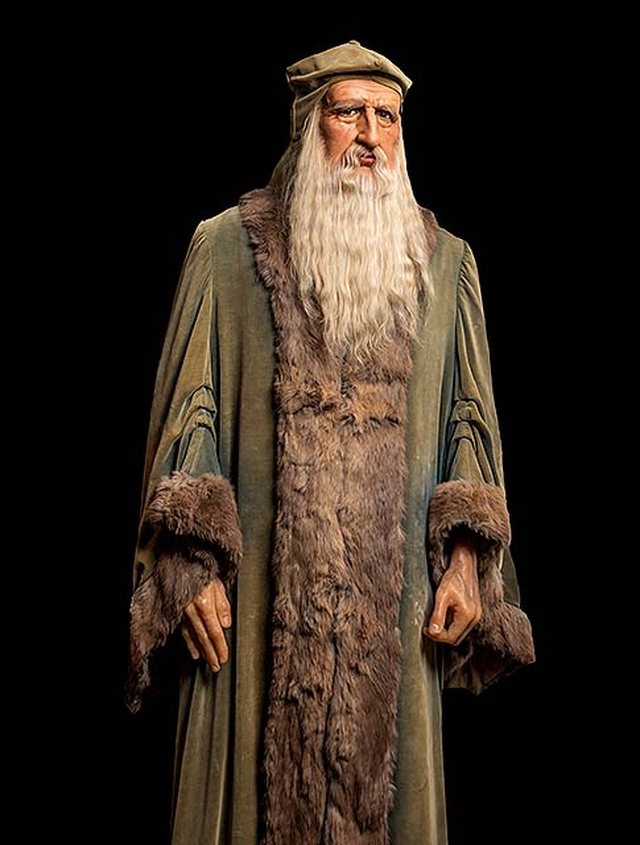
Leonardo's real revolution, however, lies in his approach to art, where he dares to do things like no one else has before. For example, he humanizes the saints. In fact, his sacred scenes seem like situations in the family or among friends: he wants ordinary people to recognize themselves in them and therefore eliminates the distance between those who observe the painting and those portrayed in it, typical of those of previous centuries. So he paints scenes with Jesus, the Virgin and the Saints by eliminating the use of gold: losing the halo, everyone is represented as ordinary people. Someone does not like this new way of painting and in fact the patrons of the repentant Saint Jerome reject the painting, because they consider the saint too "humanized". Perhaps this is also the reason why his head ends up becoming a place of excrement that Cardinal Joseph Fesch, Napoleon's uncle, will find on a street corner. Leonardo, however, does not stop and changes the conception of the portrait.
It can be seen in the “Dama con l'ermellino” (1490), where the figure is no longer frontal and static, but creates movement and seems real. In his notes he explains that to make a perfect portrait, the face should never be on the same side of the torso. Just by turning the image a few degrees, he makes a real revolution.
The sin of ambition
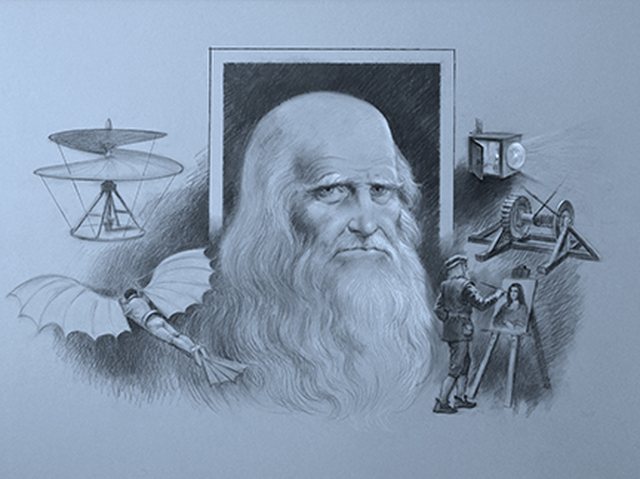
Leonardo is an experimenter and his ambitious nature always leads him to go further. Sometimes with disastrous results. The first failed experiment is the statue of a horse with its two front legs raised, which he designs for Sforza: a colossus 7 meters high and weighing 70 tons. After many years of work, he is forced to give up: disappointed, Ludovico il Moro considers him an incompetent waste of time who cheats, and takes the work away from him. Things do not go well at the beginning of the 16th century, when he is called to Florence to paint the Battle of Anghiari. Once again the project is ambitious: not only is the painting three times larger than the Last Supper, but Leonardo complicates his life even further, and wants to create it with the very old technique of encaustic, which consists of fixing the color on the wall with the heat of a brazier. He makes an error in judgment because the poorly distributed heat ends up completely melting the painting. About fifty years later, Giorgio Vasari is called upon to cover it with another work, which overlays Leonardo's powders and colors, recently identified thanks to very thin probes.
But what can be said about the Last Supper?
Witnesses tell of a very unfocused Leonardo who goes to the refinery of Santa Maria delle Grazie in Milan, where the work is located, gives two brushstrokes and immediately leaves. Here too he sins of excessive ambition: he is not satisfied with a normal fresco, which, as the saying goes, must be painted “in fresco”, that is, using the fresh base of the masonry to make the colors better.
He is very reflective for such a fast technique and invents a mixture of wet and dry paint, rich in oils. It is not a good idea: the paint begins to peel off even before the work is finished. The story is known. As we see now, in fact, Leonardo's Last Supper is the result of an imposing restoration that lasted about twenty years.
The Last Supper, the secrets
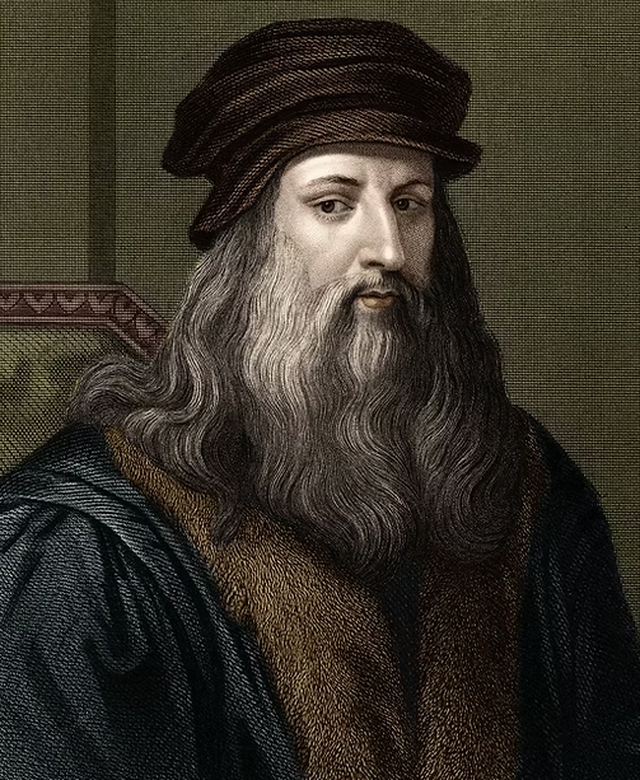
With The Last Supper Leonardo brings the Last Supper to a new level, one that will appeal to artists of the following centuries. Until then, the Gospel episode was represented in such a way that believers, often illiterate, could immediately recognize the protagonists of the scene: Judas was isolated and surrounded by darkness, while Christ was at the center, intending to break bread with John, the favorite apostle, leaning towards him. Leonardo turns everything upside down, starting with Christ who does not appear when he takes the bread, but when he discovers that someone will betray him.
Judas is part of the group, the apostles look at each other and John does not lean on Jesus' shoulder. To find inspiration for the characters' faces, Leonardo wanders around Milan with a notebook in which he notes useful ideas. For three years he searches for perfect faces: that of Jesus seems to belong to Giovanni Conte, a cardinal from Vogevano. To find Judas, he explores the poorest neighborhoods of the city. As for the boy portrayed next to Jesus, according to some hypotheses, he is a woman, more precisely Maddalena, his wife according to the apocryphal gospels. In reality it is always John, represented with soft and feminine features, because he is the youngest of the apostles and the only one without a beard. The possibility cannot be ruled out that for him he used a model, Giovannina, mentioned by Leonardo in his notes. / Bota.al

Few people in history have left such a profound mark as Na...

US attack on Iran? The situation seems to be moving toward...
There are figures in human history who are not simply conf...

Many of us live our lives assuming that what we see is the...

Jonathan, a giant tortoise from the Seychelles, is conside...
From Ottoman cat "keepers" to modern street watchmen, Ista...

"In the age of Artificial Intelligence, humanity is increa...
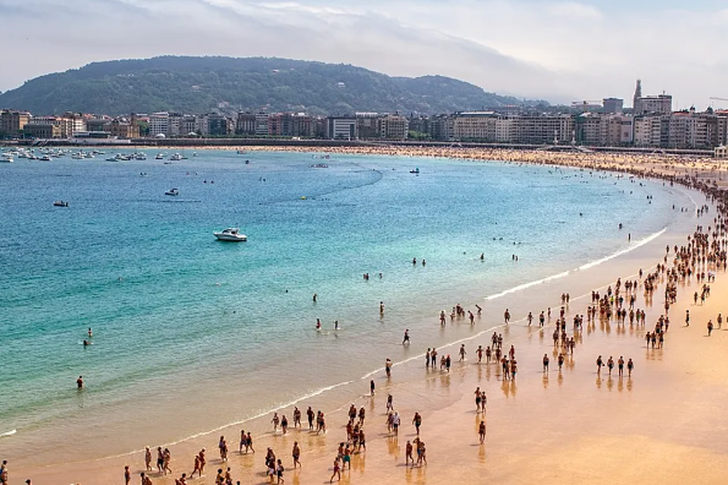
New beach rules in San Sebastian should come into effect b...

Tea originated in ancient China, with its earliest use as ...

Perfume is a powerful way to express personality, style, a...

Ginseng is a widely known medicinal plant that has been pa...
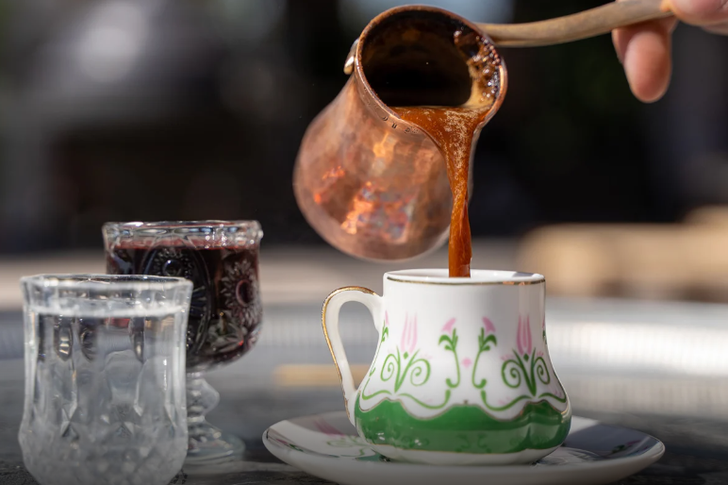
To call Turkish coffee "just a drink" certainly understate...

NASA has discovered that since 2020 there has been an asym...

This year's season has been extremely challenging for ...

An ordinary morning. A message comes to your phone from an...

The disappearance of the Mayan civilization is a question ...

György Schwartz was born in Hungary in 1930 to an Ashkenaz...
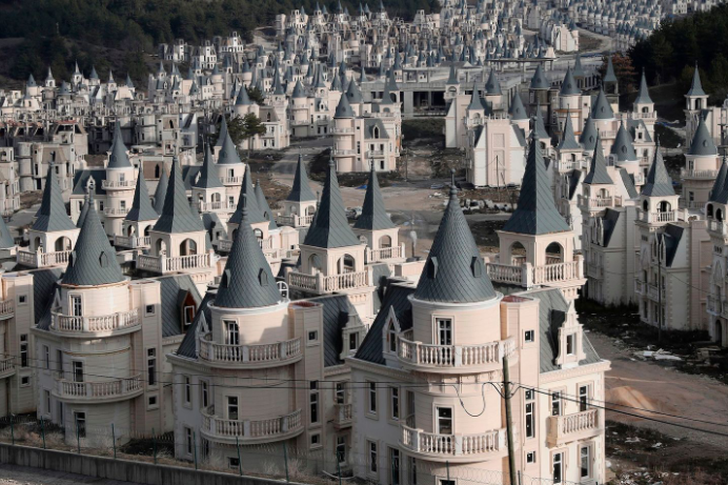
Burj Al Babas mund të jetë qyteti më i çuditshëm në botë. ...
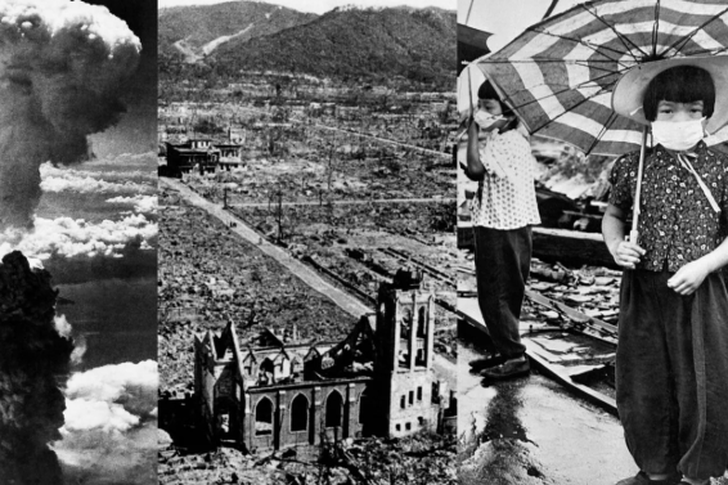
The first atomic bomb in Hiroshima Hiroshima after the dr...
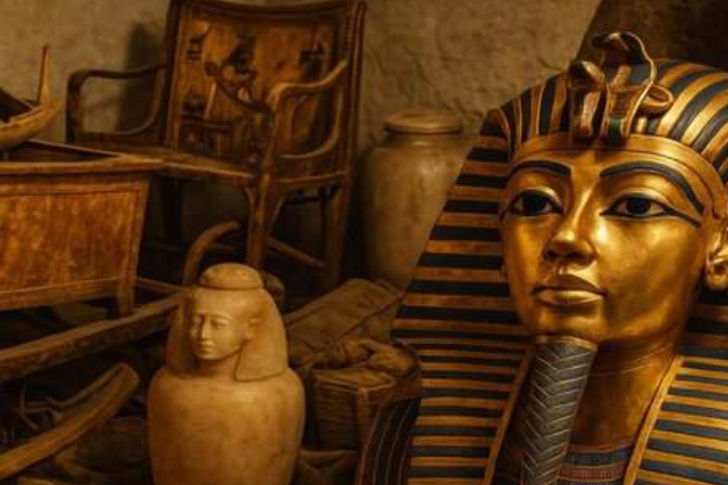
The discovery of King Tutankhamun's tomb in 1922 captivate...
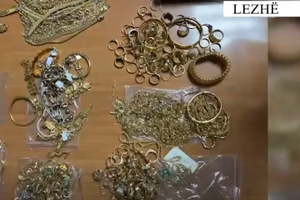
A 39-year-old citizen has been arrested in Lezha, after se...

CNA has launched another investigation that could lead to ...

Irfan Hysenbelliu is a businessman that we call "Irfan the...

In March 2026, CNA launched another investigation centered...

The Special Board of Appeal (KPA) decided this Monday ...

The KPA vetting decided this Thursday to dismiss the p...

Suela Salavaçi, a prosecutor in the Prosecutor's Offic...

The Special Board of Appeal reinstated the prosecutor ...

As a result of the investigative and procedural actions ca...
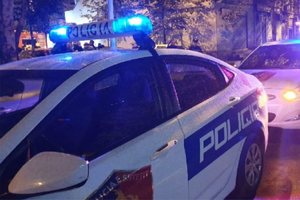
A conflict for weak motives was recorded today in the vill...

An accident involving three vehicles occurred a few minute...

55-year-old Belere Plaka, who was injured today with a sho...

Today, our country will be under the influence of stable a...

By noon, cloudiness is expected to prevail in almost all o...

Children without parental care, for whom alternative famil...
On Thursday, our country will be under the influence of st...

Marine Le Pen is entering the decisive phase of the presid...

Member states of the International Criminal Court voted to...

From the declining role of exports to new public investmen...

South Korea is becoming one of the most sought-after desti...
Two windows, a century of history and the metaphysics of p...
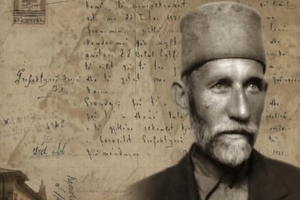
In my research at the Central State Archives, specifically...

At a time when industrial products are increasingly taking...

Trust among people is not just a three-syllable word. It c...

This Saturday, one US dollar is bought for 81.7 lek and so...

War, weather and supply disruptions could send gas prices ...
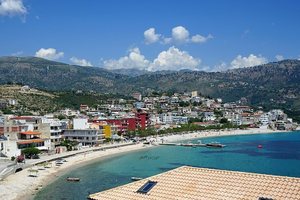
The number of active enterprises in Albania continued to g...

In Albania, the bar-cafe has long become an almost unique ...