


The best perfumes/ A journey into the world of endless scents
Perfume is a powerful way to express personality, style, a...



Tea originated in ancient China, with its earliest use as a medicinal beverage around 2700 BC before becoming an everyday drink in the 3rd century AD. It spread to Japan by the 13th century and was brought to Europe by the Dutch East India Company in 1610, becoming popular in Britain when Catherine of Braganza married King Charles II in 1662. The British Empire later introduced tea cultivation to India and Sri Lanka, establishing it as a global beverage.

Legend has it that the Chinese Emperor Shen Nong discovered tea when the leaves of a tea tree (Camellia sinensis) fell into his cup of hot water. Initially, tea was consumed as a medicinal drink. By the 3rd century AD, it had become an everyday drink and cultivation and processing began. Tea was established as a national drink during this period (618–906 AD), and the first book on tea, the Ch'a Ching, was written.

The seeds were brought to Japan around the 8th century, with cultivation becoming established by the 13th century. The Dutch East India Company brought the first shipment of tea from China to Europe in 1610. Tea drinking was initially seen as medicinal in Europe before becoming a fashionable beverage when the Portuguese princess Catherine of Braganza, wife of King Charles II, introduced it to the English nobility in 1662.

The six main types of "true" tea, white, yellow, green, oolong, black, and pu-erh, all come from the leaves of the Camellia sinensis plant and are distinguished by their processing, particularly the level of oxidation. Herbal teas, such as chamomile or rooibos, are beverages made from other plants and are not technically tea.
White Tea: The least processed type of tea, it is unoxidized and usually consists of young buds and leaves that are simply dried and unoxidized.
Yellow Tea: This type of tea is unfermented and unoxidized, but is allowed to yellow through a unique process of covering and withering, resulting in a delicate flavor.

Green Tea: Green tea is not allowed to oxidize after harvest, which is achieved by steaming or pan-frying the leaves. This preserves its fresh, grassy flavor.
Oolong Tea: Oolong is partially oxidized, which involves a process of withering, blackening, and partial oxidation of the leaves, creating a wide spectrum of flavors.
Black Tea: Fully oxidized, black tea gets its dark color and strong aroma from the process of wilting and complete oxidation of the leaves.
Pu-erh Tea: This is an unfermented tea that includes green tea that is left to ferment or compost over time, giving it a unique profile and aged flavor.

Tea offers benefits such as antioxidant protection against chronic diseases such as heart disease and some cancers, while potentially supporting weight management and bone health. It contains polyphenols and flavonoids, especially in green tea, which help fight oxidative stress in the body.
Rich in antioxidants: Tea contains polyphenols, such as flavonoids and catechins, which fight free radicals and reduce oxidative stress, reducing the risk of chronic diseases.

Cardiovascular health: Studies link regular tea consumption to a reduced risk of heart attack, stroke, and type 2 diabetes.
Weight management: Green tea, rich in catechins, can help increase metabolism and burn calories, potentially aiding in weight loss.
Bone health: Some research suggests that drinking tea may help protect your bones.
Strengthening the immune system: Tea can help strengthen the immune system.
In modern times, tea remains a widely consumed global beverage, with consumption varying by culture and age group, and evolving through innovations such as tea bags and ready-to-drink formats. While some demographics are moving away from traditional black tea, there is a growing focus on wellness-oriented herbal teas and the incorporation of tea into trendy ready-to-drink products, reflecting both established traditions and contemporary markets.

Widespread Popularity: Tea is enjoyed all over the world for a variety of reasons, including relaxation, spirituality, tradition, and pleasure, making it more than just a beverage.
Emerging Markets: New formats, such as canned sparkling teas and bottled kombucha, are emerging to appeal to younger consumers and the “food deal” market.
Wellness Focus: There is a growing interest in herbal teas, which are being integrated into wellness brands and offer benefits like antioxidants and immune support. /CNA

Perfume is a powerful way to express personality, style, a...

Ginseng is a widely known medicinal plant that has been pa...
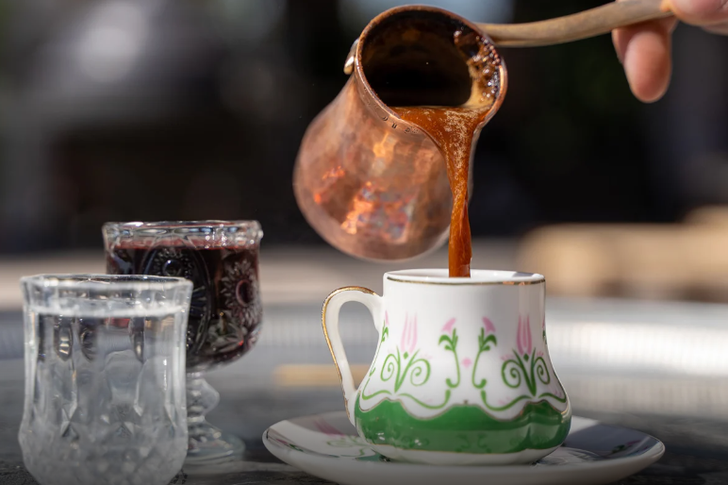
To call Turkish coffee "just a drink" certainly understate...

NASA has discovered that since 2020 there has been an asym...

This year's season has been extremely challenging for ...

An ordinary morning. A message comes to your phone from an...

The disappearance of the Mayan civilization is a question ...

György Schwartz was born in Hungary in 1930 to an Ashkenaz...

Burj Al Babas mund të jetë qyteti më i çuditshëm në botë. ...

The first atomic bomb in Hiroshima Hiroshima after the dr...

The discovery of King Tutankhamun's tomb in 1922 captivate...

July 4th marks Independence Day in the United States of Am...

The history of chess can be traced back nearly 1,500 years...

Years of tensions between Israel and Iran have escalated i...

The Northrop B-2 Spirit, also known as the Stealth Bomber,...

May 28th for Korça is a historic date. In Kapshtica (borde...

Rome, the vibrant epic metropolis, the land of lost empire...

YouTube, which is celebrating its 20th anniversary, has beco...

When the car arrived at the border, it was not yet dawn ou...

Tanush Mulleti, the nephew of Qazim Mulleti, has confessed...

On the morning of July 7, 2026, the Ministry of Culture ur...

After the disclosure of the portfolio of properties an...

For 6 months now, CNA has been sending several letters to ...

The word "fatherland" with properties is not enough. The m...

The Special Board of Appeal (KPA) decided this Monday ...

The KPA vetting decided this Thursday to dismiss the p...

Suela Salavaçi, a prosecutor in the Prosecutor's Offic...

The Special Board of Appeal reinstated the prosecutor ...

A knife attack occurred this evening in Fushë-Krujë. Acco...

A 44-year-old man in Saranda has been seriously injured af...

Spanish police have acted on an Albanian-Spanish criminal ...

New details have been revealed regarding the murder of Egl...

In Albania, in 2024, 8,911 beds were available in public h...

Albania was included in the band of above-normal temperatu...

Today, our country will be affected by mainly stable weath...

Today, our country will be affected by mainly stable weath...

The death toll from two powerful earthquakes that struck V...

Oil prices rose to their highest levels in a month after t...

Iran has reacted to US President Donald Trump's statements...

Counter-terrorism police have taken control of the investi...

The ninth edition of "MIK Festival" kicked off with one of...

A historic evening for Albanian culture was marked in the ...

When I turned 10, another building was built in front of o...

A special scientific conference was held by the World Bekt...

The tax administration has announced the completion of the...

Albania has lost almost a quarter of its population since ...

This Monday, one US dollar is bought for 81.5 lek and sold...

This Sunday, one US dollar is bought for 81.5 lek and sold...