


"LVV scored its fifth victory in seven years"/ Kurti: We will cooperate with all parties
The leader of the Vetëvendosje Movement, Albin Kurti, appe...

The leader of the Vetëvendosje Movement, Albin Kurti, appe...

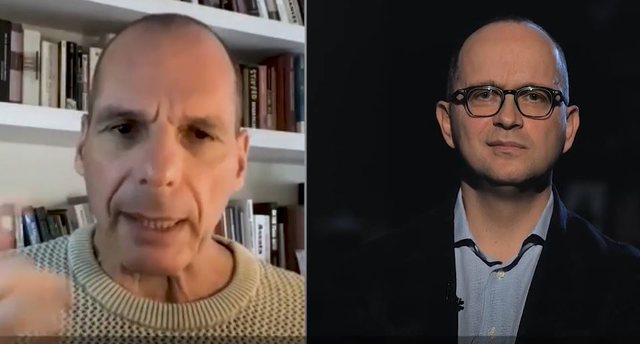
The former Greek minister, author of many books on capitalism and technology, Yanis Varoufakis, in Ditmir Bushati's podcast "Public Square" stated that techno-feudalism is killing capitalism.
According to Varoufakis, we already live in a time where rapid technological development is taking everything forward.
The former market has been totally replaced by technological platforms, such as Amazon, Alibaba and others, where by easily providing some of your data you can buy the products you want without going to stores.
"Today, instead of the feudal lord who received a share of the production at the end of the harvest period, we have entrepreneurs who use different types of production, such as labor, capital, land, and receive up to 40% of the profit," he says. he.
"When I say that capitalism is already dead, it sounds like a ridiculous claim, because everywhere we look we can see the triumph of capital, but this does not contradict my thesis. It all depends on how you define capitalism. From my point of view, a simple way of looking at capitalism is as a socio-economic model of production, a system, that rests on two pillars, two foundations. One is the market, where all economic activity takes place, which was not the case in feudalism or in any type of society before capitalism. And the other is that rents have given way to profits. So instead of the feudal lord taking a share of the produce at the end of the harvest period, we now have entrepreneurs who use different types of production, such as labor, capital, land, and take their profit. Profit was the subject and the market was the place where economic activity took place in capitalism", he emphasizes.
Full interview
Ditmir Bushati: Welcome to Public Square Yanis! It's a pleasure to have you here.
Yanis Varoufakis: The pleasure is all mine. Thank you for the invitation.
Ditmir Bushati: A few years ago you wrote a book about the essence of capitalism, where you actually answered your daughter's questions about inequality and why there is so much inequality. You recently published a book about the techno-feudalism that is killing capitalism. In your view, the market is being replaced by digital trading platforms and profit is being replaced by rent. Can you elaborate more on the political and economic direction implications of this situation?
Yanis Varoufakis: Thank you for giving me the opportunity to talk about this. First, when I say that capitalism is already dead, it sounds like a ridiculous claim, because everywhere we look we can see the triumph of capital, but this does not contradict my thesis. It all depends on how you define capitalism. From my point of view, a simple way of looking at capitalism is as a socio-economic model of production, a system, that rests on two pillars, two foundations. One is the market, where all economic activity takes place, which was not the case in feudalism or in any type of society before capitalism. And the other is that rents have given way to profits. So instead of the feudal lord taking a share of the produce at the end of the harvest period, we now have entrepreneurs who use different types of production, such as labor, capital, land, and take their profit. Profit was the subject and the market was where economic activity took place in capitalism. OK?
Now, the moment we get into one of these big digital commerce platforms, whether it's Amazon.com or Alibaba or Uber or AirBnb, or really any kind of digital platform that relies on data collected by Google, by Apple, etc. , the moment you enter Amazon.com, I'm choosing this because it's a good example, the moment you enter Amazon.com, you exit capitalism. Because Amazon.com is not a marketplace. It looks like a market, because there are many buyers and many sellers in it, but if you think about it, the algorithm takes you, it knows a lot about you, it has a lot of knowledge about you, and that's why its recommendations for books or things others are very good, because he knows you. So you've trained the algorithm to train you, to train the algorithm to know you really, really well. This algorithm knows the buyers very well, perfectly, in the same way. So it matches a buyer with a seller in a way that no one can understand except the person who owns the algorithm. And it matches a buyer and a seller with the goal of maximizing the rent the seller gets for every sale they make to you. For an electric bike, a book, a disc, anything, up to 40% is held by Jeff Bezos, the owner of the algorithm. This algorithm, of course, is a kind of capital because it does not exist on the Internet. I call it virtual capital (cloud capital), but it exists on earth. It's in server farms, fiber optic cables, telecommunications antennas, and more. So we actually have a new form of capital, called virtual capital, that can do many things at once. It can capture your attention in a way that television programs used to. Second, it can put ideas in your head about the products you want, just like ads used to do. But now, it's a two-way, never-ending dialectical process, train you to train him to train you to train him to train you to train him to do this to your mind, right? It's not like a TV commercial, which only comes at you one way. The third thing it does is that everything is accomplished through your activities as a user. You produce unpaid work, work with which you replenish and reproduce the virtual capital of that algorithm. In the end, what happens is that the owner of that virtual capital uses your free labor in order to maximize his power to get 40% of the price of the item he convinces you to buy and also sells it to you directly bypassing any market. Amazon convinces you to buy something and then sells it to you. And in the Amazon warehouse where the item is packaged and mailed, the workers, the proletarians who work for paid work, are driven by a digital device they wear on their wrist with the same algorithm that works faster and their work supervised.
What I mean is, folks, this is not capitalism anymore. It is based on a very powerful form of mutant capital, which I call virtual capital. But this is a new kind of techno-feudalism, because the platform on which this commercial activity takes place is a kind of feudal manor owned by a feudal lord, the techno-feudal lord, who collects fees just as feudal lords once did, except in in this case his power does not come from inheritance. He is not only the son of the landowner, but he has used very large amounts of capital and money to invest in digital technologies, which makes him a kind of techno-feudal landlord. And the end of this long answer to your very good question is, most of the money comes from central banks. Nine out of every ten dollars that have been spent to produce this wonderful virtual capital come from central banks after the great financial collapse of 2008. This is the new world. It is not capitalism as we know it.
Ditmir Bushati: So, in fact, what you are saying is that virtual capital has engineered and monetized our behavior. And so we are effectively in a brutal race for clicks, for data. The question I have is, how does this relate to the liberal individual? So how do we protect the fence of liberal individuals in this ecosystem or in this new world that has been created?
Yanis Varoufakis: Oh, it's too late. This opportunity is gone. There is no longer a protective fence. I am a leftist, I come from a Marxist tradition. But it is not only us leftists who should despair about what is happening. Liberals must stand up for the destruction that is being done, for the killing of the liberal individual. But let me elaborate further. Quite rightly, you focus on changing human behavior, because you see the profound difference between virtual capital and earlier forms of capital, traditional capital, whether we are dealing with steam engines or tractors, or today with highly sophisticated industrial robots. advanced. These are all obsolete forms of capital because they create manufactured means of production. They are machines that are made by humans to make other things. This is capital as we understand it: means produced for production. But the algorithm that lives on your phone, the artificial intelligence (AI), all this physical infrastructure, giant server farms, what I call virtual capital, it's not a tool made for production, it's a tool made for changing human behavior . Whoever owns this capital has the capacity to modify our behavior. And it's two-way. Henry Ford, General Electric, Coca-Cola, McDonalds, all have access to very talented advertisers who have modified our behavior. They put into our minds desires we didn't have, they made us want things we didn't really want. That is great power, but these were human beings, and because they were human beings, this was a one-way process. So a big advertiser creates an ad for McDonalds that you look at and say to yourself, "oh, I want a Big Mac," and then you go to McDonalds to buy it, and that's the end of the story. The ad appeared on the TV with a poster, from there it crossed your mind and then you went to the Mcdonalds store and bought the product. Now it's an endless two-way process, the machine influences you, you influence the machine so that it influences you better, you influence it so that it influences you better, etc., so that you change your behavior. Anyone who has this power, who owns this capital, is many times more powerful than Henry Ford, McDonalds or Coca-Cola ever were. And most importantly, the owners of this virtual capital no longer work for capitalism. So if you were a good advertiser, you worked for a capitalist, you had a client who was a capitalist, and you helped the capitalist increase the demand for capitalist goods. But now if you're Jeff Bezos, you don't work for a capitalist, you don't need one, you're actually the owner. Your vassals are capitalists. They come to you and they are paying up to 40% of what they receive from consumers, and at the same time all consumers are also producers of their virtual capital, because every time you go to Amazon.com you replenish the stock of virtual capital belonging to Jeff Bezos. Every impression you give on the Internet about a book or any product, or likes you give and things like that add capital to them. So everyone works for these techno-feudal owners. That's why I say it doesn't help to think of this system today as capitalism anymore. So I no longer use the word capitalism, which I know is very difficult for people.
But let's go back to your question about the liberal individual, and I try to explain that in the book as well. Liberals thought that the importance of markets in capitalism, the reason why they defended capitalism was because for them the market was the sphere of freedom. You are a sovereign consumer, you want a coca-cola and nobody has the right to tell you that you don't want a coca-cola, right?! Your desires are sovereign. Maybe it had an impact, but ultimately you decided what you wanted. And you could sell and buy whatever your wallet allowed. So if you wanted to sell your labor, you do it, you spend eight hours working in an office, or a warehouse, or a supermarket, in a factory, and then at the end of the day, at the end of those eight hours, you worked for yourself, relaxed, you had the capacity to expand your horizons, read books or things like that. But today, it doesn't happen like that anymore. And it doesn't happen like that because, for example, let's take young people. I have been an academic all my life, this was unfortunately interrupted by politics, but I still think like a professor, and I have noticed this fundamental change in the way students or young people behave and think. Because now, when they go to a job interview, they know that the interviewers, sometimes now the panel of interviewers are algorithms. Algorithms interview students or future employees. Do you know that now there are also interviews conducted through artificial intelligence as the first filtering of candidates? Whether it's humans or artificial intelligence, the first thing they do is see your social media profile, your Facebook page, what you've posted on Instagram, TikTok, posts on the X network. They summarize everything, or they do you a summary. In other words, young people, even when they are at home in the middle of the night, post something on TikTok, in their mind they know that they will be judged based on what they post, even if it is not conscious. , but unconscious. So there is no border, dividing line, protective fence that separates work from pleasure. They live with the constant anxiety of creating a persona that will be acceptable and desirable to Google, to Facebook, to techno-feudal landlords, virtual capitalists, as I call them in my book. And when it comes to work, we know that, even from the beginning with e-mail, there is no clear division between work time and rest time. So that division that liberals valued, and that they were prepared to support capitalism as a system for increasing freedom, is gone.
Ditmir Bushati: How is techno-feudalism developing in the current geopolitical circumstances? You mentioned that most of the capital is being provided by central banks, and we also know the techno-competition between the US and China, but there are also hot spots in the Middle East, in Europe, and everywhere. So how will this be seen or develop in the new geopolitical circumstances in your view?
Yanis Varoufakis: With techno-feudalism we have two destabilizing forces at once. The first is, in support of my hypothesis that profit is being replaced by virtual rent. If you compare General Motors or Volkswagen on the one hand, and Facebook on the other hand, all companies like Volkswagen or General Motors pay about 85% of their income as salaries to workers, administrators, senior administrators. They receive roughly 85% of the income of the big corporations of yore. Facebook pays less than 1%. So all this wealth, all this virtual rent (cloud rent) is taken from this circular circle of income in the US, in Germany, in France, everywhere. Which means that aggregate demand is very low. Which means the system is more unstable in the global north. This volatility drives the tendency to do two things. Makes the Central Bank produce more money with the goal of replacing lost aggregate demand, and imperialism, finding markets and more markets. This is the first force. This is why techno-feudalism is not good for geostrategic peace, but is a very, very big threat to international peace. So my hypothesis in the book is that the new cold war between the US and China comes about because we have a big clash between the two fiefdoms of virtual capital, the American one and the Chinese one. The war in Ukraine has caused Saudi Arabia, Indonesia, Pakistan, which use money in different ways, a lot of anxiety about what will happen to their dollars, because they saw that Russian dollars could be confiscated by the Americans and Europeans. Well, if you're a Saudi or Emirati in Europe with a bag of money, you think to yourself, 'ok, this doesn't look very good because today they're in conflict with Putin and his people, tomorrow they're going to be in conflict with me. God knows what could happen'. So, to a small extent, we see an increase in global payments moving towards the Chinese payment system, the digital payment system, both WeChat Pay and Central Bank. This is a real danger for the US and Germany, because the only reason the US maintains hegemony, knowing that their balance sheets are in the red, more and more since 1971 they are in the red, in the sense that have a trade deficit and a budget deficit, and the only reason they are combining these deficits with growing hegemony is because they all use the dollar system. So if Chinese virtual capital and virtual finance together constitute an alternative to the dollar payment system, it poses a very big, clear and present risk to the US. And this to me explains the new cold war between the US and China.
Ditmir Bushati: In the past, capitalism has been limited by social democratic governments. Do you think something similar to techno-feudalism could happen, from progressive forces or social democratic forces, although I have to admit that social democracy is somewhat in retreat?
Yanis Varoufakis: I'm afraid I have really bad news for social democrats or for those people who believe in social democracy. It no longer exists. Just as the liberal individual no longer exists, the dream of social democracy no longer exists. It has long since ceased to exist. Let me remind the audience what was the golden age of social democracy. For me it was the period when Willy Brandt in West Germany, Bruno Kreisky in Austria, the Labor Party under Harold Wilson in the United Kingdom, at the beginning of François Mitterrand in France, Andreas Papandreou in Greece, they saw their role as politicians. that would gather around a table, the representatives of the employees, the trade unions, on the one hand, and the representatives of the industry on the other, and would make agreements between them. And the arrangement would be that part of the profits of the industrialists would go to the state to finance schools, universities, hospitals, social security, pensions and so on, and another part would go to the workers to improve their situation. them as far as the conditions are concerned. And this they did. It was actually a civilized social democracy, it was a force of civilization. But after the Bretton Woods of 1971 we have the release of the bankers from all the restrictions that had been put on them after the collapse of 1929, according to the new deal, in the USA and the Bretton Woods system that imposed many restrictions on the bankers between 1944- 1971. So the bankers were freed and financialization came. There was a very large shift of power from the sphere of industry to the sphere of finance. Once upon a time, in the 1960s, if you were the head of Siemens in Germany or Krupp, you would own the universe. After the 1970s, you owned the universe if you controlled JP Morgan or Goldman Sachs or Deutsche Bank. And if you were an industrialist, your power was being reduced, social, economic and political power. If you were a banker, your power increased. So at this point, it became impossible, even for sympathetic social-democratic chancellors, presidents, prime ministers to do what Willy Brandt, Bruno Kreisky and others did, bringing industry and trade unions together in a hall to reach an agreement. . And this is because the power was no longer with the industrialists, because much of their power had passed to the financiers. How could you bring together the representative of Goldman Sachs, who is anyway American, with the Volkswagen unions? It was simply impossible. So instead of that social democratic "new deal", people like Gerhard Schröder, social democrat and chancellor of Germany, Tony Blair, the second government of François Mitterrand, and the second government of Andreas Papandreou, made deals with the financiers . The deal was really quite simple. The unions were out of the game, they were not in the room, and the deal was between the social democratic government and the financiers, and it was very simple. The financiers asked to be allowed to do as they pleased, with no restrictions at all. They wanted to make high pyramids with CDOs (collateralized debt obligations) and CDS (credit default swaps) and so on all toxic instruments were allowed. In exchange, a small part of the participants at the table, a small part of those huge financial rents that were accumulated by speculation and speculation and speculation would go to the state. And actually when you think of Tony Blair letting the City of London go completely crazy, he actually let the financiers "kill each other", but he also took enough money from them, while everything was going well, to finance the national health service in the United Kingdom, which is a somewhat social democratic policy, financed by the revenues and profits of finance that were built in hot air. When the hot air blew, so as you know, the financial sector collapsed in 2008, the social democrats who were in government were no longer able, they had neither the analytical acumen nor the moral strength to say to the bankers, ' ok, you bastards, get off the stage, we're going to nationalize the banks, we're going to save them, but you're off the stage'. Instead they applied huge austerity measures and printed money to give to the bankers. And this is the end of social democracy. Today we have another change. You remember how power shifted from industrialists to financiers, and is now shifting to virtual capital. How can Jeff Bezos and the unions sit at the same table? It is even more absurd to imagine this than Goldman Sachs and the unions. So the idea that we're going to have regulation, how can there be regulation for the owners of the algorithms, when the algorithms aren't even understood by the people who actually created them? It is the same as with CDOs, (collateralized debt obligations) when Lehman Brothers and JP Morgan created these very complicated financial instruments. The people, the mathematicians who created these instruments, as Warren Buffet once called them "financial weapons of mass destruction", they did not understand how they worked, they did not understand the things they were creating. I know, it's like a God who creates a creature and doesn't understand what he's created, like Frankenstein, just like the people who created virtual capital (cloudalist), don't understand it. So how can the state regulate an algorithm that even the people who created it do not understand, without thinking a little. The people who created ChatGPT4 and now ChatGPT5, they know how they did it, but they have no idea how the app comes up with the answers it gives you when you ask for them. So the people who created it don't understand it. How can the government fix this? Then there is the issue of taxation, which is useless now that you cannot impose taxes. As you may know, Amazon's Jeff Bezos made 44 billion euros in profits in Europe alone and paid zero taxes. because his financiers are very good at hiding all profits as costs. So nothing can be done about it. Perhaps, a digital tax could be levied at the point of sale as a percentage of revenue, but still that does not stop the immense power of virtual capital to modify your behavior or mine. Not to be too long, I think it's revenge against the defeated left, the defeated Marxist left, because we can already prove, beyond a reasonable doubt, that the only way we can reclaim even liberal freedom is socializing algorithms, behavior modification tools, that part of capital that modifies behavior. Now, how we will do this is a very big question, but I insist that nothing will return us to the capacity to be in control of our thinking, our desires, and especially the way we live and communicate with each other. the other.
Ditmir Bushati: Yanis, father has shown you that everything that matters in life is pregnant with the opposite. I would like your opinion about artificial intelligence viewed in this direction? So from your father's perspective, how would you view artificial intelligence today in terms of wealth creation, in terms of innovation?
Yanis Varoufakis: Artificial Intelligence is another triumph of the human spirit. In the same way that thousands of years ago we learned to make steel from iron, we managed to domesticate animals even earlier in time or cultivate crops. These are all heroic acts of technology, technological triumphs of the human mind, but like every technological triumph, instead of liberating us, instead of making technology our servant, we become the servants of technology. And this is the dialectical turn. The same goes for artificial intelligence. That's wonderful. Actually, I really like AI when I play with its app translation or GPT4. I'm really excited to be living in the age of artificial intelligence when I heard that artificial intelligence has helped scientists at pharmaceutical companies and university labs create antibiotics that kill super bacteria that no man-made antibiotics can kill and escape human life. I am very much with her. But as always when it comes to technology, the issue is who owns it, because, you know, it's like an atomic bomb or atomic technology. Who owns the atomic technology and what are they using it for? If they're using it to create radioisotopes to cure cancer to ensure that most people survive cancer, that's a great thing, but if they're using it to build an atomic bomb to blow us up, this is not a good thing. So I'm concerned about property rights. Who owns this damn thing? The big danger of artificial intelligence today is that it takes virtual capital, because we've had artificial intelligence, it's not new, like Google, Zoom, through which we're talking today, they're all driven by artificial intelligence. If you see at the bottom of our screen there is an artificial intelligence application that can be used to summarize what the two of us are talking about. So we've had it here, it's not like it happened to us now. What is clear is that within the current property rights for the structure and distribution of these machines or technologies we will have a much, much deeper poverty for the majority, an even greater inequality. It will be the first technology that will destroy more jobs than it will create, because it is now attacking not only the work of workers but also the work of intellectuals. Lawyers will lose their jobs, and are currently losing their jobs. Doctors will lose their jobs. Of course we will have new jobs, but the jobs that will be eliminated will be more numerous than the jobs that will be created, and this for the first time in the history of technological change. And the worst part of it all is that our conversation will be completely poisoned when AI algorithms are owned by people with vested interests in poisoning them. As you know, we already have the fake "Deepfake" images, we will not be able to rely, we will not be able to know what to believe and what not to believe. So, for example, a copy of you will appear talking about an issue you despise, and it will be very difficult for your audience to know if it's really you or a fake image of you. And when the technology belongs to people with an interest in poisoning the conversation because they have an interest in thwarting progressive policies that oppose their property rights to virtual capital, then I mean your show or podcast is called "Public Square" , but there will be no more "Public Square".
Ditmir Bushati: If we talk about productivity, inequality and technology, you know that leftist thinkers and economists support economic models that are based on high productivity, a very good education system. Meanwhile, both our countries in the southern part of Europe are economies based on tourism. What would be your suggestions, how can we achieve a balance between high productivity and technology?
Yanis Varoufakis: Productivity is a very strange notion. In the sense that there are two ways to increase productivity. One is to have more output from certain efforts or work, human work, and the other is simply to destroy work, and as long as there is work left, it produces little, and then the output-to-labor ratio increases. So in Margaret Thatcher's time in the UK when unemployment rose from 750,000 to 4,500,000, productivity went up because a lot of people lost their jobs, but output didn't fall as fast, and that increased productivity. This is not a huge benefit. It is not an advantage for society.
As far as it belongs to our countries. Look, our countries, when we speak as Greeks or as Albanians, Serbs, Macedonians, any of us, our countries are in a process of "desertification". We are becoming a desert. We are losing people, young minds that are worth their weight in gold or platinum. They are migrating. Our countries are turning into playing fields from the Global North. We will end up with nothing more than five-star hotels, five-star clinics for the elderly, nursing homes so that Germans, Swedes and Norwegians can come to spend their last years in a better climate, meanwhile that we become a little like Hawaii. Don't go to Hawaii if you haven't been, but if you go you will see a big island, you will see beautiful places.
Ditmir Bushati: I thought you would say that we are a bit like California or Silicon Valley...
Yanis Varoufakis: A little like Hawaii because we are a little like the natives of Hawaii. They are moving them more and more, they are moving them away from the coast, which is full of five-star hotels. Locals live in the center of the island, in slums. At six o'clock in the morning, the vans go to the villages, to their neighborhoods, pick them up and take them to five-star hotels, where Japanese, German, American tourists, in these hotels owned by Japanese, Americans and Germans, spend some time wonderful, and the locals go there to clean the bathrooms, cook food, sing local songs and play the guitar and then take them back to their slums. This is what is happening to the Balkans. This is what is happening to us, because there is no investment in artificial intelligence, there is no investment in green technology, there is no investment. And any artificial intelligence that is being used is being used to further deplete any quality jobs we have.
Ditmir Bushati: My last question is related to Europe. You recently wrote an article about Jacques Delors and Wolfgang Schauble, which I understood as two competing visions of the euro but also of the economic-political model of Europe that is somehow projected and reflected in the southern part of Europe. What would be your advice to the leaders of the European Union or our respective countries, how to organize the European integration process with the aim of accelerating the convergence of our countries with the average of the European Union? I know you have been very critical about this point and I really want to hear your analysis on this.
Yanis Varoufakis: I wish you had asked me this question five years ago, before the European parliamentary elections of 2019, where I ran in Germany to emphasize an idea, that this should be a political war on the European level and not a political war on national level, because five years ago I was much more optimistic. Five years ago I had an enthusiastic response to your question. My answer at the time was that we should learn from the crisis in the Eurozone. We must learn that you cannot have a Monetary Union if you did not have a Fiscal Union, without having a common investment policy, which does not depend on the separate budgets of nation states. We as the DiEM25 Movement (Democracy Movement in Europe 2025) ran in seven or eight countries with the new green deal for Europe, with which we put forward the answer to your question, for example, we cannot have a federation now because it is too unrealistic , but we can simulate the federation by having the European Central Bank support the issuance of many bonds by the European Investment Bank, which can then become 500 billion a year, which then goes into a common fund to be spent and invested in all of Europe. How can we start the process of the constitutional assembly thinking about the federation, thinking about the European Constitution? These are the things we put forward in 2019 before the European parliamentary elections of May 2019. Since then, I have to be honest with you, I think this is a beautiful thing that hardly comes true. Europe has missed the ship or the train or the opportunity. I can't anymore, even though I think these things would work, I don't see any political process that is capable of making these things work anymore. And the reason is the Pandemic. Because the Pandemic proved to us that Europe can do a lot, if it wants to. Not only Europe but also the United Kingdom, the USA. I remember when the neo-liberals used to tell us that, 'the state is finished, it is very limited from the fiscal side, there are not many options because of the debts, just leave it to the market'. And then the Pandemic came, the isolation came, we had a complete collapse of production, of course to save people's lives, I'm not criticizing, I'm just describing, and then the state intervenes and replaces all wages, immediately, reprints trillions and everything was fine. So, they proved that they can do it. The money tree is there. They can use it if they want, but in Europe they used it in the wrong way. They created the next generation of the EU, the so-called "Coronavirus Recovery Fund", which was a waste of opportunity, because it was the kind of funding that I envisioned before 2019, as a green fund for a green investment and in particular for green energy. At the time, I was actually saying, it's the way to break away from Gazprom and Vladimir Putin, if we were to create all that green energy through an investment of 500 billion a year, for every year. But that didn't happen. Instead they created the Recovery Fund which is institutionalized corruption, that's right, institutionalized corruption. So they took hundreds of billions of euros, which they borrowed from the markets, from the financial markets, which in itself is not a bad thing. They could get the funds from the European Central Bank instead of buying Greek debt for example, which is ridiculous, knowing the state of the Greek state. But still, they borrowed those hundreds of billions. And what did they do with them? They sat around a table and said Italy gets a hundred billion, Greece gets forty billion, Spain gets eighty billion. And who received this money in the respective countries? The oligarchs. So basically, this may sound strange said by a Greek, it was the European Union that adds debt on the shoulders of the German worker, because the German worker pays taxes not the rich, the rich don't pay taxes because they have lawyers and financiers too good, they don't pay anything. So the German worker had to borrow money on behalf of the Greek oligarchs. And we must say this to understand that this is a recipe for destroying the possibility of a European Union as it should be, because this turns the Germans against the European Union, who do not want to hear about the federation, who do not want to hear about consolidation, a fiscal union, because every time they hear the words "More Europe", they imagine more taxes for me to pay the Italian and Greek oligarchs. So I'm afraid Europe is no more. I think that this European Union has come to an end. I have no more hopes for this European Union. And you can see that. You can see it with Ukraine. The European Union has lobotomized itself. We no longer have an opinion on anything. Whatever Washington tells us to say, we say it. And that's it. And we must say this to understand that this is a recipe for destroying the possibility of a European Union as it should be, because this turns the Germans against the European Union, who do not want to hear about the federation, who do not want to hear about consolidation, a fiscal union, because every time they hear the words "More Europe", they imagine more taxes for me to pay the Italian and Greek oligarchs. So I'm afraid Europe is no more. I think that this European Union has come to an end. I have no more hopes for this European Union. And you can see that. You can see it with Ukraine. The European Union has lobotomized itself. We no longer have an opinion on anything. Whatever Washington tells us to say, we say it. And that's it. And we must say this to understand that this is a recipe for destroying the possibility of a European Union as it should be, because this turns the Germans against the European Union, who do not want to hear about the federation, who do not want to hear about consolidation, a fiscal union, because every time they hear the words "More Europe", they imagine more taxes for me to pay the Italian and Greek oligarchs. So I'm afraid Europe is no more. I think that this European Union has come to an end. I have no more hopes for this European Union. And you can see that. You can see it with Ukraine. The European Union has lobotomized itself. We no longer have an opinion on anything. Whatever Washington tells us to say, we say it. And that's it.
Ditmir Bushati: Thank you!
Yanis Varoufakis: Nothing! Please!
Ditmir Bushati: It was a pleasure to listen and talk with you!
Yanis Varoufakis: Thank you! I can't wait to see it.

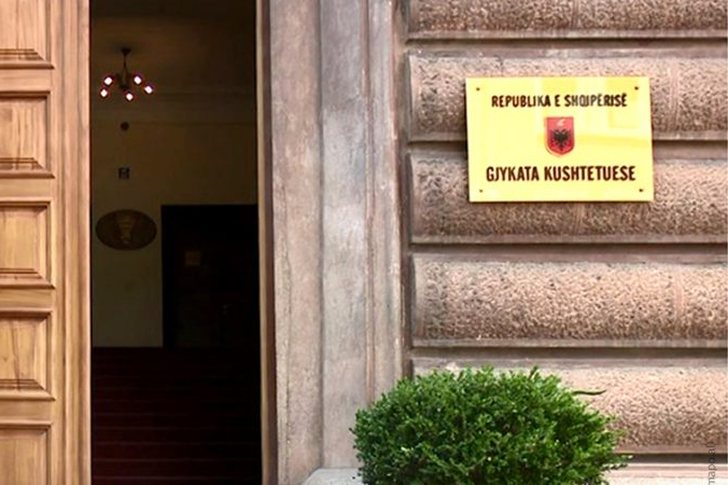
Gjykata Kushtetuese ka zbardhur vendimin e arsyetuar mbi k...
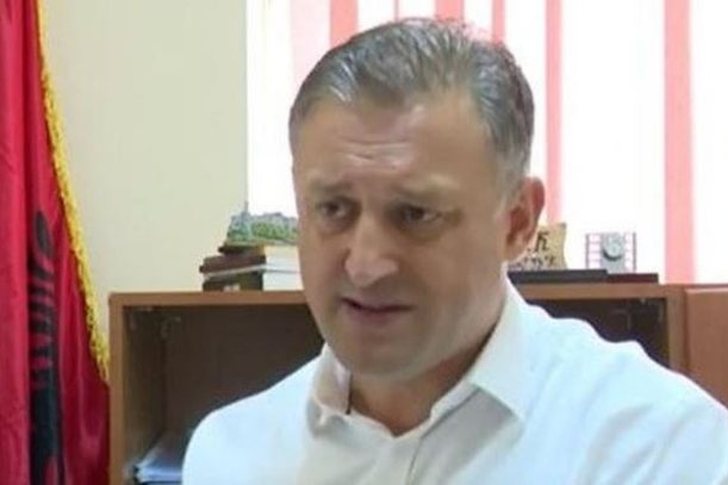
Ish-kreu i Kadastrës së Gjirokastrës, Florian Taçi është l...
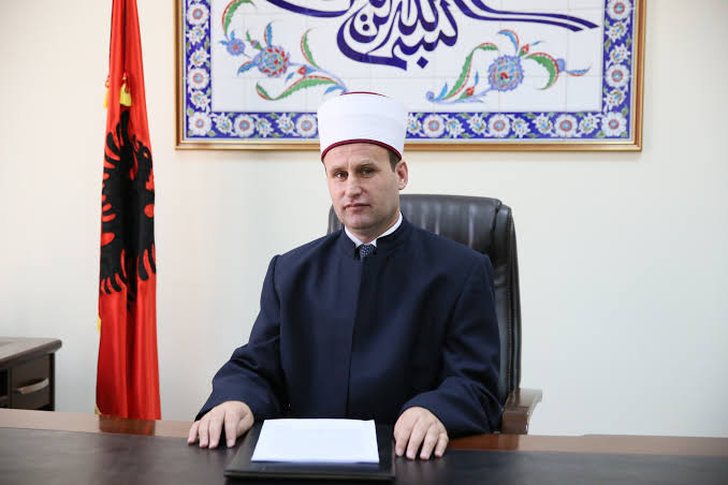
Bujar Spahiu is re-elected head of the Muslim Communit...
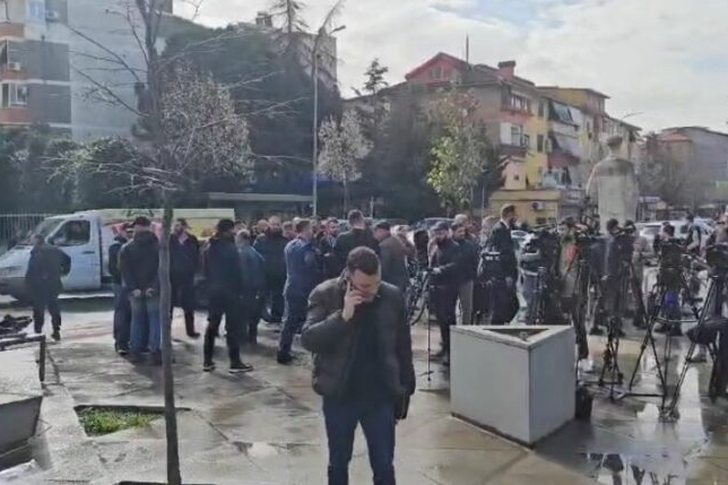
Të shtunën pritet të mbahen zgjedhjet për kreun e Komunite...
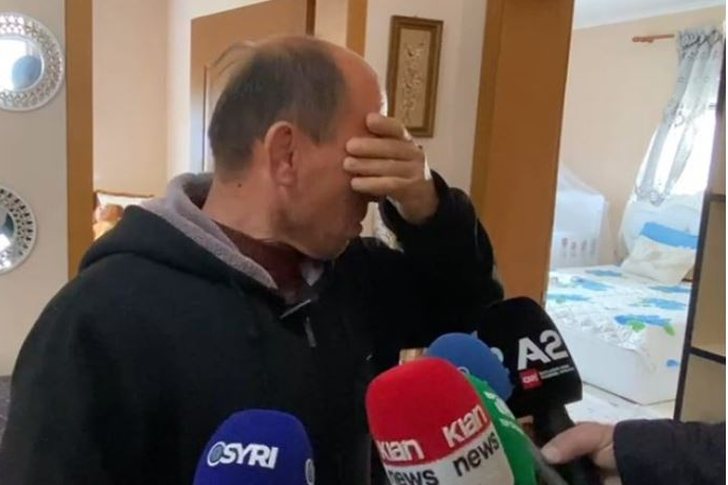
Residents of the house adjacent to the industrial area whe...

Për zjarrin që ndodhi në Urgjencën e Qendrën Spitalore...
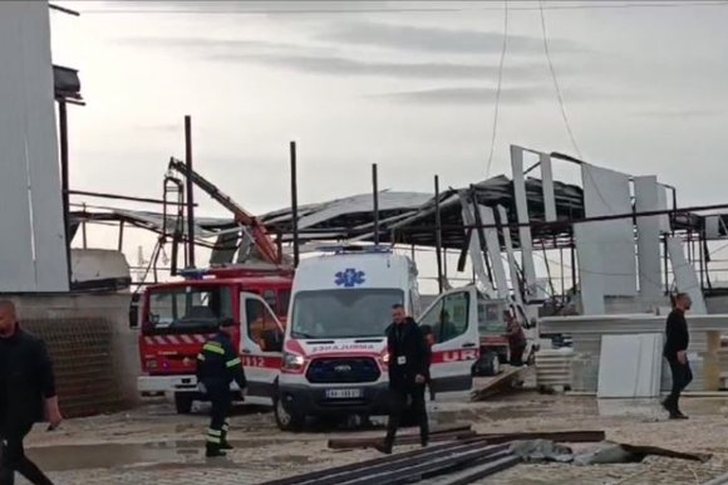
For the explosion that happened the day before in the ...

Former Minister of Infrastructure and Energy, Socialis...
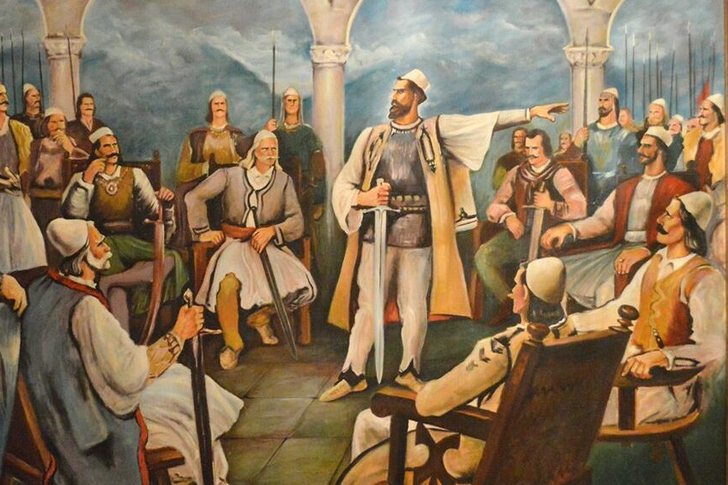
Today marks 580 years since the Treaty of Lezha. The...

Këtë të shtunë, datë 2 mars 2024, po ju njohim me titu...
OSHEE has taken security measures after the explosion in L...
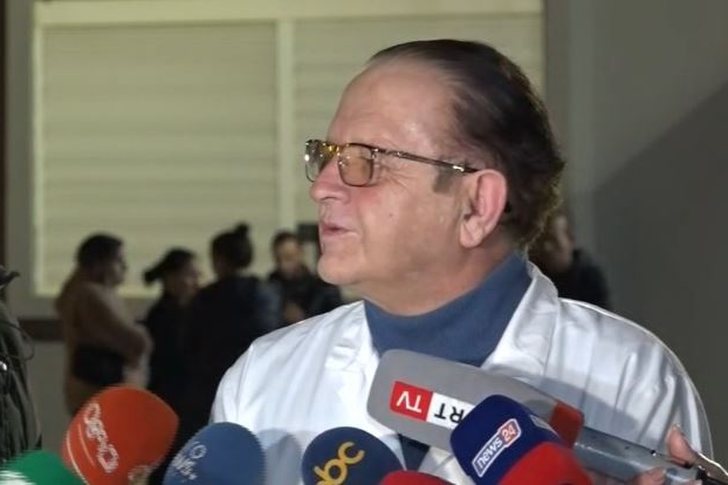
After the powerful explosion in Lushnja, there are two...
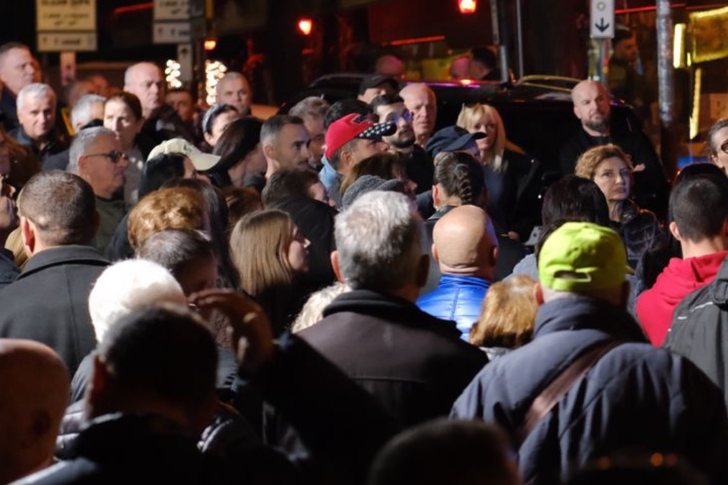
Dozens of citizens and supporters of former Prime Minister...
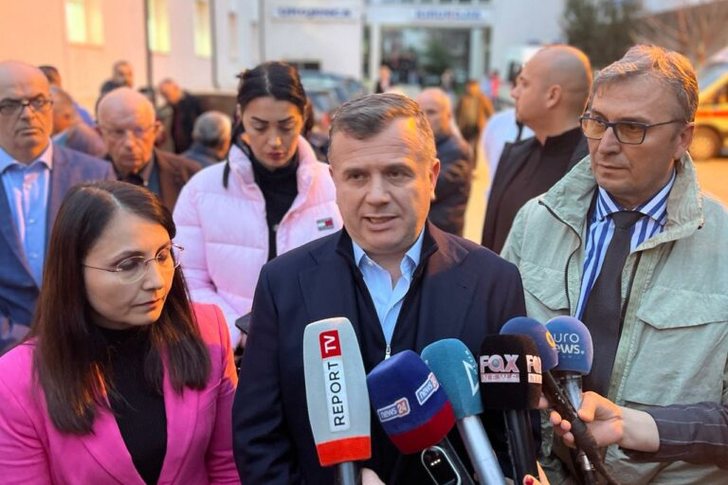
The Minister of the Interior, Taulant Balla, spoke to the ...
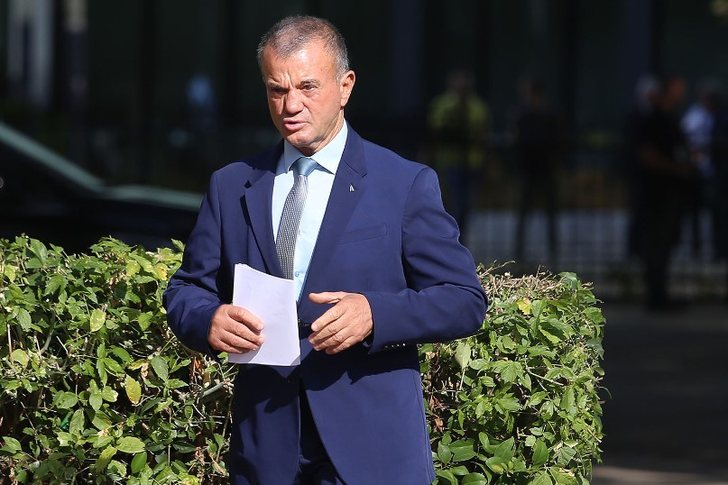
The deputy of the SP, Bujar Çela, was injured by the i...

A powerful explosion was recorded in a business in Lushnja...
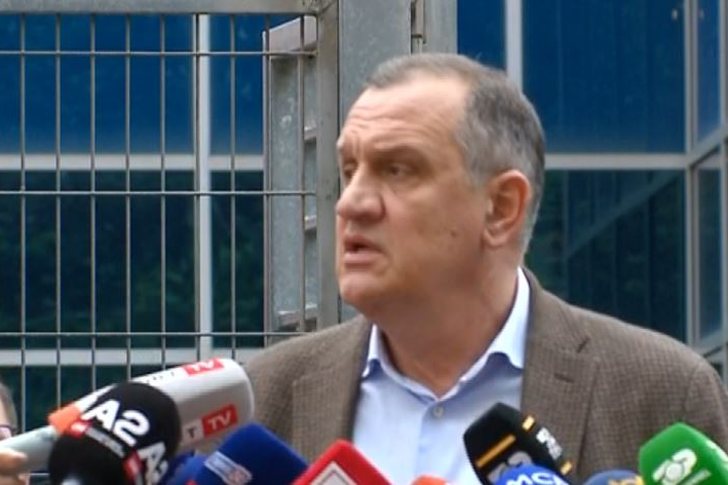
The former Minister of Health, Ilir Beqaj, attacked the ju...
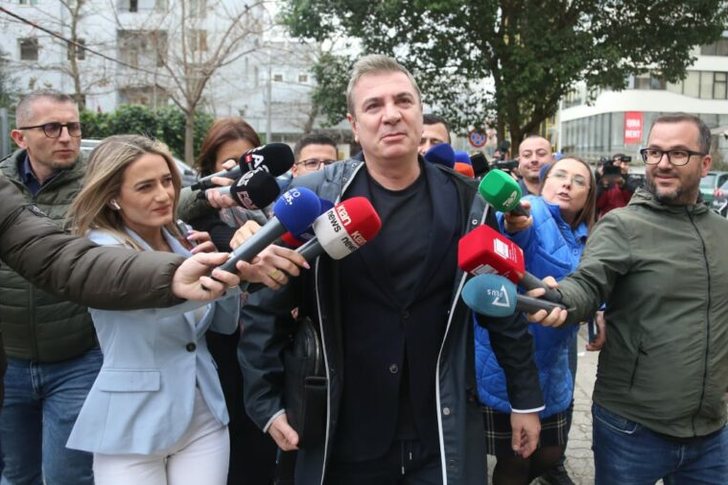
The testimony of former minister Damian Gjiknuri in SPAK l...
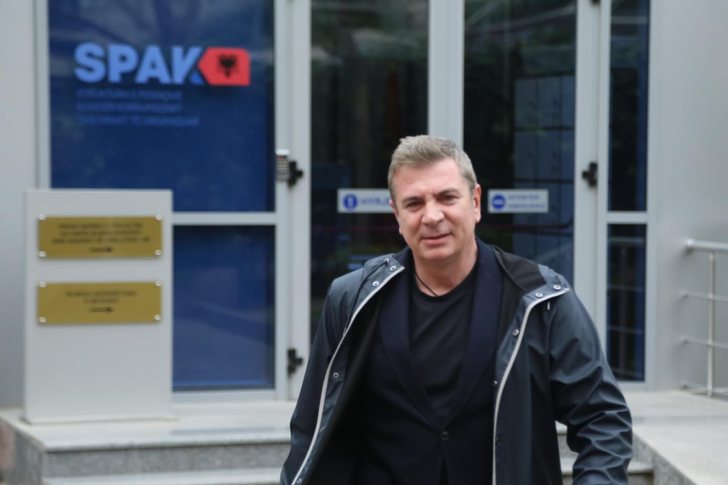
The former Minister of Infrastructure and Energy, Damian G...
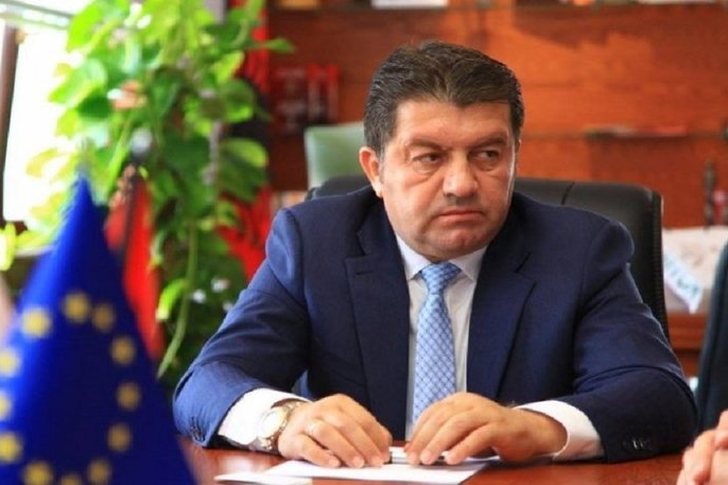
GJKKO has given the decision for the former mayor of Lezha...
SPAK's standards, the way it investigates, how it secures ...
Irfan Hysenbelliu claims to be a big businessman, an hones...

The murder of officer Enea Mekolli in the line of duty has...

The next case broadcast on the show "Stop", this Thursday,...

The Special Board of Appeal (KPA) decided this Monday ...

The KPA vetting decided this Thursday to dismiss the p...

Suela Salavaçi, a prosecutor in the Prosecutor's Offic...

The Special Board of Appeal reinstated the prosecutor ...

Another gunshot wound occurred at the scene. According to...

A gunshot wound occurred this afternoon in Shijak. Accordi...

The Border Police blocked the vessel and fined the driver ...
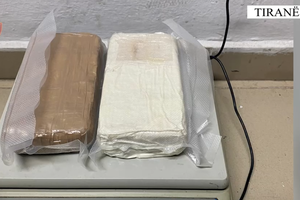
A police operation codenamed "Zonet" has ended with the se...

On Monday, our country will be affected by relatively stab...
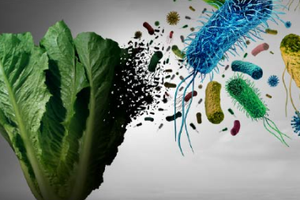
More than 860 million people fall ill and 1.5 million die ...
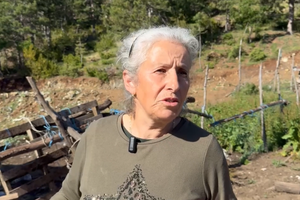
The mother of Violand Braçellari, the perpetrator of the s...
The modern European traveler seeks a meaningful connection...
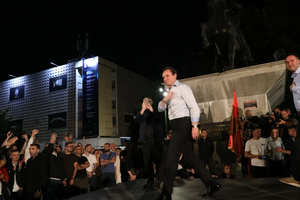
The leader of the Vetëvendosje Movement, Albin Kurti, appe...
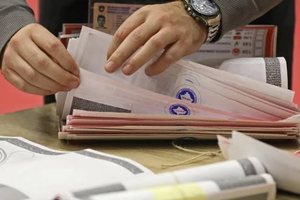
The vote counting for political entities in Kosovo is almo...
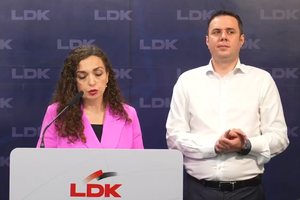
Former President Vjosa Osmani, who was the leader of the D...
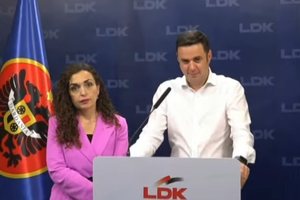
LDK leader Lumir Abdixhiku and former president Vjosa Osma...

Korça has transformed this weekend into the capital of cel...
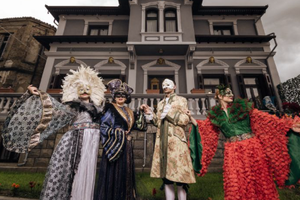
Korça is ready to open the summer season with one of the c...
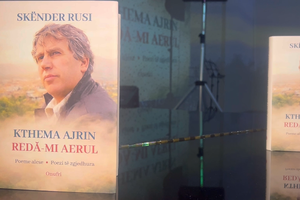
Two years after his passing, the renowned Korçë poet Skënd...

The Ethnographic Museum of Berat has opened its doors to v...

The tourist apartment market is continuing to expand at a ...

The number of properties sold by entities monitored by the...
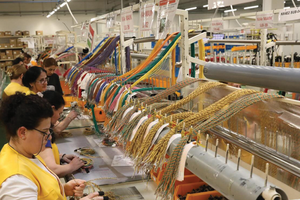
The automotive industry in Albania is currently at a turni...
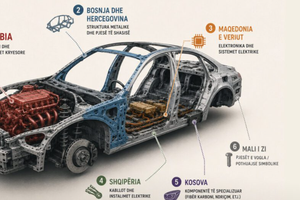
If you were to follow the industrial map of the Western Ba...