

The punishment of the crimes of communism is linked to the fate of Albania and its European future!
Writer Ismail Kadare, for the first time, addresses one of...


For some time now, the thesis of a "republic of prosecutors" has taken hold in the current public discourse, underlining the assumption of unlimited power of the Special Prosecution Office (SPAK), uncontrollable by the judiciary and selective (as the opposition declares when all its leaders are under investigation).
On the other hand, dramatic statements from the majority, such as "no one dares to take my phone," that I am a minister or above, have a very limited legal basis.
The 2012 constitutional reform (Law No. 88/2012) and the 2016 justice reform created a more independent prosecution from political power, but did not eliminate the constitutional filter of parliamentary authorization for measures that infringe on the personal freedom of subjects with immunity. This also applies to the control of telephone communications, for which there is now a consolidated jurisprudence of the Constitutional Court of Albania.
According to Article 73 of the Constitution, after the 2012 amendments
Paragraph 1: Non-liability (functional immunity): the deputy does not bear criminal, civil or other liability for opinions expressed and votes cast in the exercise of parliamentary function (with the exception of defamation).
Paragraph 2: Inviolability (personal immunity): the deputy cannot be arrested, deprived of liberty or have his/her person or residence searched without the authorization of the Assembly.
Paragraph 3. The only exception: flagrante delicto or capture immediately after the commission of the crime; even in this case, the Assembly is notified and decides on the continuation or lifting of the measure.
Paragraph 4: the decision is taken by open vote, after the possibility of discussion in closed session for the protection of data or investigative secrets.
Likewise, a minister who is not a member of parliament has parliamentary immunity as above!
Therefore, the power to arrest, detain or control (including telephone communications) remains exclusively in the hands of the Assembly – a political body dominated by the majority. SPAK does not have, and cannot have, unlimited power in this regard, including telephones. The thesis of the “republic of prosecutors” regarding the telephone, take it/don’t take it, give it/don’t give it, does not comply with the constitutional text in force.
In short, even if SPAK wanted to, it could not take the phone from either the minister or the MP because they are not equal to ordinary citizens, so "dramatic" statements have no legal basis.
In this institutional balance, the role of the Constitutional Court is considered crucial. Theoretically, it is the constitutional mechanism that prevents the prosecution from becoming an uncontrolled power, by establishing clear standards for proportionality, legality and judicial control of measures that violate personal freedom and privacy.
In this sense, the GJK has responded to the public concern that is articulated, not without basis, as a "republic of prosecutors" regarding telephones (perhaps also for pragmatic reasons), as I have analyzed previously!
But equally important is its role on the other side of the equation: to prevent immunity from turning into impunity.
Immunity, according to constitutional doctrine, is not a personal privilege, but a functional guarantee for the exercise of the mandate.
Parliamentary procedures for lifting personal immunity cannot be used to block or neutralize a criminal investigation.
However, current practice shows a serious deviation: the prosecution's requests for arrest warrants or other measures that infringe on personal freedom drag on for months in the Council of Mandates and Immunities. The 3-month deadline provided for in the Rules of Procedure of the Assembly (Article 118) and in the absence of a decision, leads to the automatic rejection of the request (March 16, 2026), a de facto effect that impedes criminal proceedings.
This practice leads us towards another Republic, a "republic of immunities", which seems in open contradiction to the spirit of the 2012 reform, which aimed to limit personal immunity and facilitate criminal investigation, while preserving functional immunity as a constitutional guarantee for the independence of the legislative and judicial powers.
In my judgment, Albania does not need either a prosecutor's office that operates without judicial control and with selectivity, or a parliament that turns the immunity procedure into an effective obstacle to justice.
It needs the rule of law, where functional immunity remains inviolable, personal immunity is effectively limited and used only when the functioning of the institution is seriously compromised; parliamentary procedures have binding deadlines, objective criteria and proportionality; and the Constitutional Court acts as the final arbiter, correcting both the excesses of the prosecution bodies and the abuses of parliamentary discretion.
The problem today is not the excess of the constitutional reforms of 2012 and 2016, but the lack of their uniform implementation and the weakness of the mechanisms that guarantee the real balance of powers.
This weakness is so evident these days!
Theoretically, the key to not slipping into either a "republic of prosecutors" or a "republic of immunities" is not politics or the prosecution, but the Constitutional Court. Only it has the authority to establish the constitutional limits of each power and to restore the rule of law.
If the prosecution exceeds its role, the Constitutional Court must stop it.
If the Assembly turns immunity into a blockade of justice, the Constitutional Court must correct it.
If both sides push the system to extremes, the Constitutional Court is the final arbiter.
Without an active, coherent, and authoritative Constitutional Court, any debate about a “republic of prosecutors” or a “republic of immunities” remains mere political rhetoric. With a functional Constitutional Court, both of these risks are neutralized within the constitutional order.
I am not naive to think that the real challenge today falls on the Constitutional Court because it is the last line of defense of the Constitution, and that is where respect, institutional pressure and public attention should be focused! This is taking into account our Republic, political and economic vectors. But as lawyers, people of the law, we must think that the challenge falls on it!
Because in a Constitutional Republic (not a banana republic), neither politics nor the prosecution should rule over the law, but only the Constitution, through the Constitutional Court.

Writer Ismail Kadare, for the first time, addresses one of...
Yesterday, Petrit Malaj, Minister of Finance, spoke in Par...

Self-regulation is vital, but the state in the middle is m...

Today, January 28, 2026, marks the 90th anniversary of the...
When people with integrity do not tell the truth, they onl...
I have been saying for years: "THIS POLITICAL ESTABLISHMEN...
The postponement of the decision by the Constitutional Cou...
When corruption becomes a system, it begins to appear in ...
Today we mark a significant and historic day for nations, ...
Emergjenca është doktrinë pushteti, blen kohë duke u shitu...
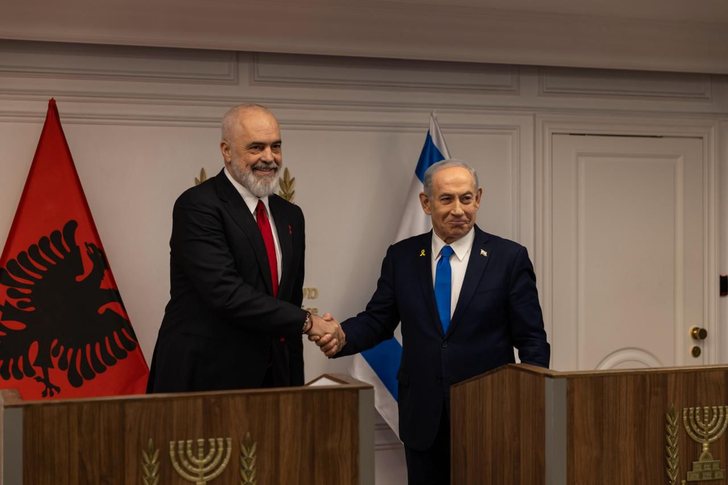
Prime Minister Rama's visit to Israel and his very presenc...
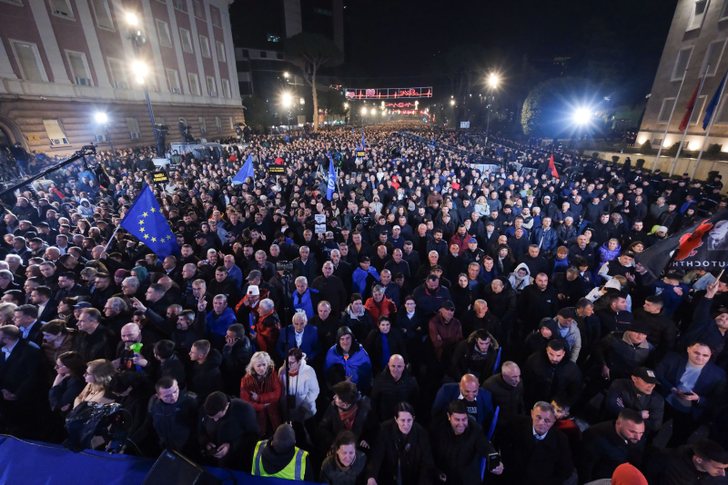
The delusion of absolute political power and the inability...
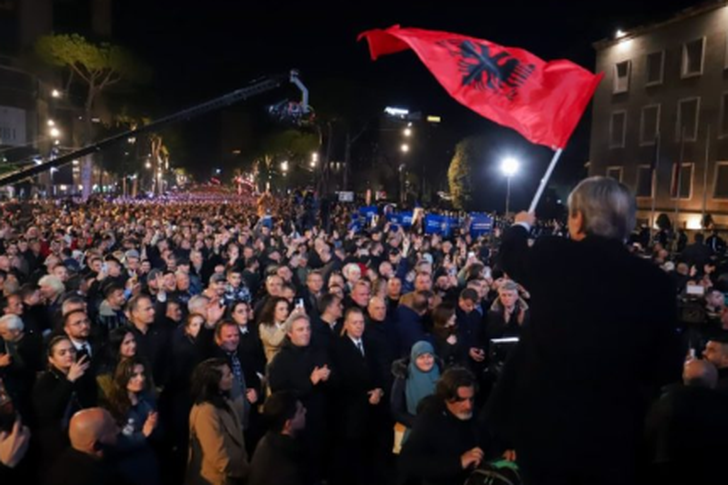
Saliu and his fire in the capital is a criminal offense. H...
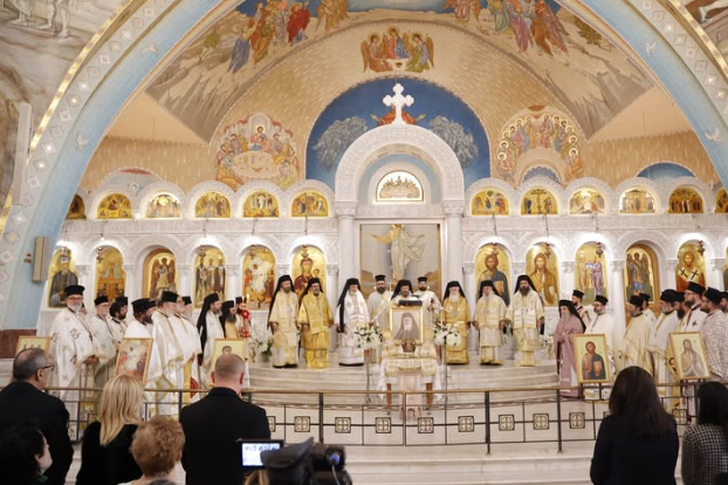
A year that our Church experiences the absence of our belo...
On Thursday, the American flag was lowered from the headqu...
In Tirana, Durrës, Shkodra and everywhere else, time seems...
Albania has a moral, national and constitutional obligatio...
The world is changing at an unprecedented pace. Every day ...
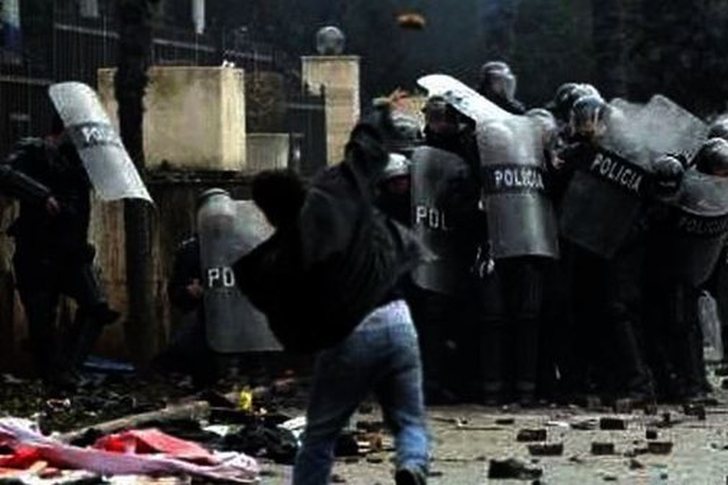
On January 21, 2011, during a protest organized by the the...
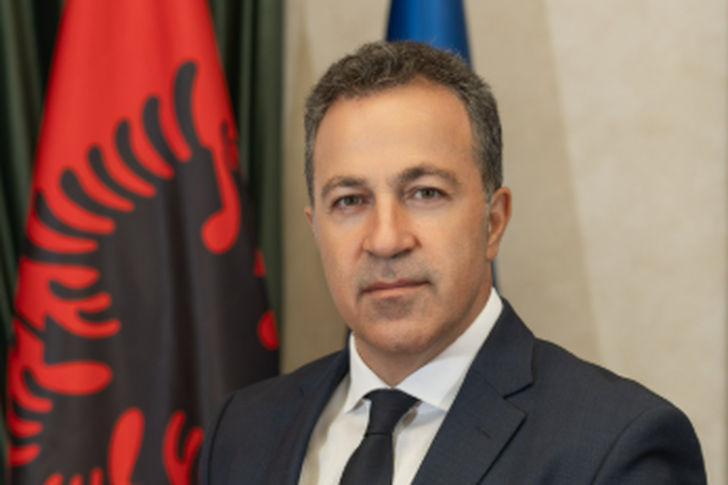
We have been brought to this Assembly by the trust of citi...

The protests of recent days related to the situation in Zv...
The case addressed this Wednesday, June 3, on the show "St...
The show "Stop" broadcast this Wednesday, June 3, the case...

Irfan Hysenbelliu claims to be a big businessman, an hones...

The Special Board of Appeal (KPA) decided this Monday ...

The KPA vetting decided this Thursday to dismiss the p...

Suela Salavaçi, a prosecutor in the Prosecutor's Offic...

The Special Board of Appeal reinstated the prosecutor ...
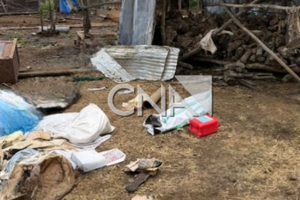
Several images provided by CNA show the area where this mo...

A quantity of explosive material exploded this morning at ...
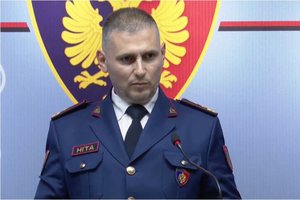
The Head of the State Police, Skënder Hita, expressed his ...

New details have emerged regarding the serious incident th...
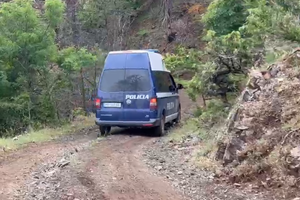
Witnesses in Lozhan, Maliqi, have shared details from the ...

Albania is facing an unprecedented demographic transition,...

On Thursday, our country will be affected by unstable weat...

An alarming figure of more than 166.4 thousand Albanians a...
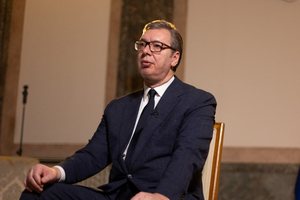
Serbian President Aleksandar Vučić has confirmed that he w...

Israel and Lebanon have agreed to renew their fragile ceas...

United States President Donald Trump announced in a post o...
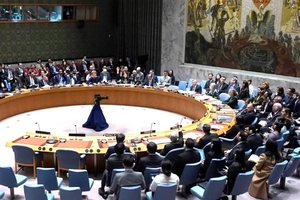
Asambleja e Përgjithshme e Kombet e Bashkuara ka përfundua...
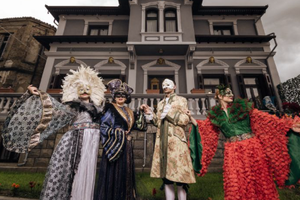
Korça is ready to open the summer season with one of the c...
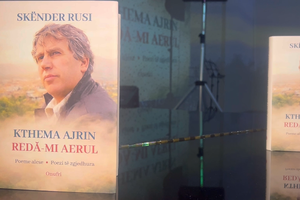
Two years after his passing, the renowned Korçë poet Skënd...
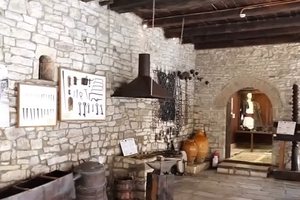
The Ethnographic Museum of Berat has opened its doors to v...
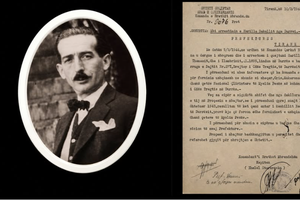
The story of Harilla Bakalli is one of the most chilling t...

Profit margins in the construction sector have increased s...

The Transparency Board, at its meeting today, decided to i...

Today, in the foreign exchange market, one US dollar is bo...
The Minister of Finance, Petrit Malaj, announced today a n...