


The madness of a defendant's lawyer
Plarent Ndreca has made an epochal discovery in procedural...

Plarent Ndreca has made an epochal discovery in procedural...


I don't know what dessert is served for Eid lunch, but my mother always made us pengjir. That's what they call it in Korça, in other areas I think it's called revani. We enjoyed baklava for the New Year, so it changed our taste. We had a full calendar of holidays, but twice a year we got a sweet tooth. Because apart from sugar, it was hard to find flour, butter, and you were lucky to get your hands on a nut. They became so rare that we even made baklava at the end of the year with crushed cookies.
They looked like nuts to the eye, tasted like pieces of toasted bread. I remember that my mother cut the portions of the breast into medium-sized pieces, but she would serve them to us on small plates so that they would fill our eyes. Ah, that moment, that moment, says the poem! We would bite with our little forks and like birds we would lower our heads and not breathe until we tasted even the smallest crumb that remained on the tip of the fork and that we would grab with our tongues. Which we would hold out like frogs under the willow with their branches hanging over the river. As lunch was ending, while we no longer looked at the casserole because we were so used to it, my mother would count the pieces that were left.
She looked at us as if joking, but also as a rebuke, meaning that no one dared to touch it because I had taken inventory of the cauldron. Then she would wrap it up and put it on the clothes closet in her room. We called it the wardrobe. She left it there every year, she never changed its place. Again, we would eat the branded ones, but in small portions, in rations and not every day. But let's say, for example, one day yes and three days no.
The first day we didn't make an incursion into the cauldron. We would go in and out of our parents' room, see where the sink was, but that was it. We would shake our heads and swear, as the saying goes, tomorrow, tomorrow. And indeed, the next day, as soon as we came home from school and our parents were still at work, we would find my brother and I with the kitchen chair in our hands, ready to climb on it. But we couldn't reach the dessert, we were still young. I would tell my brother to bring a drawer from the nightstand.
I would place it at my feet. I would start to stretch it with a little effort, becoming like that lizard that looks like a rubber band when it wants to catch a mosquito on the wall. It often happened that our sister would enter the room at that solemn moment. She was not yet 5 years old, but she was whistling like a spy. So that she wouldn't think about our act of sabotage against the breast, I would start to jump on top of the chair. My brother would whistle and my sister would clap.
So much so that later I would signal to my brother, "Take this away, it'll take us to the guillotine." The main thing; we didn't want her to know that my mother had counted the pieces that were being stuffed into the pan. We didn't even bat an eye. They looked and we looked. They didn't think we would attack them when they saw us with such a look of anger in our eyes and with such courage in military tactics. But no, we had a different strategy. We would fight without weapons, without gunpowder. We would do it with spoons. So with them in our hands we would start the slaughter. As soon as I finished with my spoon, my brother would jump on the chair with his spoon. Waterloo, oh Waterloo. And after rubbing our bellies with pleasure, we would wait like beautiful monkeys for my mother to come home from work.
It was far from our best. But we laughed too because it was the exact day that she would give each of us a piece of bread. She would take the pan from the cupboard, put it on the table, take a look that included the entire pan, count the pieces and then give us one for each plate. And so on for a few days. While we fought with the spoon, mother was happy that she didn't miss anything from her count.
The calculation was precise. Because we were not stupid. We did not eat pieces when we got on the chair. In fact, we were always tempted to swallow them. They were like Ulysses' sirens, inviting us on a ride with their sweetness and aroma, but we stopped. We did not go further. Such was the strategy, attack, but do not be deceived. We did not touch the depths at all, we swallowed the syrup. We sucked it up. Every day with a spoon. One by one. Until after a few days the pan longed for its syrup. Like the earth in summer that groans when it does not rain.
And on those very days when there was not a drop of moisture around the womb, the breasts were as dry as biscuits, the mother would brag to the father, the grandmother, or the aunt:
-I'm the one who makes this dessert. No one comes close to me, I'm number one. Look how it's absorbed the sherbet, look! Serving it is not a simple matter, as is mistakenly thought. You have to make it with the optimal proportions of water and sugar and pour it on the pan not as soon as you take it out of the oven, but when it has cooled down a bit. After a few seconds or minutes.
And she didn't give any further explanations. Everyone asked her, but she kept her mouth shut. This sherbet probably had a lot of secrets. She just said this:
-Oh, how much is the craft. How much is it.
We laughed. It seemed to us that at that moment the spoons inside the table drawer were laughing too. That they had witnessed Waterloo, our battle with the pan on top of the cupboard. So every Eid. So every year… The brave with the spoon on their belt./ CNA


14 Marsi është një ditë e veçantë në Shqipëri, pasi sot fe...

Xhevahir Zeneli is atypical. A silhouette that never refus...

Legendary folk singer Gëzim Nika will bring "Me zanin e bj...

The “Nikolet Vasia” Visual Art Gallery in Durrës has opene...

Several archaeological excavations have led to the discove...

In a special academic and civic ceremony, the University o...

Director Arben Kumbaro's drama "Justice at Nuremberg" prem...

On March 12, the concert of the quintet of the Italian art...

"Paddington The Musical" has dominated the WhatsOnStage Aw...

The rare archive with the collection of photographs of the...

On Saturday, March 7th, the launch event of the Internatio...

20 years ago, the interracial drama “Crash” took the Oscar...

Beethoven's Triple Concerto and Symphony No. 5 will be per...

The National Opera and Ballet Theater brings the play "Lol...

Cillian Murphy said in a recent interview that it's a wond...

On March 7th and 8th, the National Circus comes with two s...

On March 11 and 12, the play "My Husband's Wife", a comedy...
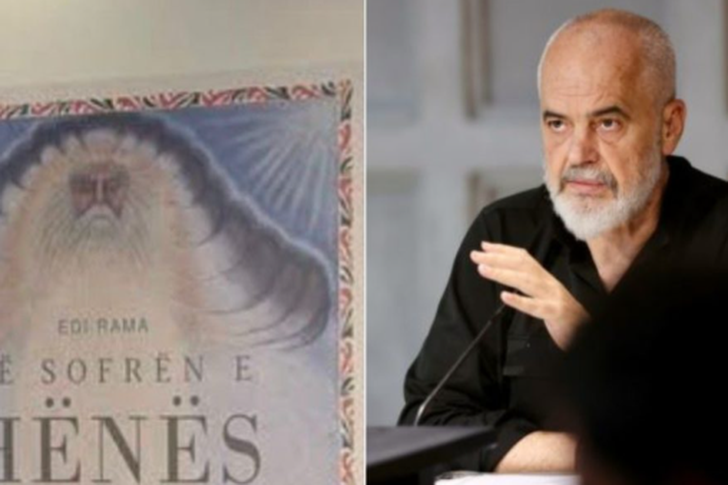
Prime Minister Edi Rama comes to the public this time as t...

The world-famous Louvre Museum is not just a space for pai...
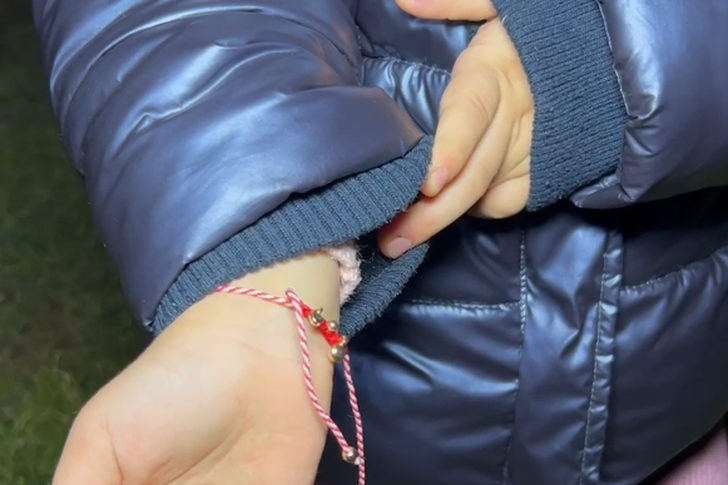
March 1st in Korça came like every year with the aroma of ...

CNA has launched another investigation that could lead to ...

Irfan Hysenbelliu is a businessman that we call "Irfan the...

In March 2026, CNA launched another investigation centered...
The arrested mayor of Tirana, Erion Veliaj, with 13 charge...

The Special Board of Appeal (KPA) decided this Monday ...

The KPA vetting decided this Thursday to dismiss the p...

Suela Salavaçi, a prosecutor in the Prosecutor's Offic...

The Special Board of Appeal reinstated the prosecutor ...

An accident occurred this Tuesday on "Dituria" street in K...

A tourist has lost her life on Orikum beach, where she was...

Two people were arrested and two others were prosecuted af...

At around 08:40, in neighborhood no. 10, Korça, a "Benz" t...

Albania was hit by temperatures significantly higher than ...

For the first time, Pogradec welcomed the Inter-Lake Chess...

Albania has achieved a record for the employment of foreig...

Today our country will be under the influence of relativel...

The United Kingdom's new Prime Minister, Andy Burnham, has...

United States President Donald Trump has imposed 50% tarif...

US President Donald Trump responded with harsh rhetoric to...

US President Donald Trump said on Monday that Israeli Prim...

At a time when industrial products are increasingly taking...

Trust among people is not just a three-syllable word. It c...

Master of humor Todi Llupi has passed away at the age of 7...

The ninth edition of "MIK Festival" kicked off with one of...

The Centralized Purchasing Operator recently opened a tend...
The new draft law "On the Bank of Albania" provides that t...

This Tuesday, one US dollar is bought for 81.2 lek and sol...

Deputy Minister of Economy and Innovation, Enkelejd Musabe...