

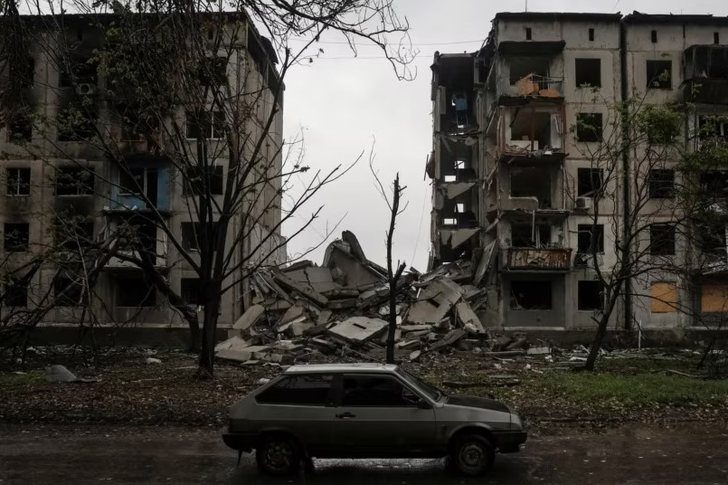
Ukraine: Over 1,400 Africans from dozens of countries are fighting for Russia
Over 1,400 citizens from over 30 African countries are fig...



Everywhere you look in the rich world, public finances are in a sorry state.
In France, as debt grows, governments are changing prime ministers more often than the aristocrats at Versailles changed wigs: on October 14, Sébastien Lecornu, the latest of them, proposed postponing the planned increase in the retirement age to restore budget balance.
In Japan, both rival candidates for prime minister promised new spending, despite the country's colossal debt.
Britain is facing huge tax increases to plug a budget gap after welfare reforms were almost completely abandoned, even after a significant "final" tax increase last year.
Above all, the unsustainable deficit of the United States, which reaches 6% of GDP, weighs heavily, which President Donald Trump is considering deepening even further through new tax cuts.
How long can governments continue to live beyond their means? Public debt in rich countries now stands at around 110% of GDP; before the Covid-19 pandemic, this level had only been seen after the Napoleonic wars.
At the time, Britain had been pursuing austerity policies for nearly a century to pay off its debts to creditors. But as The Economist's special report explains, today's politicians are barely managing to balance the books.
They cannot avoid rising interest costs and higher defense spending; meanwhile, an aging population exerts inevitable electoral pressure to distribute more money.
Tax increases are equally difficult: in Europe, tax revenues are already very high; in the US, taxes are synonymous with electoral losses.
Since all citizens gained the right to vote, only one G7 economy has managed to significantly reduce its debt through budget savings: Canada in the 1990s, at the height of the technocratic era. Don't expect any other country to repeat that success today.
One might hope that artificial intelligence (AI)-driven productivity gains would save countries from having to make tough fiscal choices. But that's wishful thinking. Countries typically emerge from debt when their workforces are growing or when they are small and catching up with more developed economies.
Advanced technologies like AI do not change this dynamic. Spending on pensions and healthcare increases in line with incomes; in highly affluent countries, they will explode along with productivity.
Likewise, according to standard economic models, interest rates will also rise. If AI has a dramatic effect on economic growth, the colossal investments being made today in data centers and chips will become even greater.
This will push interest rates higher, making it even more expensive to service existing debts, eroding any fiscal benefits from faster growth.
As a result, it is increasingly likely that governments will use inflation and financial controls to reduce the real value of their high debts, as they did in the decades after World War II.
The mechanisms for such a strategy already exist in central banks, which have a major influence on bond markets. Meanwhile, populists like Trump and Nigel Farage in Britain are attacking their central banks with proposals that would weaken their ability to protect against inflation.
Price increases are unpopular, just ask Joe Biden, but it doesn't need political support to happen. Nobody voted for it in the 1970s or in 2022.
When governments fail to coordinate their economic policies and pursue unsustainable paths, inflation explodes on its own. By the time markets realize it, it is usually too late.
This is why we need to think ahead and reflect on the damage that inflation causes to the economy and society.
It distributes wealth unfairly: from creditors to debtors; from those who hold cash or bonds to those who own real assets like homes; and from those who sign contracts and salaries with fixed monetary values ??to those who are smart enough to anticipate higher prices.
John Maynard Keynes called this an “arbitrary redistribution of wealth.”
And this could happen precisely at a time when societies are facing other major wealth shifts that the losers consider equally unfair: in the labor market, as AI replaces routine jobs, and through inheritances, as the generation born after World War II (the so-called baby boomers) leaves vast fortunes to those lucky enough to have the right parents.
This multiple wealth shock could fragment the middle class, the bond that holds democracies together, and weaken the fundamental bond between state and citizens.
In the 20th century, Argentina, plagued by inflation, went from one of the world's richest countries to a middle-class economy that lurched from one crisis to another.
The race in Buenos Aires was no longer about innovation or productivity, but about who would manage to capture the state and use it to avoid the devastating effects of inflation.
This is the fate that awaits countries where leaders ignore budget constraints in pursuit of distributional policies. Ten years ago, The Economist warned emerging markets like Brazil and India to learn from Argentina’s example. Today, the warning applies to the world’s richest economies.
However, this vicious circle is not inevitable. The steady rise in prices in the 1970s also led to the election of Ronald Reagan and Margaret Thatcher, who considered monetary stability to be the foundation of the unwritten contract between the state and the citizen.
They established a new principle: that public debts should be honored only if they were justified and sustainable. The Federal Reserve waged a “war” against inflation that gave credibility to independent central banks for a generation.
This pattern has spread further. The decline in inflation in most emerging markets since the 1990s has been remarkable. Even Javier Milei, amid efforts to pull Argentina out of its chronic crisis, could give the country a new chance to revive.
A crucial crossroads
Which direction will the rich world take, one of destruction or care? In many countries, populists will be in power at the moment when governments will face the budget crisis head-on.
Perhaps they will be blamed for the mess, paving the way for a return to fiscal discipline. Everywhere, a coalition of savers and bondholders will oppose inflation.
Whether their voices are heard will depend on the clashes that occur between financial markets and politicians, some of which could become very fierce.
If the world manages to emerge from this period with lower debt and a new awareness of the dangers of excessive borrowing, then some kind of economic revival could occur. The alternative would be for the world's most important economies to descend into chaos./ Monitor.al

Over 1,400 citizens from over 30 African countries are fig...

Nobel Prize-winning American scientist James Watson, one o...

Turkey has issued arrest warrants for Israeli Prime Minist...

Acting Interior Minister Xhelal Sveçla called on the inter...

US President Donald Trump hosted Hungarian Prime Minister ...

More than 2,000 flights in the US were canceled or delayed...
The European Commission is planning to create the Center f...
Hungarian Prime Minister Viktor Orban has arrived at the W...

The Danish government has reached an agreement to implemen...

An agreement for the construction of a cross-border railwa...

Russia called on the United States to clarify what it desc...
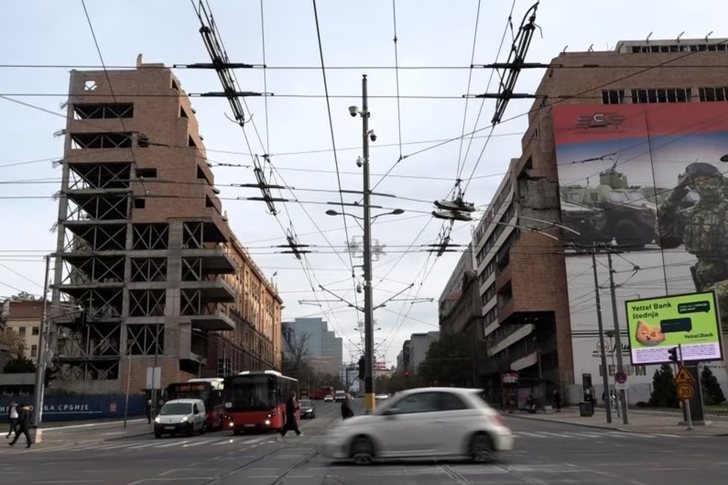
The Serbian Parliament on Friday approved a special law fo...

Iranian President Masoud Pezeshkian said today that Iran s...

The Louvre is taking action to address security concerns t...
Russia on Friday asked Belgrade for clarification regardin...

The Israeli military has announced that it has struck Hezb...

Childhood obesity rates have stabilized in some countries ...

If German steel production is moved abroad, researchers wa...

Belgium's defense minister said that the National Airspace...

October 2025 was the third warmest month ever recorded glo...

A mountain of documents for a flagrant case, in the na...

The Democratic Party has denounced a tender held by the Hi...

Since the summer of 2020, the Mayor of Tirana, Erion Velia...

The leader of the Democratic Party, Sali Berisha, denounce...

The Special Board of Appeal (KPA) decided this Monday ...

The KPA vetting decided this Thursday to dismiss the p...

Suela Salavaçi, a prosecutor in the Prosecutor's Offic...

The Special Board of Appeal reinstated the prosecutor ...

Following intensive controls and work based on police inte...

A road accident was recorded on Saturday morning on the Le...

A serious incident is reported to have occurred today in G...

A fatal accident has been recorded on the Fier-Lushnjë hig...

Today our country will be affected by stable weather condi...

Albania is leading a painful demographic process that plac...

On Friday, our country will be affected by stable weather ...

On Thursday, our country will be affected by stable weathe...

Four months of war have fundamentally changed relations be...

Australia has confirmed for the first time the presence of...

Two high-speed passenger trains collided on Friday afterno...
The United States government has announced that it will st...

The Albanian Embassy in Switzerland has organized an eveni...

This Wednesday, the prominent actor of Albanian cinema, Gj...

Several archaeological excavations conducted during this s...

At the Museum of Fine Arts in Chambéry, France, an exhibit...

In the Balkans, few tourism markets are expanding at the p...

Demographic experts Ilir Gëdeshi and Russell King conclude...

This Saturday, one US dollar is bought for 81.8 lek and so...

Urban development, transport, energy, forestry and agricul...