


"RTSH" MUST BE SHAKEN!
Public Radio Television has sparked a major debate after a...


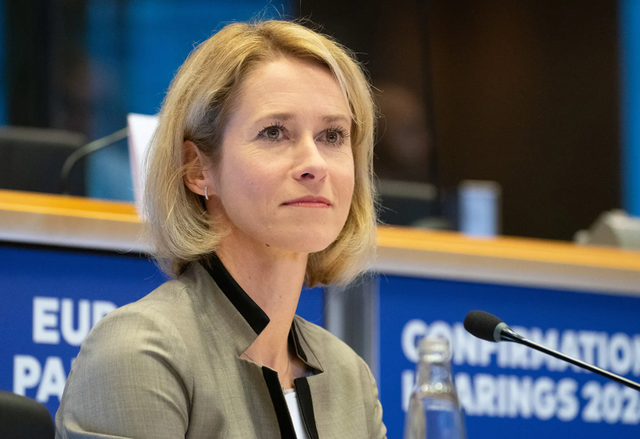
The High Representative of the EU for Foreign Affairs and Security Policy, also Vice-President of the European Commission, Kaja Kallas, when asked by journalists at the press conference in Tirana about the possibility of Albania's membership in the EU in 2030, emphasized that: "it is a realistic objective, but in order to achieve it, several steps must be taken, and Albania must adopt and implement reforms in practice."
On her first visit to Albania, as part of a regional trip, Kaja Kallas kindly reminded us of two of the most basic aspects of the enlargement process.
First, this process has three actors: the EU member states (decision makers); the European Commission (the driving force of the European integration process and at the same time the closest friend of the candidate country); the candidate country aiming for membership (Albania).
Second, reforms can only be achieved by creating an inclusive political climate. It is worth recalling that, in the process of Albania's NATO membership, in addition to geopolitical circumstances, political understanding for the adoption and implementation of reforms in the field of security and the rule of law were crucial.
In the context of EU membership, this takes on even greater value, as unlike NATO membership, this process has a direct impact on almost all areas of life.
EU membership is a national objective that extends beyond political parties. Even more so in the conditions of Albania where the connection with Europe has been and remains organic. Europe is a kind of spiritual hearth of Albanians from Balshaj onwards. Or as Ismail Kadare said: “our natural state”.
Kaja Kallas should be commended for the authenticity with which she conveyed the messages, which is not always a distinguishing feature for Brussels officials, by not feeding false illusions that the Albanian people do not need.
I recall here the European officials who, immediately after the publication of the 2018 Enlargement Strategy, set 2025 as a possible deadline for the membership of Montenegro and Serbia.
Such sweet-talking predictions without practical effects need no further elaboration.
For geopolitical reasons, particularly related to the war in Ukraine, EU enlargement has returned to the political agenda.
However, the materialization of this process is not a closed issue, as the EU also faces countless difficulties in the administration of internal affairs. Therefore, Kaja Kallas rightly referred to the steps that need to be taken in this process, first of all meaning the EU member states. On the other hand, we must understand that the member states will not accept new memberships solely for geopolitical reasons, ignoring the fulfillment of the rule of law and good governance reforms.
Although it has been more than two years since EU member states have asked the European Commission to draft a document on reforming the EU in light of the enlargement process, they are not yet ready for this discussion, nor for the final EU project.
Not all EU member states share the same ideas about how the EU should become a functional organization to enable the membership of several candidate countries, including our country, in the new geopolitical context where it needs to act as an important global actor, alongside the US, China, Russia and India.
The examples of France and Germany, traditionally considered the driving force of the EU, are the best reflection of this reality. Thus, a few weeks after Russia's invasion of Ukraine, French President Emmanuel Macron set out his vision for the creation of the European Political Community, with the conviction that, "the EU cannot remain the sole platform to structure the European continent."
This was an idea recycled by former French President Francois Mitterrand, after the fall of the Berlin Wall, which aimed to avoid a massive and rapid expansion of the EU with states that had just emerged from the communist yoke.
In both cases, France's concern is essentially about avoiding the enlargement process. For this reason, the European Political Community attempts to create "strategic intimacy" (intimité stratégique) between European states in the face of Russian aggression.
But, in fact, it has been limited to a dialogue platform, where states can discuss things together, even though they do not share common values ??and goals, far from being a European forum where decisions are made.
On the other hand, the outgoing German government's program pledged to 'accelerate' the process of accession of the Western Balkan countries to the EU. Four years later, it is impossible to consider this commitment fulfilled. While in the agreement for the future governing coalition between the CDU/CSU and the German Social Democrats, enlargement is considered 'a geopolitical necessity' and the approach of 'gradual integration' is supported, but there is no commitment accompanied by deadlines for the completion of the negotiation process and the admission of new states. In the text of the agreement, the consolidation of the EU through its reform is defined as a prerequisite for any possible enlargement.
Not all EU member states are willing to contribute financially or forgo financial benefits in a larger EU. For this reason, the report drafted by former Italian Prime Minister Enrico Letta, “On the Future of the EU Internal Market”, proposes a solidarity mechanism for enlargement, which would alleviate the fears of countries that are net beneficiaries of a possible membership of the Western Balkans, Ukraine and Moldova.
Not all EU member states agree on whether countries that are occupied or in a state of unresolved conflict can become part of the EU. Not all EU member states are willing to sacrifice social welfare packages and spend more on security.
It is worth noting that in the much-discussed report by former Italian Prime Minister Mario Draghi, “On the Future of Europe's Competitiveness”, the Western Balkans are not mentioned at all in terms of the enlargement process. In fact, the word 'enlargement' is used in the past tense and not in the future.
The value of eight hundred billion euros through which Draghi thinks Europe will become competitive is very large compared to the value of six billion euros that the EU offers to the Western Balkans through the Growth Plan, which does not bridge the development gap between the EU and the countries of the region.
This year, work begins on the EU's multiannual budget, which is also an indicator of political readiness for enlargement. It remains to be seen whether this budget will harmonize Draghi and Letta's proposals for EU countries and those aiming for membership.
Despite the new geopolitical context we are living in and the above proposals, it must be acknowledged that the 'enlargement engine' with motivating effects on candidate countries continues to be off. EU member states hold the key to turning on the 'enlargement engine', just as candidate countries hold the key to using the 'conditionality' in this process as an opportunity to change and reform the quality of governance and life.
The lyrics of the famous song “New York, New York” state, among other things: “if I can make it there, I can make it anywhere.” The opposite is true in the case of enlargement, where EU member states must understand that “if they can’t make it there (enlarge with the Western Balkans), they can’t make it anywhere.”
The sooner consensus is reached on this, the easier it will be for the European Commission. In the absence of a green light from EU member states for this process, the European Commission has been creative in keeping it alive. However, this is not enough to influence the democratic transformation and economic and social development of the candidate countries.
Is 2030 an achievable target for Albania's EU membership?
This question reminds me of May 1, 2004, when, in the hall of the Academy of Arts in Tirana, we organized a debate on this topic together with the ambassadors of the countries that had just been admitted to the EU.
To the interest from the audience about 'when Albania will be admitted to the EU', we responded with some optimism: 'maybe within a decade', disappointing the expectations of the participants in the debate, for whom a decade seemed more like a horizon than a tangible objective.
Likewise, on June 12, 2006, when Albania signed the Stabilization and Association Agreement, which to this day remains the main contract between Albania and the EU, when asked by a national television station when Albania would join the EU, I replied: "if everything is implemented according to the provisions of the agreement, within a decade."
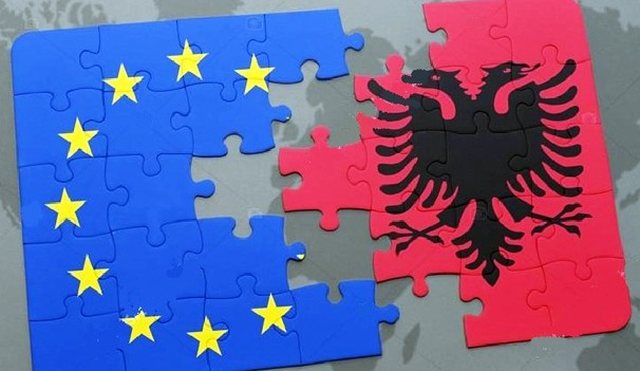
Indeed, our path towards the EU, since 1990, resembles a steep path, which does not justify the enthusiasm and popular support for this process. It is related to the process of democratic state consolidation, which reflects the weaknesses of our democratic tradition, the difficulty of cultivating the best European values ??of the rule of law, excessive polarization and the unilateral destruction of the rules of the political game.
We missed a chance on our path to the EU, which seemed brisk in the early 1990s and several in the early 2000s. We sat at the table for more than three years to sign the SAA, it took us five years to obtain candidate status and thirteen years to start EU membership talks.
The same can be said for the absorption of EU funds in the form of grants, where Albania ranks second to last, leaving behind only Bosnia and Herzegovina. Or of European investments in the form of loans and grants, where we are on the same level as North Macedonia and leaving behind Montenegro and Kosovo.
We have lost a lot of time along the way. And in most cases we have hindered ourselves in this process. The above history is not simply a lesson from the past, but the key to facing the challenges of the present and predicting the future. Viewed in this context, setting a timeframe within which we aim for EU membership, if not accompanied by a more inclusive and unifying platform that encourages a different quality and speed for democratic state consolidation reforms and the absorption of EU funds, is at best pretending to be (impossible).
The analysis is a publication of the Friedrich-Ebert-Stiftung Tirana/ CNA Foundation

Public Radio Television has sparked a major debate after a...
The appeal of the GJKKO has left Erion Veliaj, the mayor o...
The decision of the Special Appeals Judge, Engert Pëllumbi...
When they can't have arguments, have facts, oppose, they h...
For 5 consecutive days, CNA has published without inte...
CNA has so far published dozens of pages of wiretaps of th...
Translated by: Brizida Gjikondi I know that many of you a...
The news that two people had hacked or obtained materials ...
On March 25, in the hall below the Cathedral of the Autoce...
In an editorial, one of those that suits him very well...
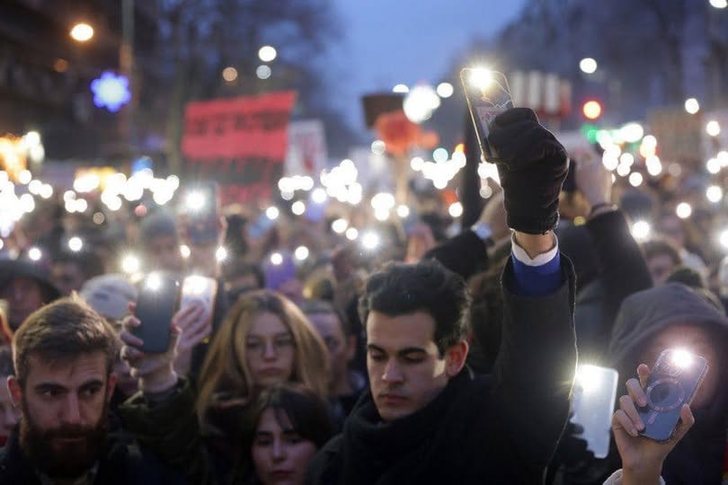
The past week has seen massive protests across Europe. Ser...
" I am a thief with 250 thousand votes and I should be fre...
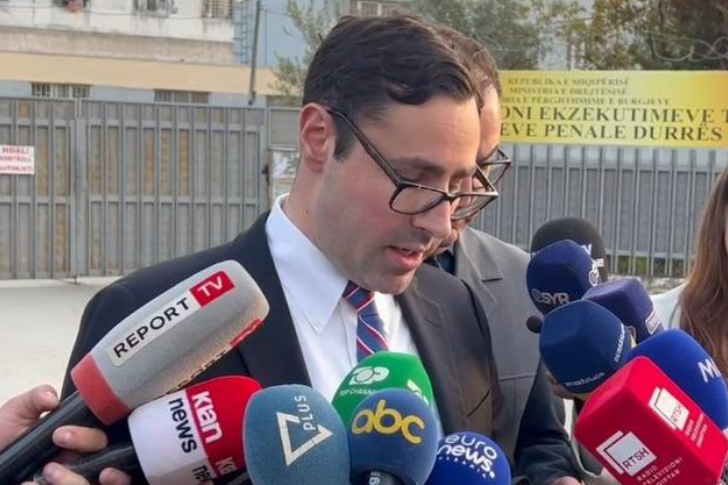
Today, American citizen Joshua.E.Roberts appeared in Tiran...
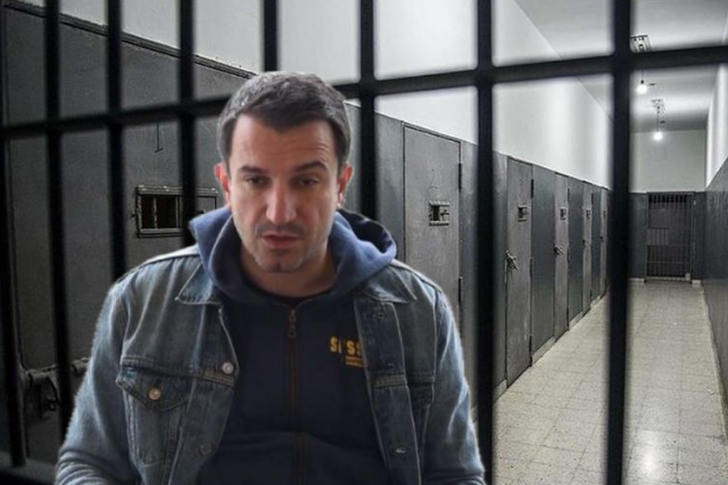
Tirana Mayor Erion Veliaj, who is behind bars following th...
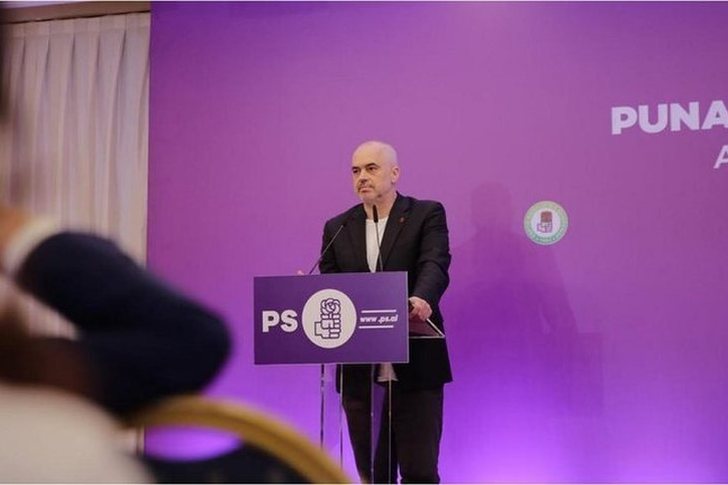
The Socialist Party is a major political force, having...
A look back in time and a reading of Mayor Erion Velia...

The "Bermuda Triangle" , as a mysterious geographical enti...
For several days and weeks, Erion Veliaj has begun his...
Valmir Xoxa is a very interesting character who appear...
Prime Minister Rama once again mentioned special journ...
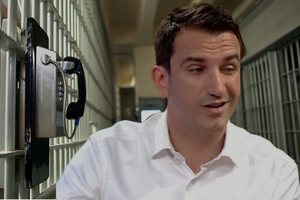
The mayor of Tirana, Erion Veliaj, arrested on 13 charges ...
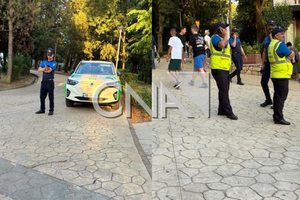
Qytetarët që kalojnë pasditen pranë Liqenit Artificial në ...
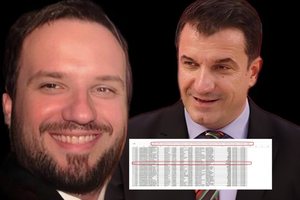
On the morning of July 7, 2026, the Ministry of Culture ur...
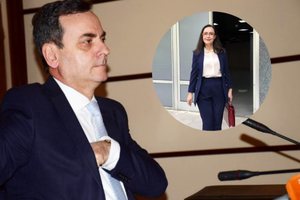
After the disclosure of the portfolio of properties an...

The Special Board of Appeal (KPA) decided this Monday ...

The KPA vetting decided this Thursday to dismiss the p...

Suela Salavaçi, a prosecutor in the Prosecutor's Offic...

The Special Board of Appeal reinstated the prosecutor ...
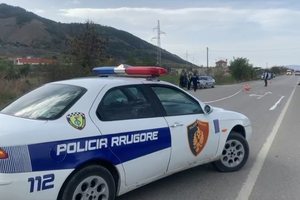
A serious accident occurred this afternoon on the Elbasan-...
The Police Supervision Agency has arrested two police offi...
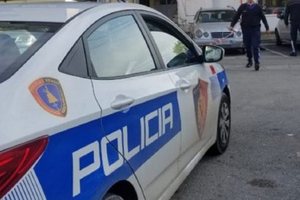
The 18-year-old who stabbed a citizen in the premises of t...
A road accident occurred this Thursday on the Tirana-Elbas...
Demographic trends in Europe are revealing a new complex r...
Today, our country will remain under the influence of stab...
Today, our country will remain under the influence of stab...
The latest report compiled by the European Transport Safet...
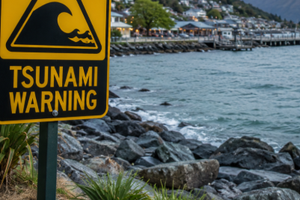
A magnitude 5.9 earthquake struck New Zealand's South Isla...
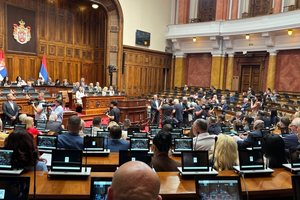
The only Albanian MP in the Serbian Parliament, Shaip Kamb...
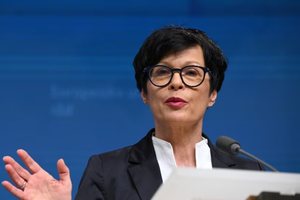
European Union Enlargement Commissioner Marta Kos has reac...
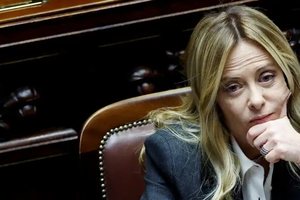
In the Chamber of Deputies (Camera dei Deputati) in Rome, ...

Master of humor Todi Llupi has passed away at the age of 7...

The ninth edition of "MIK Festival" kicked off with one of...
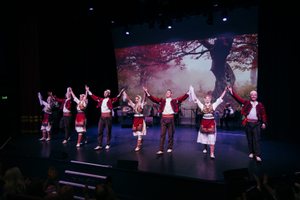
A historic evening for Albanian culture was marked in the ...

When I turned 10, another building was built in front of o...

Around 97,100 people are employed in regulated professions...
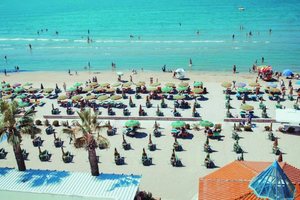
Albania continues to be the main destination for vacatione...
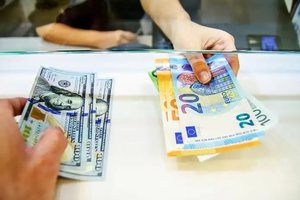
This Thursday, one US dollar is bought for 81.1 lek an...

Beekeeping has expanded significantly in recent years, bec...