



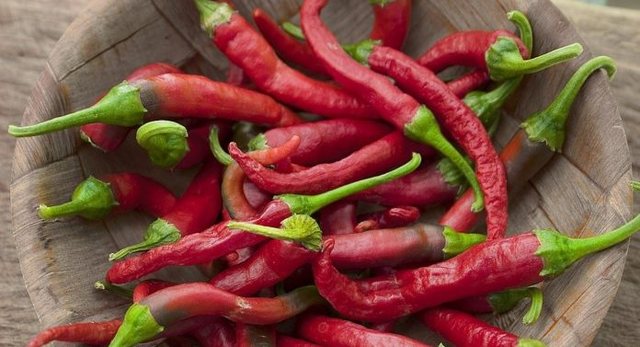
Lista B e regjistrit zyrtar të pesticideve të miratuar nga Ministria e Bujqësisë vë në vështirësi fermerët. Në pak ditë sistemi i alertit të Komisionit Europian RAFFS sinjalizoi për dy ngarkesa specash nga Shqipëria me pesticide përtej normave të lejuara.

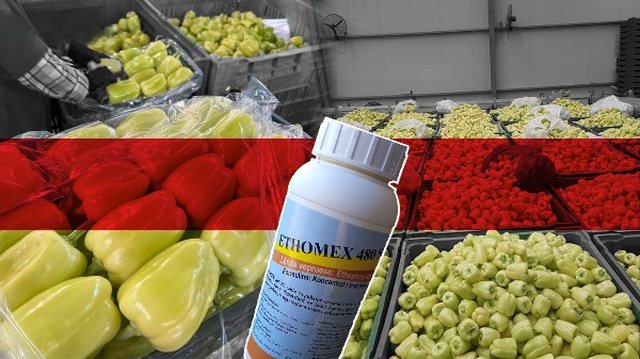
On July 10, a shipment of fresh peppers coming from Albania was detected at the Croatian customs with a high presence of pesticides, more specifically formatenate.
Two days later, on July 12 , Czech customs announced that high amounts of famoxadone and formatenate, two pesticides that are considered dangerous, were found in white peppers coming from Albania. On the official website of the European Commission, the load is accompanied by the note "serious" for the damage it could cause if it were consumed. The results of the published analyzes that accompany the shipment show that 0.037 mg/kg – ppm of pesticide residues were found in them, out of the 0.01 mg/kg – ppm that is the allowed rate.
Formetanate , is a poisonous pesticide and is associated with the skull mark. In the guide sheet approved by the Ministry of Agriculture, it is stated that it is "very toxic to aquatic organisms, can cause long-term negative effects in the aquatic environment and is toxic to bees".
The other pesticide Famoxadone is a fungicide that has recently been phased out in EU countries, but in our country it can be used for a few months only for products that are for domestic consumption, not for export. This pesticide will be used in our country until December 2024.
Famoxadone is part of what is called list B of the official register of plant protection products (PMB) approved by the Ministry of Agriculture, "allowed to be marketed and used but not imported". The products on this list have been notified to be phased out in EU countries, but in Albania they are allowed to be used for a limited period of time after being phased out in EU countries. This list in July (the list is constantly updated) includes 22 products, while in list A, 351 different types of pesticides are approved for use.
The policy followed by the Ministry of Agriculture, when the EU bans a plant protection product, risks turning Albania into a warehouse for pesticides that are no longer used in EU countries. While farmers are the main victims.
INSTAT data show that in four years (2020-2023), Albania imported about 7 thousand tons of pesticides (6,973,395 kg), with a market value of 4.8 billion ALL.
According to the Ministry of Agriculture, the list of PMBs, which are allowed to be marketed and used but not imported, is in accordance with the transposition of EU legislation in this field.
"This list is legal and the residues of active substances in their content within the permitted limits are allowed", the Ministry of Agriculture told Citizens.al.
"The presence of their residues above the permitted rates is the responsibility of the exporting entity", - explains the Ministry of Agriculture.
For the Agriculture expert, Eduart Sharka, this procedure is related to the fact that we are not members of the EU.
"We have a transitional phase up to a year late. It would be good if, in the framework of accession, we had the same deadline as the EU countries have", says Eduart Sharka.
According to the Ministry of Agriculture, this list B allows the use of a PMB that is deregistered until the expiration date of the product that is on the market or until the date determined by the order of the minister.
Bashkim Lika, a farmer and a former math teacher, has been fighting with all the structures of the Ministry of Agriculture for years to ban the use of ethephon , a hormone for faster growth and ripening of fresh agricultural products.
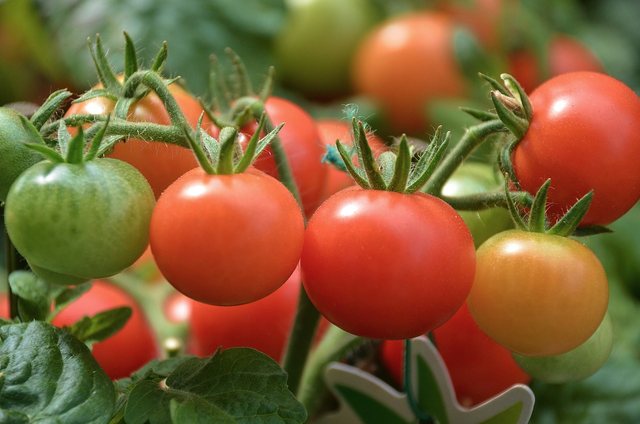
In 2012, at the same time that it was registered for use in the Albanian market, EU countries imposed restrictions prohibiting its use in fresh produce. Discovered for the first time in 1965, numerous studies proved that the hormone had side effects on the health of the population, as it affected the endocrine system and affected the reproductive system.
Referring to the practice of neighboring Greece, which has stopped the use of ethephon in agricultural products for direct consumption, farmer Lika requests that its use be limited in Albania as well.
For this, he refers to the VKM of 2008, which specifies that pesticides entering Albania must be usable in two EU countries, which have similar technical and agrotechnical conditions as us.
"Greece took a decision in April 2012, they removed it from use for agricultural crops, and left it only for cotton", he says, clarifying that in 2016 another VKM came out, which removed the similarity criterion.
Data from customs show that in a decade of use, that is, since 2014, an average of 30,000 liters of this hormone have been traded, or about 3,000 liters per year.
According to the Ministry of Agriculture in 2020 the total area of ??greenhouses was about 2000 ha across the country.
"Which means that it has been used on the entire surface of the greenhouses", says Bashkim Lika.
Lika owns 1.1 ha of tomato greenhouses in the village of Petovë in Fier and produces them organically, rejecting this product.
"In the greenhouse, he is the master (the one who works) and God knows, others know nothing", he says as he asserts that in our country a significant part of farmers have used this hormone to ripen and stimulate production of products.
In the list approved by the Ministry of Agriculture, there are five products that have as active substance the hormone ethephonin, which has been used for 12 years in our country.
With a long list of documents and data, which only for their photocopying spent about 60 thousand new lek, after years of effort, Lika managed to convince the experts of the Ministry of Agriculture to limit the use of at least one product, but not others even though they have the same active ingredient.
On June 21 of this year, the Ministry of Agriculture made the decision to change the label of at least one of the products and ban the use of pesticides for agricultural products.
"This is a systemic preparation, that is, when it is sprayed on the plant, it absorbs it and gets attached to the plant almost biologically and does not leave it completely, despite the deficiency that is indicated on the label. So the effects on health are long-term, they can appear after 10 years", - explains farmer Lika the reasons why he insists that farmers do not use this product.
Currently, this hormone is allowed to be used in EU countries until November 15, 2024 , while in Albania the deadline for its use has been postponed one year later, until the end of 2025.
"The dependency structures of the Ministry of Education and Culture have been notified of these changes, in order to advise farmers, monitor them through on-farm control for the use of PMBs, as well as by taking and analyzing samples, within the annual plan of monitoring of pesticide residues", says the Ministry of Agriculture in a written response.
The Ministry of Agriculture prepares every year the monitoring plan for pesticide residues in agricultural products, which is implemented by the National Food Authority (AKU), which takes samples in the field and sends them to the ISUV (Food Safety and Veterinary Institute) laboratory.
A year ago, they were analyzed for pesticide residues in banana, tomato, carrot, cucumber, apple, potato, table grapes, green salad, pepper, spinach, table olives, watermelon, melon, tangerine, cabbage, peach + nectarine, orange products. , cherry and strawberry. From the analysis, 10% of the products resulted with a higher level of pesticides than the allowed rate.
"For the year 2023, it turns out that a total of 945 samples were taken and sent to ISUV. From the results of the analyzes carried out in the ISUV laboratory, 98 non-compliant samples have been found, i.e. with a pesticide residue level above the permitted rate", says AKU in a written response.
AKU says that in 28 cases (export and import) that have resulted in pesticides above the norm, the EU alert system, RASFF (Rapid Alert System for Food and Feed), has been notified.
For the farmer Lika, due to suspicions about the use of pesticides, farmers are facing loss of markets.
"We have lost many markets, until 2012 our market was free and went all over Europe. Of course, there were cases of pesticide residues that did not respect the requirement. Today is much worse, we have lost these markets completely now. Today we trade in Kosovo, Macedonia, Montenegro and very little in Bulgaria and Romania", he says.
According to him, there are some units that export to EU countries, but they are few and they get the agronomist from there.
According to him, the Ministry of Agriculture itself has created chaos with the decisions it takes and has left the farmer alone.
Referring to the case of ethephon hormone labels, although they have the same active ingredient, they say that the impact on the ecosystem is different.
"There is no logic. One says that neither the fish nor the bee dies, one says that both die", says Lika.
"If you tell the farmer that there is no negative effect and allow it to be traded by law, the villagers have no reason to be cautious. That's why they take and paint the products and then we find ourselves in front of unpleasant situations" - he concludes. / Citizens

CNA is conducting another investigation that affects p...

Dozens of complaints about Suzana Isufajn have come to the...

A strong denunciation was made this Sunday by Jamarbër...
The international relations expert, Ilda Zhulali, deno...
SPAK launched a few years ago an investigation regardi...

A student tells on the show "Stop" on TV Klan that she com...
There are no surprises in our country. The hidden camera o...

Suzana Bajrami, a resident of Peqin, tells on the show "St...

In October last year, the National Territorial Council app...

Journalist Iris Rezhda has denounced "Fax News" televi...
The anti-corruption spokeswoman in DP, Genta Vangjeli,...
The Albanian government has paid 129 million euros, accord...
Çim Peka published in his show the denunciation of a c...

The next problem takes us back to the years '79-'90 in the...
In June 2019, the former head of the Institute for t...
The former head of the Institute of Studies and Conseq...
The Plug in Syri TV show uncovers new details from the...
Nazmi Hoxha has gone to "Stop", as he does not receive the...
On February 20 of this year, "Stop" showed how the Saliko ...

A day ago, the Durrës Prosecutor's Office arrested 5 e...

The mayor of Tirana, Erion Veliaj, arrested on 13 charges ...

Qytetarët që kalojnë pasditen pranë Liqenit Artificial në ...
On the morning of July 7, 2026, the Ministry of Culture ur...
After the disclosure of the portfolio of properties an...

The Special Board of Appeal (KPA) decided this Monday ...

The KPA vetting decided this Thursday to dismiss the p...

Suela Salavaçi, a prosecutor in the Prosecutor's Offic...

The Special Board of Appeal reinstated the prosecutor ...
A serious accident occurred this afternoon on the Elbasan-...
The Police Supervision Agency has arrested two police offi...

The 18-year-old who stabbed a citizen in the premises of t...

A road accident occurred this Thursday on the Tirana-Elbas...

Demographic trends in Europe are revealing a new complex r...

Today, our country will remain under the influence of stab...
Today, our country will remain under the influence of stab...

The latest report compiled by the European Transport Safet...

A magnitude 5.9 earthquake struck New Zealand's South Isla...
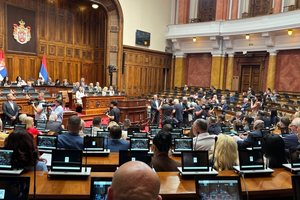
The only Albanian MP in the Serbian Parliament, Shaip Kamb...

European Union Enlargement Commissioner Marta Kos has reac...
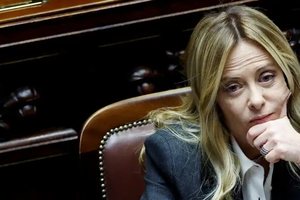
In the Chamber of Deputies (Camera dei Deputati) in Rome, ...

Master of humor Todi Llupi has passed away at the age of 7...

The ninth edition of "MIK Festival" kicked off with one of...

A historic evening for Albanian culture was marked in the ...

When I turned 10, another building was built in front of o...

Around 97,100 people are employed in regulated professions...
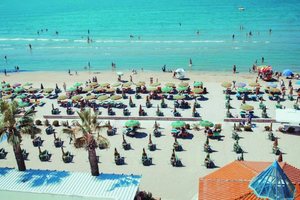
Albania continues to be the main destination for vacatione...

This Thursday, one US dollar is bought for 81.1 lek an...
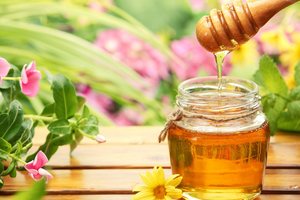
Beekeeping has expanded significantly in recent years, bec...