

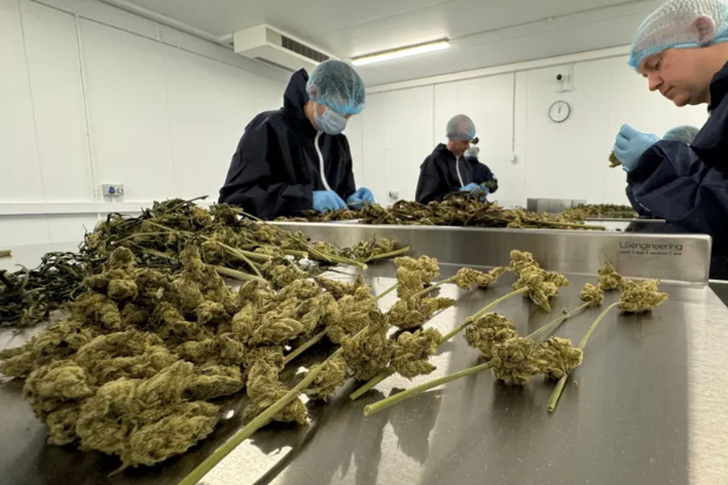
Inside the UK's £10m 'secret' medical cannabis plant
Since it was legalized in the UK, the number of medicinal ...


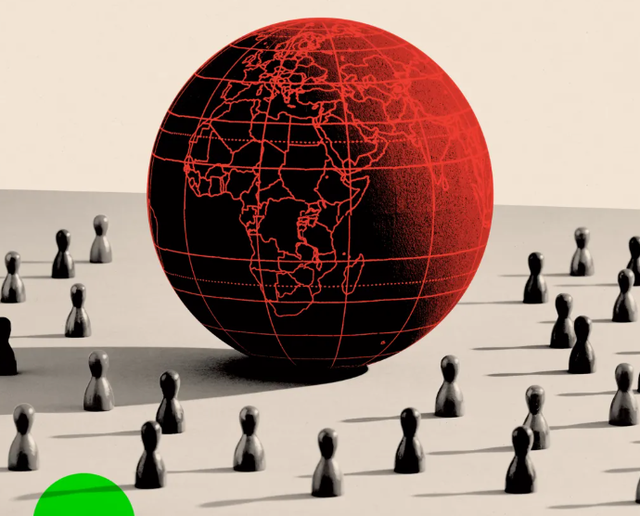
It's been one of the most eventful years since I started covering global security for the BBC after the 9/11 attacks in 2001.
The sudden overthrow of Syrian President Assad, North Korean soldiers fighting for Russia, British and American missiles sent to Ukraine and fired at Russia, Iranian missiles sent to Russia, US-armed Israeli airstrikes in Lebanon and Gaza, Yemeni rockets fired at Israel.
It is a complex and confusing web of conflicts and raises the inevitable question.
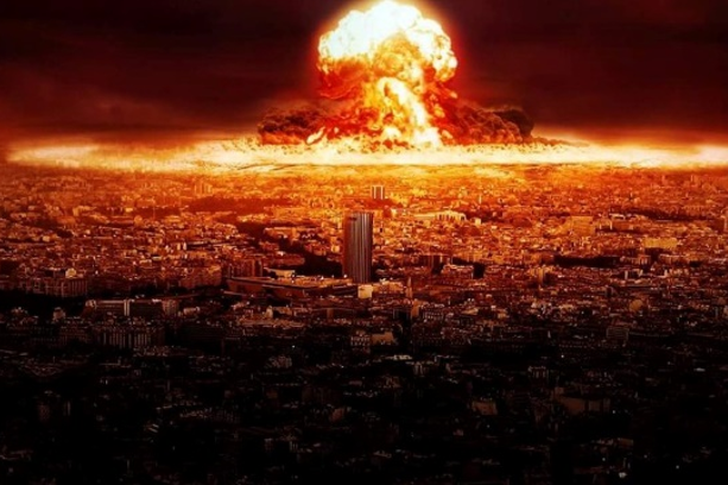
Let's get one thing straight, this is not World War III, although President Putin likes to raise this threat to scare the West into sending more powerful weapons to Ukraine. But it is clear that many of the conflicts on our planet have an international dimension, so how do these lines come together?
We can start with the war that has been raging in eastern Europe, across Ukraine since February 24, 2022 when Russia launched its full-scale invasion of Ukraine in a failed attempt to take over the entire country.
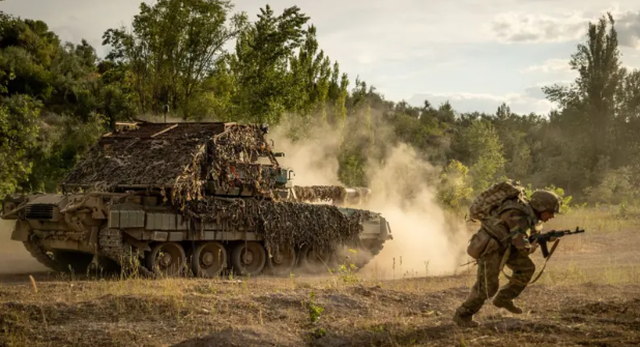
But the war in Ukraine had been internationalized long before the North Koreans showed up. Belarus, a nominally independent European nation but now almost completely in step with Moscow, was used as a launching pad to attack Ukraine. Since the early months of its 2022 invasion, Iran has supplied Russia with Shahed warhead drones, and more recently the Islamic Republic has been accused of sending powerful ballistic missiles to Russia via the Caspian Sea.
And the West has hardly been passive in this conflict. A massive unilateral pipeline of US, NATO and EU aid, both financial and military, has enabled Ukraine to largely sustain the Russian military, until now.
"What we are seeing is a fundamental imbalance of approaches," says the BBC's Ukraine expert Vitaly Shevchenko. "While the West's policy of caution and containment has imposed limits on what Ukraine can do, Moscow appears unconcerned about expanding the conflict and perhaps even eager for it to do so."
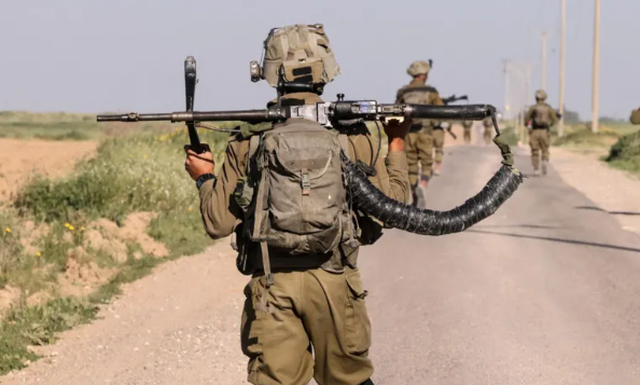
The complexities of this region frankly make the war in Ukraine seem straightforward. Because there are several conflicts in this region, all either raging or dormant, and all going on at the same time.
But first, an important caveat. Contrary to the impression we often get from the world media, most of the Middle East is not at war. Daily life in places like Dubai, Saudi Arabia and Egypt continues as normal, unaffected by the threat of war. Even in countries that have recently experienced some form of conflict, such as Iraq and Iran, life is largely peaceful for most people.
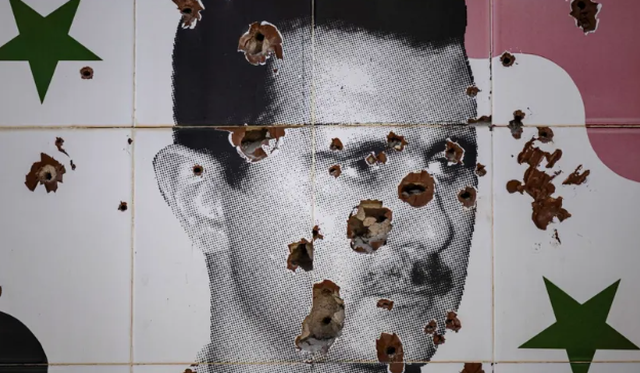
Almost no one saw this coming. Not Syria's current president, Bashar al-Assad. Neither did his supporters in Tehran, Moscow and South Beirut. Apparently neither does America's multi-billion dollar intelligence community.
In the space of less than two weeks, a coalition of Islamist rebels known as Hayat Tahrir al-Sham (HTS), which has been designated a terrorist organization by the UN, the US, the EU and the UK , managed to break out of their stronghold in northwestern Syria and conquer city after city until they have now become the new rulers of Syria.
This is much more than just an event localized to one country, it has some international points to it.
One of the many effects of the Hamas-led offensive in southern Israel is that the Israeli government's response has had a devastating effect on Iran's allies in the region. The last time Syria's rebels looked like they threatened Assad's rule, in 2015, Iran, Hezbollah and Russia all came to their aid and turned the rebels back. Not this time. Russia is busy fighting Ukraine, Hezbollah is devastated by its brief war with Israel, and Iran is bruised after seeing how easily Israeli warplanes were able to penetrate its airspace in the fall.
The net result is that Assad's allies were either unable or unwilling to help, while Turkey, which backs the rebels, saw an opportunity to reshape the situation to its advantage.

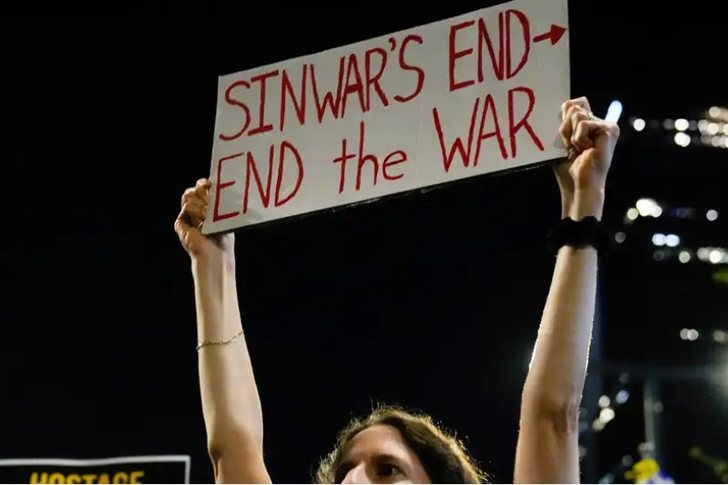
The situation in Gaza is far from tragic. The last conflict there (and there were much shorter ones before this one) was triggered by a raid led by Hamas (militants designated as a terrorist group by many governments) in southern Israel on October 7, 2023, in which more than 1,100 people. were killed and about 250 others were taken to Gaza as hostages. Since then, Israel's war against Hamas has resulted in more than 44,000 Palestinians killed there. These are mostly civilian deaths, and although this figure comes from the Hamas-run Ministry of Health, it is largely supported by independent aid agencies. Israel says it has largely degraded Hamas' military capabilities.
Today, 15 months after this war, most of Gaza is in ruins. More than a million people have been displaced, often multiple times, out of a population of 2.4 million. Many of them live in miserable conditions in tents, plagued by snakes, scorpions and scabies in the summer and battered by the weather in the winter.
Multiple attempts to broker a ceasefire between Israel and Hamas have failed, despite efforts by Qatar, Egypt, the US and others. Israel has vowed to eliminate Hamas as a military force, and while its ranks have been greatly depleted, the fighting is far from over and devastating Israeli airstrikes on built-up areas continue.
There appears to be no agreed plan for what will happen after the fighting stops, nor who will rule the Gaza Strip after more than 18 years of Hamas rule.
In many ways, Gaza is the source of other conflicts in the region, leading to exchanges of fire between Israel and, variously, Lebanon, Yemen, Iran and Syria.
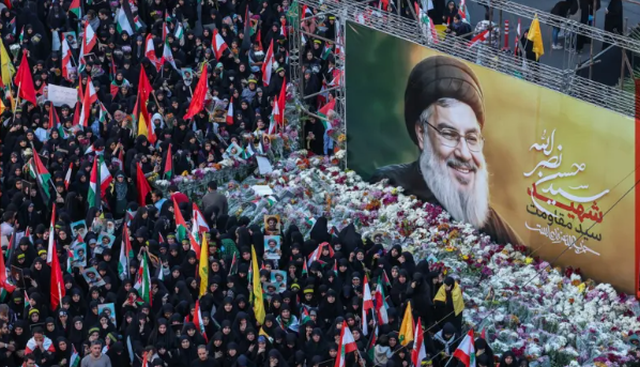
Iran supports a number of allied or "proxy" militias around the Middle East, providing them with money, weapons and training through its Quds Force, a branch of Iran's Revolutionary Guard Corps (IRGC). All are visibly hostile to Israel and are collectively known by Iran as the "Axis of Resistance."
In Lebanon, for years now, the strongest military force has not been the national army, nor the UN peacekeepers stationed in the south. It is Hezbollah, a militant force armed by Iran with advanced missiles and rockets.
On October 8, 2023, Hezbollah began raining rockets and drones on northern Israel in solidarity, he said, with his brothers in Gaza. In September 2024, Israel changed its war aims to include clearing Hezbollah away from the border so that more than 60,000 Israelis could return to their homes in the north.
Israel, through a combination of covert sabotage by the Mossad, its foreign spy agency, and its military, the Israel Defense Forces (IDF), has dealt Hezbollah a series of devastating blows, killing its longtime leader. , blowing up his communications and destroying our weaponry. Thousands of people have been killed in the brief Israel-Lebanon war that preceded a ceasefire in late November.
Israel is at war with Hamas in Gaza, Hezbollah in Lebanon and has fired missiles and been attacked by Iran, Yemen, Syria and Iraq.
The US has continued to supply Israel with a colossal amount of military aid – defensive ones like the THAAD missile defense and attack weapons like parts for the F35 jet – despite the killing of so many Palestinians in Gaza and almost universal opposition around the world. This makes the US—and the West in general—unpopular in the Arab world and increases the risk of recruitment by banned terrorist groups such as the Islamic State (IS) and al-Qaeda, leading to what Western officials say is the risk of an increase in transnational terrorism.
Iran's so-called "Axis of Resistance" - Hezbollah, Hamas, Houthis, etc. - has been weakened by Israeli attacks this year, but not broken.
Iran, in addition to supplying its proxies in the region, has sent missiles to Russia for use against Ukraine. There are reports that in return, Russian satellite intelligence is being passed to the Houthis in Yemen, via Iran, to help them target Western ships passing from the Indian Ocean to the Red Sea.
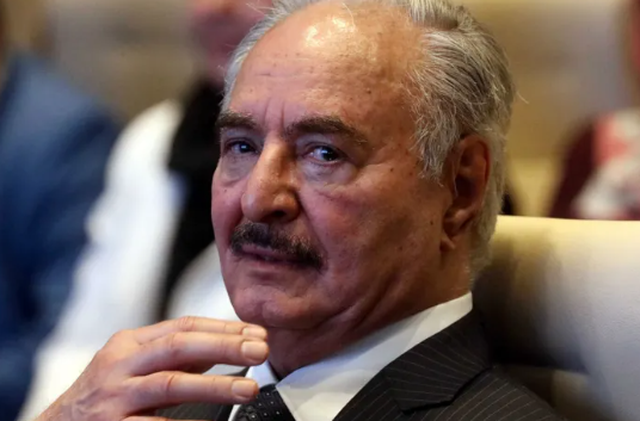
Russia may have lost its main Mediterranean ally, Syria, but it still has a major one in the form of Libya's "Marshal" Khalifa Haftar in Benghazi. Russian air force cargo planes have recently been seen flying on Libyan airstrips, both on the coast and inland at a place called Brak. Moscow clearly sees Libya as a springboard for projecting its global reach in the Mediterranean and also as a staging post for its mercenary activities further south in Sudan and the Sahel.
The Russian mercenary group formerly known as Wagner and now renamed the Afrika Korps has successfully replaced French and other Western forces in the Sahel countries and the former French colonies of Mali, Burkina Faso, Niger and the Central African Republic.
This means that Russia has effectively inherited the problem of IS jihadists in those countries, but in the meantime it is getting rich from lucrative deals that see mineral and other wealth flow back to Moscow.
Ukraine recently appeared to take a wrong turn in this area by enabling a major attack on Malian government forces and their Russian mentors in July. Ukrainian Special Forces reportedly supplied drones and training to Tuareg rebels that resulted in an ambush, killing 84 Russian mercenaries and 47 Malian soldiers. Kyiv is clearly trying to "take the fight to the enemy," but if they were responsible for supplying the drones, the move is widely considered to have failed. Ukraine has denied involvement.
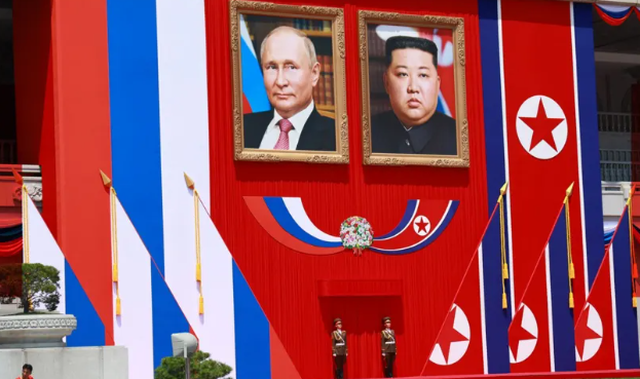
South Korea is worried. There's no such thing as a free lunch, the saying goes, and Seoul is now asking what Pyongyang will get from Moscow in return for sending all those thousands of North Korean soldiers to Russia's war effort in Ukraine . Will it be rocket technology? Nuclear knowledge? Submarine or satellite aid?
So far South Korea has carefully avoided sending any military equipment directly to Ukraine, sending it instead to the US to replace equipment which is then sent to Ukraine. But South Korea, which has an advanced military industrial base, is now considering lifting that ban and sending equipment directly to Kiev.
All this heightens the already feverish tensions on the Korean Peninsula where a paranoid nuclear-armed state (the North) is pitted against its pro-Western democratic neighbor (the South). The two countries never officially ended their war - it was stopped by a cease-fire in 1953.
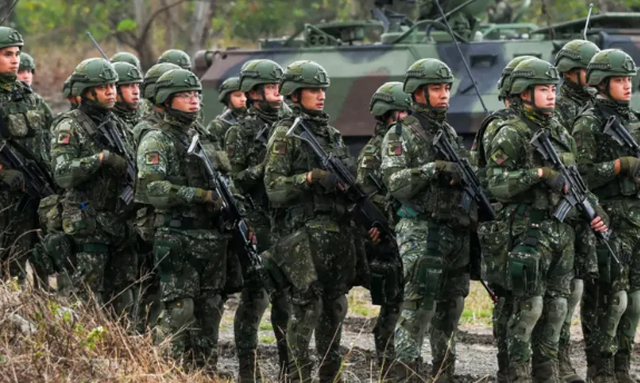
This isn't a conflict yet, but it's a huge potential flashpoint.
While the West spent the first 20 years of this century preoccupied with fighting insurgencies in Iraq and Afghanistan, China quietly colonized strategic reefs in international waters in the South China Sea and claimed them for its own. Its coast guard has since frequently clashed with Philippine ships, claiming they are trespassing on Chinese territory, despite being just outside the Philippines' maritime border and nowhere near China's coastline.
But the big concern is Taiwan. Beijing has repeatedly vowed to "restore" this self-governing democracy to the mainland, even though it has never been governed by Beijing at any time since the Communists came to power and the establishment of the People's Republic of China in 1949. President Xi Jinping has said publicly that this will be achieved, "by force if necessary" before the centenary of the Chinese Communist Party (CCP) in 2049.
Taiwan does not want to be ruled by the Chinese Communist Party in Beijing. It has voted in a pro-democracy, anti-Beijing president, William Lai, whom the Politburo in Beijing absolutely hates. They accuse him of seeking independence for Taiwan (a red line for China) and responded to a recent speech by him with a series of threatening military exercises and air raids across the island.
The main question is: if China invades - or rather blockades - Taiwan, then will the US come to its defense by committing its own forces? Will President Trump see this for a second term as a challenge to America's vital interests in the Pacific? Or will he abandon Taiwan to his fate?
This has the potential for a truly catastrophic conflict with global economic consequences that would dwarf Russia's full-scale invasion of Ukraine.
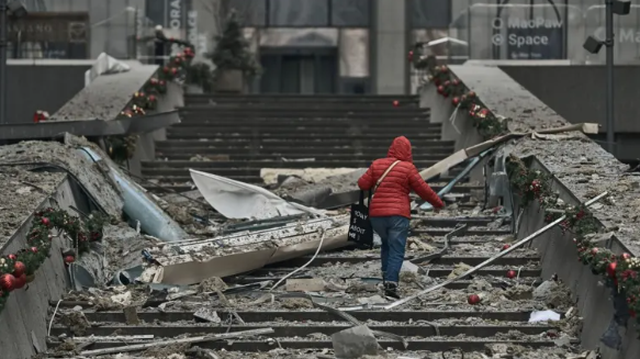
This was the year when the balance of power in the Middle East shifted dramatically, in favor of Israel and to the disadvantage of Iran. The Israeli government is clearly determined to do whatever it takes to "neutralize" its enemies, be they in Gaza, Lebanon, Yemen or Syria. Red lines previously respected by both Iran and Israel have now been crossed, with the two sides exchanging missiles in direct strikes at each other for the first time.
The war in Ukraine has now proved almost certainly unwinnable, at least for Ukraine. Russia has increased its industrial defense machine to the extent that it can now partially defeat Ukraine's air defenses and its front lines, but not so much that it can conquer the entire country. However, Ukraine's position now looks weaker than at any time since the first months of the full-scale occupation.
The war has become increasingly internationalized, with North Korean troops arriving in Europe to fight on Russia's side and the West giving Ukraine the green light to fire its long-range missiles into Russia.
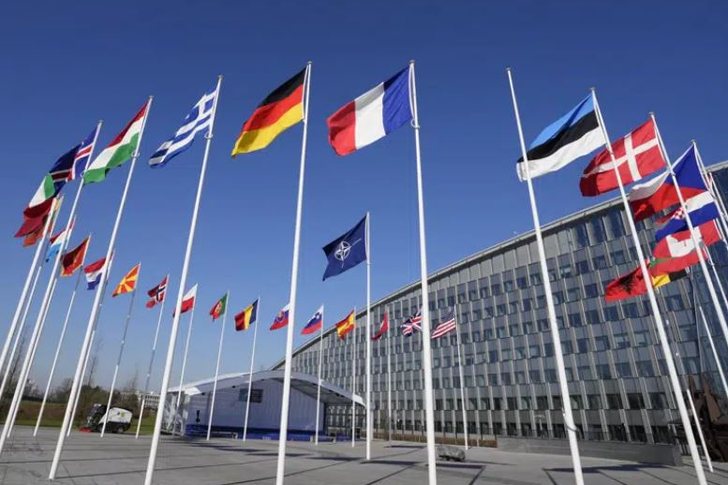
Sweden has now joined NATO, meaning that eight NATO countries now border the Baltic Sea, where Russia maintains two strategic bases, in St. Petersburg and Kaliningrad. There have been several incidents of so-called "hybrid warfare" in the Baltic, where Russia is suspected of deliberately damaging underwater communications cables./ Translated by CNA

Since it was legalized in the UK, the number of medicinal ...

From Mata Hari to Gertrude Bell, from Marlene Dietrich...

December is the month where we see the natural or artifici...

Sitting for long periods of time can be a risk for heart d...
The 43 monkeys of the species known as the rhesus macaque,...
The world today, de facto, is in a third world war with th...
According to Israeli Prime Minister Benjamin Netanyahu...

An amateur historian has discovered a long-lost short stor...

Officially not, but many doubts remain about the untimely ...

Leonardo da Vinci was born on April 15, 1452 in Vitruvius,...
Finland has been named the happiest country in the world b...

Talking to a polite and sociable seventy-year-old, you mig...
What happened to British captain Sir John Franklin and his...
Sicily, one of the largest islands of the Mediterranean an...
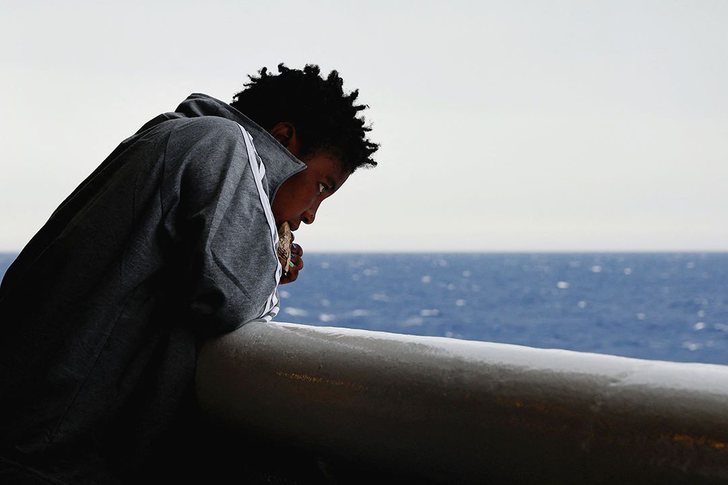
Wearily, they exit the bus and enter the besieged temporar...

The Renaissance artists working in Florence between 1430 a...
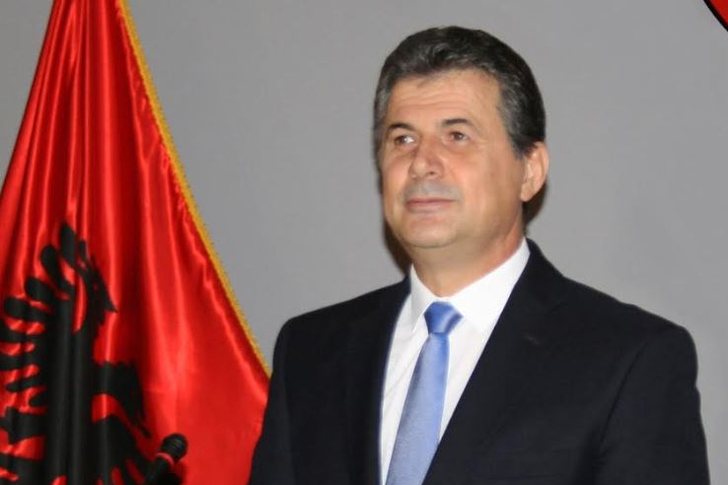
The Albanian state, in the framework of the revision of hi...
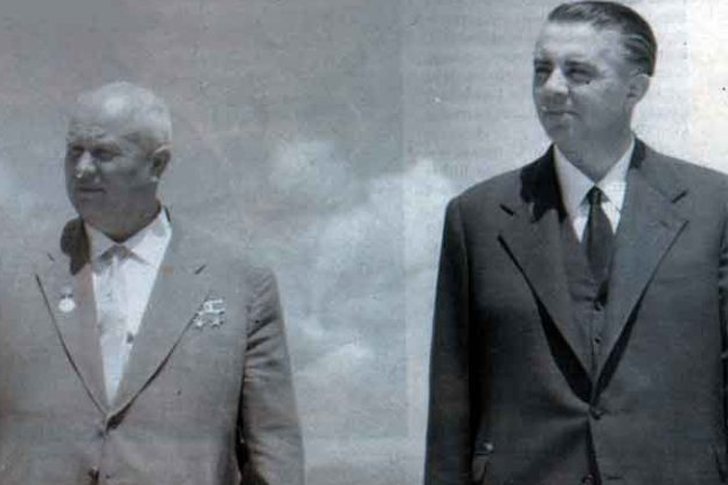
Below we publish the declassified report of the meetin...
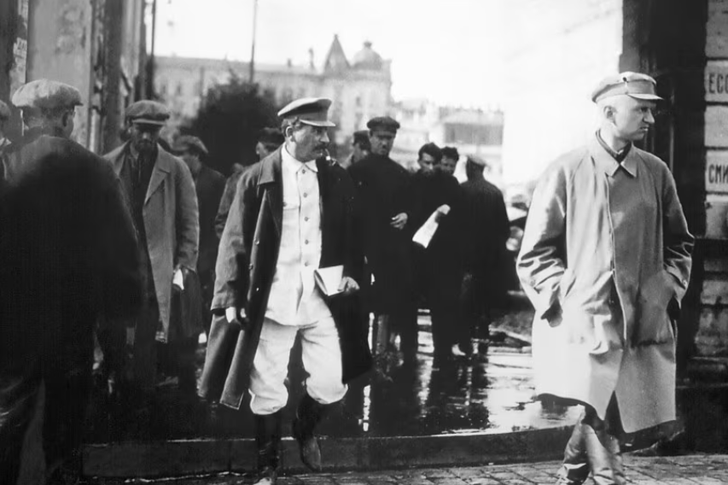
Iosif Vissarionovich Dzugasvili, known as Stalin, the ...
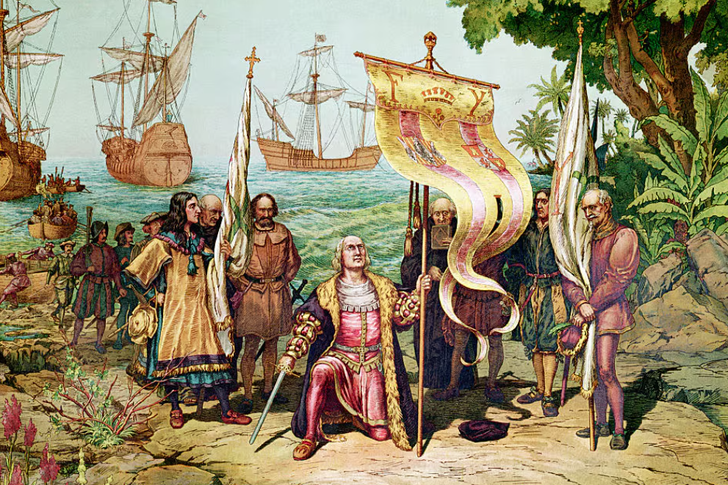
In the school books we learned that when Christopher Colum...

On the morning of July 7, 2026, the Ministry of Culture ur...

After the disclosure of the portfolio of properties an...

For 6 months now, CNA has been sending several letters to ...

The word "fatherland" with properties is not enough. The m...

The Special Board of Appeal (KPA) decided this Monday ...

The KPA vetting decided this Thursday to dismiss the p...

Suela Salavaçi, a prosecutor in the Prosecutor's Offic...

The Special Board of Appeal reinstated the prosecutor ...

A knife attack occurred this evening in Fushë-Krujë. Acco...

A 44-year-old man in Saranda has been seriously injured af...

Spanish police have acted on an Albanian-Spanish criminal ...

New details have been revealed regarding the murder of Egl...

Today our country will be affected by stable weather condi...

In Albania, in 2024, 8,911 beds were available in public h...
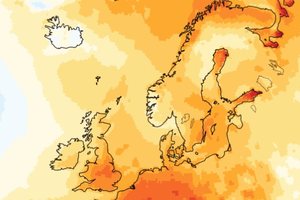
Albania was included in the band of above-normal temperatu...

Today, our country will be affected by mainly stable weath...
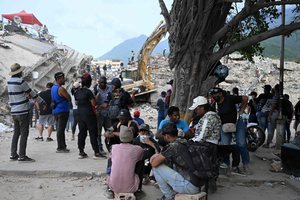
The death toll from two powerful earthquakes that struck V...

Oil prices rose to their highest levels in a month after t...
Iran has reacted to US President Donald Trump's statements...

Counter-terrorism police have taken control of the investi...

The ninth edition of "MIK Festival" kicked off with one of...

A historic evening for Albanian culture was marked in the ...

When I turned 10, another building was built in front of o...

A special scientific conference was held by the World Bekt...

In addition to the effect on the decline in demand for rea...

This Tuesday, one US dollar is bought for 81.5 lek and sol...

The tax administration has announced the completion of the...
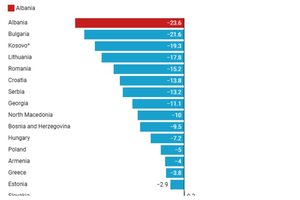
Albania has lost almost a quarter of its population since ...