

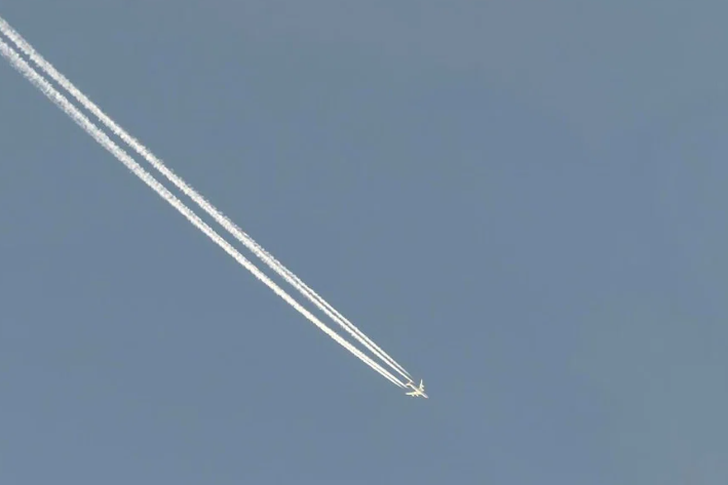
Airplane trails in the sky/ Artificial clouds that affect the climate
The white streaks left by planes as they fly high in the s...


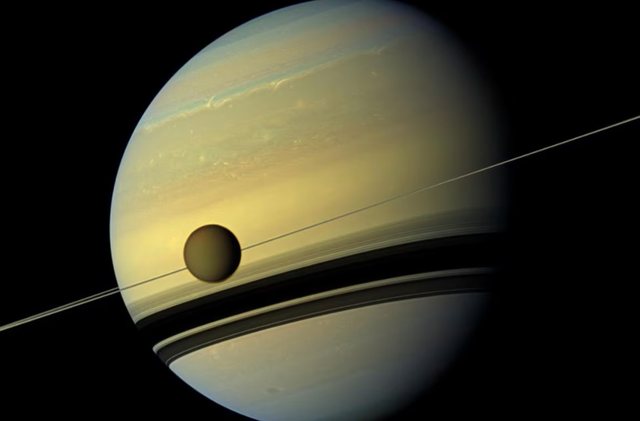
Researchers have uncovered key insights about Saturn's mysterious and largest moon, Titan, including how it was formed.
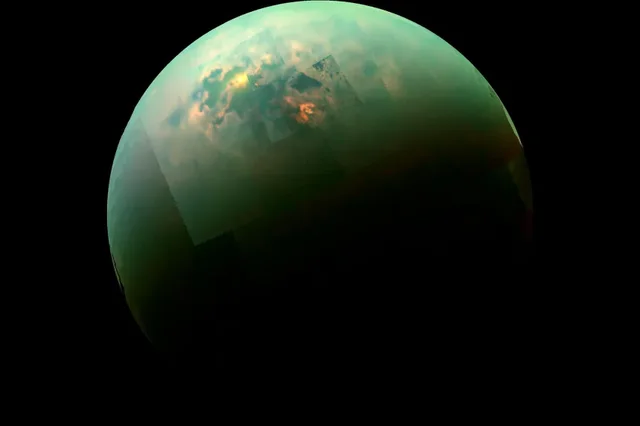
Shrouded in a dense haze, Titan is about half the size of Earth and larger than Mercury—so much so that its gravitational pull causes Saturn to wobble and tilt. The moon, in turn, is moving away from Saturn at a rate of 11 centimeters per year, much faster than astronomers previously thought. The moon could be completely ejected from its orbit.
But Titan's shifting orbit is just one of many mysteries astronomers are trying to solve about Saturn and some of its 274 moons. Many of the questions have arisen from data collected by Cassini, a spacecraft that explored the Saturn system from 2004 to 2017.
New research has combined previous theories of Titan's formation, data from Cassini, and computer simulations to suggest a new origin story for Saturn's largest moon. The study was published this month on the open-access archive ArXiv and accepted for publication in The Planetary Science Journal.
“In this paper, I tried to put all of these things together and propose that about half a billion years ago there was an additional moon that collided with Titan, which actually became part of Titan,” said lead author Matija ?uk, a research scientist at the SETI Institute in Mountain View, California. SETI is a nonprofit organization that explores topics such as planetary science, the origins of life and extraterrestrial intelligence.
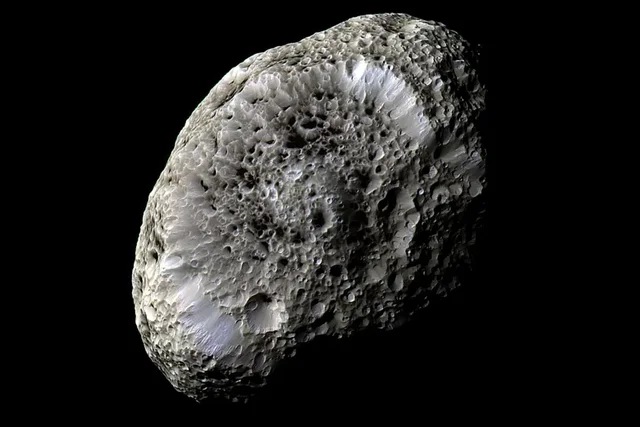
The study suggests that a lost moon collided with Titan, merging with it and changing the dynamics of the entire Saturn system. This collision may have also given birth to Hyperion, one of the strangest and most irregularly shaped moons.
An extra moon "explains everything"
Researchers found telltale signs of an ancient collision on Saturn's surface, which is made clear by its rings, which are tilted at an angle of 26.7 degrees compared to the plane in which it orbits the sun.
Before the Cassini mission, astronomers believed that gravitational perturbations caused by the orbit of neighboring Neptune caused Saturn to tilt over time.
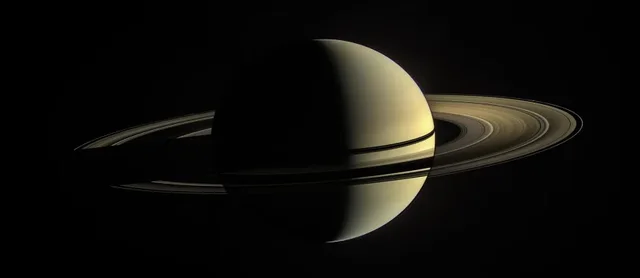
However, Cassini data showed that the two planets are not exactly in sync, pointing to a missing element. In 2022, astronomers suggested that a lost moon, which they named Chrysalis, was a possible explanation for Saturn's current tilt. It once orbited the planet for billions of years, contributing to Saturn's resonance with Neptune, but about 160 million years ago the moon came too close to Saturn and broke apart in an event that created the planet's rings and changed its tilt.
In other words, the gravity and mass of the lost moon kept Saturn and Neptune in sync, and only its disappearance explains why they are now slightly disoriented.
If the collision also created Hyperion in its current form — a smaller, collapsed, and misshapen rock — that would explain why its orbit is aligned with Titan's. But it remains unclear whether Hyperion is a fragment of Titan's predecessor or a lost moon that merged with it.
According to the study, Saturn's rings may have formed hundreds of millions of years after the event. Titan's expanding orbit interacted with some of Saturn's inner moons, disturbing them to the point of causing them to collide with each other. Some of the resulting debris survived as the rings.
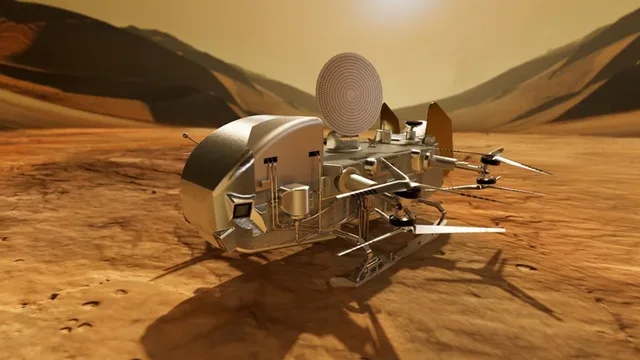
The best way to test the theory is to use NASA's Dragonfly — a nuclear-powered spacecraft about the size of a car that will fly over Titan's surface and land at various locations to collect and analyze samples with its onboard instruments. It is currently scheduled to launch in 2028 and arrive at Titan by the end of 2034.
"It's complicated"
The evolution of the moons in the Saturn system and the origin of the rings are fascinating puzzles that have intrigued scientists, said Linda Spilker, a senior researcher and planetary scientist at NASA's Jet Propulsion Laboratory, who was not involved in the study.
"The rings could be only a few hundred million years young, or they could have formed at the same time as Saturn. This study provides compelling evidence for the formation of the rings of Hyperion and Saturn long after the formation of Saturn ," Spilker said in an email.
Saturn and its moons rotate and orbit with a variety of beats and resonances, according to William B. Hubbard, a professor of planetary sciences at the University of Arizona, who was also not part of the research.
“Saturn wobbles like a tornado at a frequency that is suspiciously close to a fundamental frequency of the solar system, but is not completely in sync, suggesting that some kind of relatively recent disruption may have occurred. A 2022 study proposed that there was a missing satellite, called Chrysalis, responsible for the formation of the rings, but the probability of such an event was disappointingly low,” Hubbard explained in an email.
The scenario proposed by Cuk and his colleagues offers a complicated but highly plausible sequence of events that explains the Saturn system as scientists see it today, according to Carl Murray, a professor of mathematics and astronomy at Queen Mary University of London. Murray was not involved in the work, but was a member of the Cassini team.
Astronomers have long suspected that the Saturn system had evolved since its formation, but detailing the rate of change had always been a problem, he noted in an email.
One of the many legacies of Cassini's 13 years of detailed measurements, combined with historical data, has been the discovery that Titan's orbit is expanding much faster than expected, Murray said.
“The Saturn system is a dynamical paradise with numerous numerical relationships – called resonances – between the orbital periods of its moon pairs. ‘It’s complicated’ is an apt description of all these dynamical relationships over the past 400 million years, but the authors identify Titan’s role as key to our understanding of the Saturn system.” / CNN

The white streaks left by planes as they fly high in the s...

This February 24th marks the fourth anniversary of the Rus...
Estonia is building hundreds of bunkers along its eastern ...
The Chinese MSS, with 800,000 agents and global operations...

We live in a paradoxical age. Never before has humanity ha...
The psychology of the human mind tells us that there is a ...
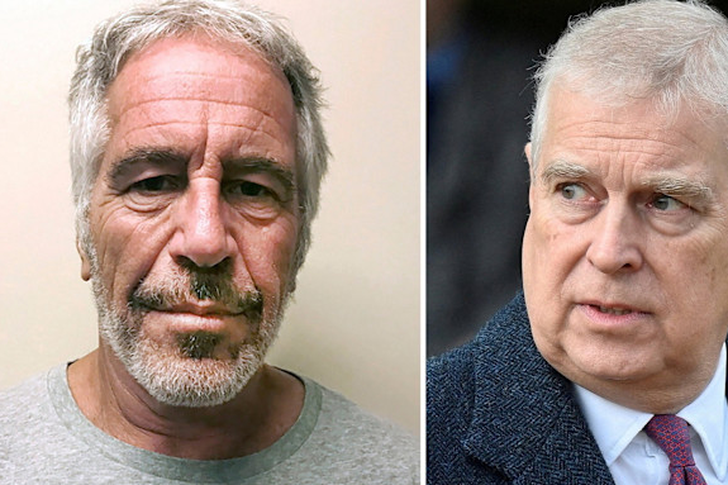
Prince Andrew of the United Kingdom and Jeffrey Epstein me...
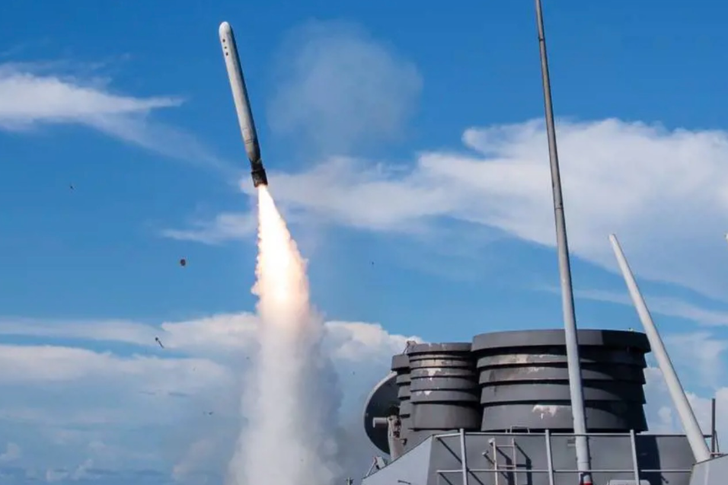
The unprecedented buildup of US forces in the Mediterranea...
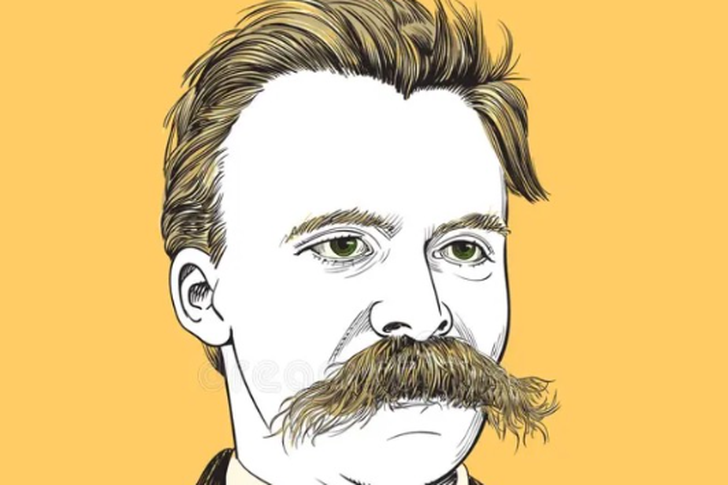
How did Friedrich Nietzsche analyze the origins of moralit...

Jeffrey Epstein's network included politicians, billionair...
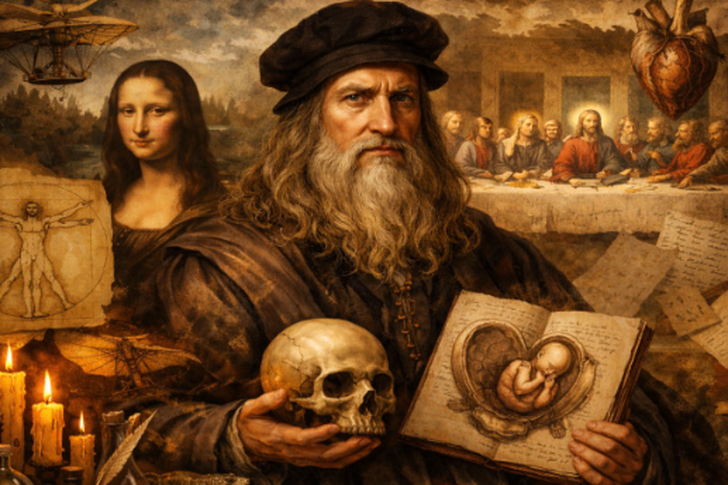
Leonardo da Vinci was not just a Renaissance genius. He wa...
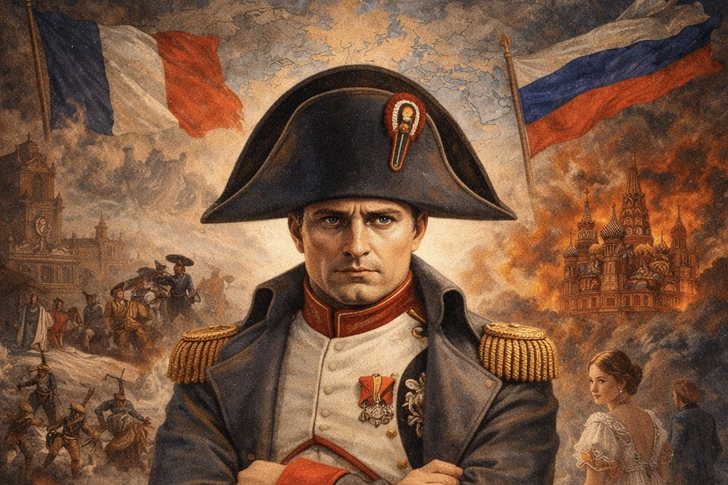
Few people in history have left such a profound mark as Na...
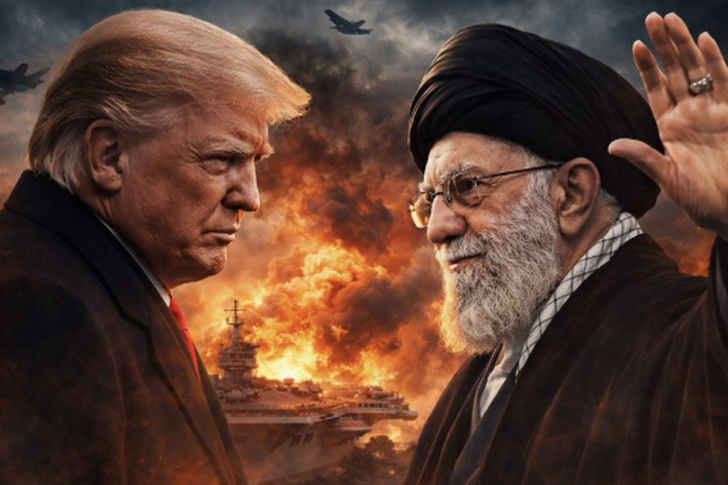
US attack on Iran? The situation seems to be moving toward...
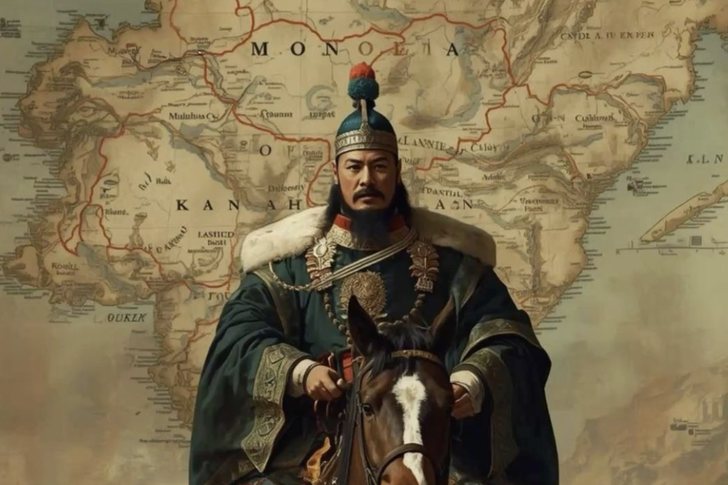
There are figures in human history who are not simply conf...

Many of us live our lives assuming that what we see is the...
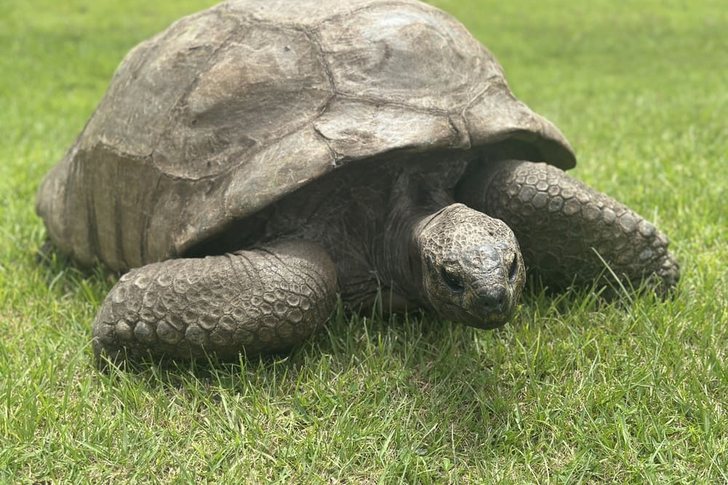
Jonathan, a giant tortoise from the Seychelles, is conside...

From Ottoman cat "keepers" to modern street watchmen, Ista...

"In the age of Artificial Intelligence, humanity is increa...

New beach rules in San Sebastian should come into effect b...

Tea originated in ancient China, with its earliest use as ...
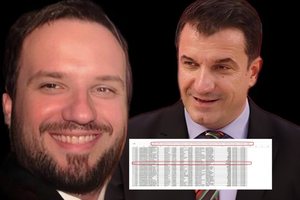
On the morning of July 7, 2026, the Ministry of Culture ur...
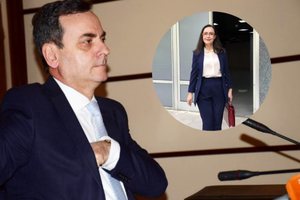
After the disclosure of the portfolio of properties an...

For 6 months now, CNA has been sending several letters to ...
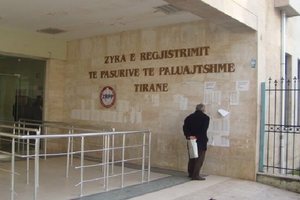
The word "fatherland" with properties is not enough. The m...

The Special Board of Appeal (KPA) decided this Monday ...

The KPA vetting decided this Thursday to dismiss the p...

Suela Salavaçi, a prosecutor in the Prosecutor's Offic...

The Special Board of Appeal reinstated the prosecutor ...

A knife attack occurred this evening in Fushë-Krujë. Acco...

A 44-year-old man in Saranda has been seriously injured af...

Spanish police have acted on an Albanian-Spanish criminal ...

New details have been revealed regarding the murder of Egl...

In Albania, in 2024, 8,911 beds were available in public h...

Albania was included in the band of above-normal temperatu...

Today, our country will be affected by mainly stable weath...
Today, our country will be affected by mainly stable weath...

The death toll from two powerful earthquakes that struck V...

Oil prices rose to their highest levels in a month after t...
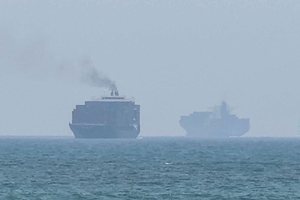
Iran has reacted to US President Donald Trump's statements...

Counter-terrorism police have taken control of the investi...

The ninth edition of "MIK Festival" kicked off with one of...

A historic evening for Albanian culture was marked in the ...

When I turned 10, another building was built in front of o...
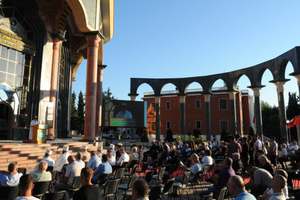
A special scientific conference was held by the World Bekt...

The tax administration has announced the completion of the...
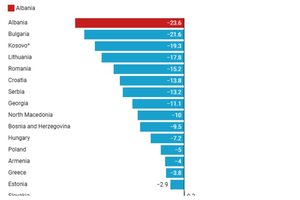
Albania has lost almost a quarter of its population since ...

This Monday, one US dollar is bought for 81.5 lek and sold...

This Sunday, one US dollar is bought for 81.5 lek and sold...