


META indicates the option that detects fake images created by Artificial Intelligence
Meta will introduce technology that can detect and tag ima...


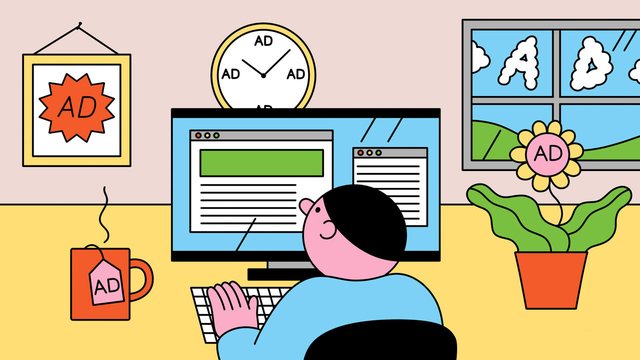
The social network Facebook follows the behavior of users in such an intimate way that it is able to personalize ads with such great precision that it sometimes seems as if they read minds.
Facebook news feeds are filled with ads, reflecting the internet world in general. It rests on the rule that consumers enjoy free services but have to be bombarded with advertisements from various companies.
However, more affluent consumers are increasingly taking advantage of the opportunity to escape endless online advertising. Recently, Meta, the company that owns Facebook, began offering customers in Europe ad-free subscriptions to Facebook and Instagram for 9.99 euros ($10.85) a month. In October, the company X (formerly called Twitter), created an ad-free version.
That same month, TikTok, a Chinese-owned video app, announced it was testing an ad-free subscription version. The following month, Snapchat, another social media rival, said it was doing the same.
Social networks aren't the only platforms that allow the wealthiest (and most targeted by advertisers) customers to tail ads. From video and audio platforms to news and gaming platforms, various regulations and technological changes are pushing media companies to offer ad-free alternatives.
"We're moving toward a world where it's going to be increasingly possible to avoid advertising," says Brian Wieser, of the advertising firm Madison and Wall. As the wealthy are opting out of advertising on some platforms, advertisers are looking for new spaces to target them.

It has become increasingly difficult to attract the attention of the wealthiest people through legacy media platforms. After the Internet reduced the value of their advertising, newspapers and magazines have for a decade turned to other sources of income.
In 2014, only 5% of adults in rich countries paid for a subscription to an online news site, while this year, that figure has risen to 13%, according to the Reuters Institute at the University of Oxford (see chart 1). .
Over the same period, ad-supported radio has given way to streamed music and podcasts on platforms like Spotify, where 40% of its 575 million users pay $10.99 a month to listen to ad-free music.
Even television, where advertising is worth $160 billion a year, is going through a digital transition. Last year, server streaming became the most watched form of television in America, according to Nielsen, a firm that tracks viewership.
Three-quarters of US streaming customers pay not to see ads, according to estimates by Antenna, a data firm (see chart 2).

Streamers like Netflix and Disney+ have created ad-supported platforms; Amazon's Prime Video will soon follow suit. But they only show about four minutes of commercials per hour, compared to more than 15 minutes on American television.
As viewers are increasingly opting for the "streaming" version, the inventory of television ads in America will decrease by a quarter in the next four years, Mr. Wieser estimates.
Social media seemed like a safer space for advertisers. For years, Facebook has promised that it was "free for everyone and always will be." Two things have changed this. The first is regulatory laws.
Meta's plan to go ad-free in Europe follows a series of court rulings that state that, under regional data protection rules, tech companies must obtain users' consent before showing them personalized ads.
So instead of making ads less effective, Meta is now offering the ad-free alternative, for a price. (Privacy activists say this price is unfair, so expect more legal battles in the near future.)
Meta will not implement this plan anywhere else, if it is not necessary: ??"We will always defend an Internet financed by advertising", the company declared on December 4. But certain states may have other ideas.
Britain and India are already strengthening digital privacy laws. Tech companies are also targeting Brazil, Indonesia and Australia (where Snapchat is testing the ad-free version).
The other change comes from technology platforms. Since 2021, Apple has enabled customers to opt out of being tracked by apps, undermining the ability to personalize ads and encouraging alternative monetization methods. Snapchat created a $3.99 per month subscription last year, offering additional features; this September, it had 5 million subscribers.
Mobile games, which often rely on advertising, have moved toward alternatives such as in-app purchases and subscriptions, says Tianyi Gu of the firm Newzoo. Apple and Netflix are among the companies that have enabled ad-free subscriptions to video games.
The existence of ad-free alternatives does not guarantee success. Few Europeans will pay for Facebook or Instagram, believes Eric Seufert, author of the "Mobile Dev Memo" newsletter. "Meta will interpret this as evidence that the ad-supported business model must be protected," he predicts.
However, as Meta networks become more and more video-oriented, the alternative of removing ads may become more enticing to users. YouTube Premium, which charges $13.99 a month to remove ads, had 80 million paying subscribers last year (the latest figure available), ranking behind Netflix, Disney+ and Amazon Prime among Western platforms.
Children in particular are increasingly being excluded as targets from advertising. In August, Snapchat announced that most advertising tools would no longer be available for use by under-18s in the EU and Britain, in line with new privacy rules. Meta has made Facebook and Instagram completely ad-free for European youth, while being embroiled in legal battles.
Right now, those who pay to remove ads are usually the wealthiest. Among subscribers who pay to remove ads, eight out of ten come from middle- or high-income households, according to the Reuters Institute.
In addition to having more money, the wealthy are usually more privacy-conscious: Wealthier users typically refuse to be tracked on their iPhones, Mr. Seufert says.
However, in the world of television, the difference may not be that big. In America, households with higher incomes account for 9% of subscribers who accept ads and 11% of those who pay not to see ads, the firm Antenna reveals.
Mr. Wieser explains that, as consumers begin to spend less on out-of-home entertainment, over time, they may be more willing to pay for ad-free television.
Either way, advertisers are sure to have alternative ways to reach affluent consumers. Worldwide ad spending (excluding US political ads) will reach $889 billion in 2023 and grow 5-6% annually for the next five years, led by digital advertising, the firm predicts. Groupm.
The number of ads seen on television may decrease, but the ability of broadcasters to target ads according to consumer preferences will make them far more effective than conventional TV ads, argues Mark Read, head of WPP, the company's most largest advertising company in the world and parent company of GroupM. Shorter ads manage to attract more viewers' attention.
"Our clients understand that a two- to three-minute ad load is more valuable than a nine-minute ad load," says Mr. Read.
Advertisers can also use platforms where the rich can't afford to pay to get rid of ads. Spending on "out-of-home" advertising media, such as billboards and similar displays, has increased by 7% this year and is now above pre-pandemic levels, according to advertising agency Magna.
Sponsorship of sporting and similar events has not been affected by the digital revolution. And other types of corporate advertising, such as public relations, could benefit as it becomes increasingly difficult to reach people through old-fashioned advertising, Mr. Wieser says.
Perhaps now the biggest advertising opportunity is in areas that have not shown ads before. Amazon's move to sell ads adjacent to search results on the retail site (something it started doing just over a decade ago) will net the company about $45 billion in profits this year, on more than the entire global newspaper industry earned from advertising.
Last year, Uber began selling ads in ride-hailing and delivery apps, personalizing them based on customer data. The company is expected to earn a full $1 billion next year from this new method.
Marriott Hotels created an ad network last year to deliver targeted messages to customers on hotel room TVs. United Airlines is planning to display personalized ads to passengers in-flight. GroupM predicts that by 2028, this method of advertising will be worth more than television advertising.

Even on social media, brands will find ways to reach people who pay not to see ads. Advertisers are increasingly using charismatic "personalities" who advertise products to users who follow them.
For example, WPP recently sent a group of online influencers to Lapland to visit Santa's house as part of an advertisement for Coca-Cola.
Thus, users who pay to block ads in some countries are still likely to see them in other countries./ Monitor.al

Meta will introduce technology that can detect and tag ima...

"Facebook" celebrates its 20th anniversary. It is the larg...

A team of scientists and engineers have landed in Antarcti...
The year 2024 is an election year in more than 40 states, ...

Since the artificial intelligence program ChatGPT became a...
BMW's main factory in Munich will soon produce only el...

The Consumer Electronics Show returns to Las Vegas January...

American billionaire Elon Musk's Space X company has a...
Google has agreed to settle a US lawsuit alleging it i...

As the automotive industry accelerates towards 2024, S...
The New York Times on Wednesday filed a lawsuit agains...

A new company in Britain hopes that devices with its new t...

China will introduce new rules that will limit the amo...

Artificial intelligence developed to model written lan...

Toyota will recall 1.12 million vehicles worldwide due...

The Guardian has devoted an article to the social network ...

Elon Musk-owned social networking platform X is being ...
Elon Musk is planning to create a university in Texas ...

Tesla is recalling more than two million cars after th...

As artificial intelligence advances, it poses an even ...

On the morning of July 7, 2026, the Ministry of Culture ur...

After the disclosure of the portfolio of properties an...

For 6 months now, CNA has been sending several letters to ...

The word "fatherland" with properties is not enough. The m...

The Special Board of Appeal (KPA) decided this Monday ...

The KPA vetting decided this Thursday to dismiss the p...

Suela Salavaçi, a prosecutor in the Prosecutor's Offic...

The Special Board of Appeal reinstated the prosecutor ...

Two rubber boats that have been sailing near the coast and...

29 arsonists in the country were arrested and prosecuted i...

A knife attack occurred this evening in Fushë-Krujë. Acco...

A 44-year-old man in Saranda has been seriously injured af...

The latest report compiled by the European Transport Safet...

The Albanian woman is on average 2 years older than the Al...

The number of theft-related crimes has increased following...

Renowned doctor Shkëlqim Balili shared some important heal...

An unusual moment was recorded on the Hendaye coast in Fra...

David Sanchez, the brother of Spanish Prime Minister Pedro...

Several people have reportedly died in a fire that broke o...

The Minister of Public Administration and Local Self-Gover...

Master of humor Todi Llupi has passed away at the age of 7...

The ninth edition of "MIK Festival" kicked off with one of...

A historic evening for Albanian culture was marked in the ...

When I turned 10, another building was built in front of o...

The number of foreign exchange offices declined in 2025, f...

In addition to the effect on the decline in demand for rea...

This Tuesday, one US dollar is bought for 81.5 lek and sol...

The tax administration has announced the completion of the...